

Fiction / SF/F
Lily Brooks-Dalton : Ruins
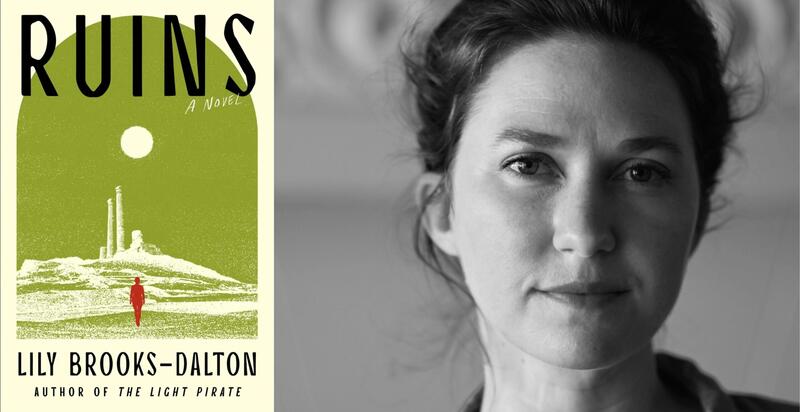
Lily Brooks-Dalton’s Ruins is both a cleverly plotted page-turner, and an emotionally engaging, character-driven novel with an unforgettable protagonist; it’s both erudite and a wild ride, inviting and yet mysterious, only slowly revealing its cards. Through the lens of archaeology, Ruins explores how cultures construct history and shape memory, and through our prickly protagonist Ember, the difficulties and rewards of questioning the beliefs we’ve inherited.
Today’s conversation, beyond delving into the themes and narrative of Ruins, also is a deep dive into craft, particularly exploring a writer’s considerations when it comes to plotting. As part of that discussion, we not only discuss Lily’s sensibilities when it comes to her three successful novels, but we also talk about two completed novels that never coalesced and why that might be. For the bonus audio archive, Lily contributes a reading from the opening of one of these novels we will never see. This joins bonus readings from everyone from Ted Chiang to N.K. Jemisin, adrienne maree brown to Dionne Brand. You can find out how to subscribe to the bonus audio, and about all the other potential benefits of joining the Between the Covers community as a listener-supporter, at the show’s Patreon page.
Finally, here is the BookShop for today’s conversation.
Transcript
David Naimon: Today's episode is brought to you by Dear Memory: Letters of Writing, Silence, and Grief by Victoria Chang. Whittled and sculpted from an archive of family relics, a marriage license, a letter, a visa petition, a photograph, Dear Memory becomes a model for what it looks like to find ourselves in our histories. Now in paperback, this edition is updated with six new intimate letters. Praised by the New York Times Book Review as providing a cultural clarity and a general clarity of the self, Publishers Weekly dubs the collection a moving consideration of ancestry and loss. Dear Memory from Milkweed Editions is available wherever books are sold. I will also add that my conversation with Victoria Chang about this very book is one of the most listened-to episodes in the show's history. So definitely check out Dear Memory and the conversation about Dear Memory, both. Today's episode with Lily Brooks-Dalton is about a book that poses some unusual challenges in how to discuss it. Lily and I figured out a strategy, which we discuss more fully within the interview itself. But I'll say in short now that if you particularly care about spoilers, we very explicitly let people know, who care about this, when to step to the side. That moment when we say, "Okay, time to hit pause if you don't want to know what we're going to talk about," actually happens quite late in the interview, after we've talked for well over an hour, perhaps even closer to an hour and a half. But you'll get plenty of forewarning if this is of concern to you. In addition to talking about the themes of Lily's book and their implications regarding history, cultural memory, self-identity, time, gender, and the more-than-human world, we also talk quite a bit about craft and about plotting in particular. As part of that, one thing that comes up is not just how Lily goes about writing her three successful novels, but also about the two novels she wrote, which in the end did not coalesce or succeed, and why they didn't. I mention this because, for the Bonus Audio Archive, Lily contributes a reading from the opening of one of these novels. As you might imagine, as a writer, even if you recognize that a novel doesn't work, that something is flawed, perhaps fundamentally and irrevocably in its architecture, you still often love many things about it. Hearing Lily read the opening from one of these novels, one that we will never see, is interesting because when I listen, I find myself wanting her to keep reading. You can feel the success of the opening that she shares. There are other craft-oriented contributions in the archive that Lily's reading joins. There are craft talks by Jeannie Vanasco and Marlon James, there are Danez Smith's poetry writing prompts, writing prompts from Lucy Ives and Will Alexander, Myriam Chancy's close reading of Jamaica Kincaid, and more. There are also contributions from other writers of speculative fiction, from Ted Chiang to N.K. Jemisin, Daniel Jose Older to Vajra Chandrasekera. The Bonus Audio is only one potential thing to choose from if you join the Between the Covers community as a listener-supporter. But regardless of what you choose, access to the bonus audio, rare collectibles from past guests, the Milkweed Early Reader subscription, every supporter at every level of support is invited to join our collective brainstorm of how to shape the show going forward, and every listener-supporter receives the robust resources with each and every episode. You can find out about it all at patreon.com/betweenthecovers. Now for today's conversation with Lily Brooks-Dalton.
[Intro]
David Naimon: Good morning and welcome to Between the Covers. I'm David Naimon, your host. Today's guest, the writer Lily Brooks-Dalton, received a BA at the University of Massachusetts Amherst and an MFA in creative writing from Portland State University. Her debut memoir, Motorcycles I've Loved, which was a finalist for the 2015 Oregon Book Award, was described by Anne Lamott as follows: "Lily Brooks-Dalton is wonderful, fresh on the scene with a big heart, a fierce spirit, a writer's eye, and a lovely sense of humor." Cosmopolitan added that what the Pacific Crest Trail is to Cheryl Strayed, the open road is to Brooks-Dalton. Her debut novel, Good Morning, Midnight, received even more acclaim. Named a Best Book of the Year by Shelf Awareness and the Chicago Review of Books, Colson Whitehead said of it, "Good Morning Midnight is a remarkable and gifted debut novel. Lily Brooks-Dalton is an uncanny chronicler of desolate spaces, whether it's the cold expanse of the universe or the deepest recesses of the human heart." Yiyun Li adds, “What does it mean to be isolated from the ordinariness of the everyday world, yet to find the extraordinariness of being close to another human being? With imagination, empathy, and insight into unchanged and unchangeable human nature, Lily Brooks-Dalton takes us on an emotional journey in this beautiful debut.” Good Morning Midnight was also the inspiration for the film The Midnight Sky, directed by George Clooney and starring Clooney and Felicity Jones, with Lily as consulting producer. The Midnight Sky was viewed by over 72 million households during its first week on Netflix. Her follow-up to Good Morning Midnight, The Light Pirate, with starred reviews from Kirkus, Booklist, and Library Journal, was a USA Today best-selling novel and a runner-up for the Dayton Literary Peace Prize, an international prize given to writers whose work uses the power of the written word to foster peace, social justice, and global understanding. Past winners include past Between the Covers guests Kaveh Akbar, Viet Thanh Nguyen, Chang-Rae Lee, Marlon James, and Junot Diaz. A New York Times editor's choice and a 2022 NPR Books We Love, Charlie Jane Anders says of The Light Pirate, “Feels like a small miracle: a book about a world wrecked by climate change that manages to be full of warmth and compassion . . . The real genius of The Light Pirate lies in the gentleness with which Brooks-Dalton treats her characters . . . Proof that climate fiction is maturing, producing works that are both nuanced and nourishing.” Lily Brooks-Dalton's work has been translated into 20 languages, and she's the recipient of The PEN America/L'Engle Rahman Prize for Mentorship, named after the 10-year friendship and correspondence between the author Madeleine L'Engle and former Black Panther Party leader Ahmad Rahman, given to mentor-mentee pairs in PEN America's longstanding prison writing mentorship program. Lily's here today to talk about her latest and third novel, Ruins, which Publishers Weekly calls a captivating mind-bender. Past Between the Covers guest Jeff VanderMeer similarly describes it as "a stunning mystery wedded to an adventurous journey. Ruins is a unique and beautiful novel from a major talent who goes from strength to strength. Highly recommended." Finally, Geraldine Brooks says, "Lily Brooks-Dalton's novels are rich literary feasts. They're also page turners with breathtaking twists. As we follow her complicated, flawed protagonist on the hunt for an artifact that will change history, the ground of our own understanding constantly shifts and re-forms itself. Ruins is a quest novel and a story of obsession: what is knowledge worth, and what should you sacrifice to get it?" Welcome to Between the Covers, Lily Brooks-Dalton.
Lily Brooks-Dalton: Thank you. I feel like my whole life has just flashed before my eyes. Thank you for the overview. [laughter]
DN: So you and I were in the MFA program together at Portland State. We had utterly different experiences there, partly because while we were both in the fiction track, I took most of my seminars in other genres, primarily in poetry. But we did have a semi-regular brunch date, and we did have some classes together. I remember sitting in the back of the room together in several of them, perhaps most notably, we had fiction workshops together. So we have workshopped each other's writing in progress. At that point, your debut memoir had already come out, but none of your fiction, and you were workshopping short stories. I really liked your writing drafts back then, but I wasn't at all prepared for how bowled over I'd be by your writing now. I actually think my experience of reading Ruins is going to influence the show going forward because most of the long-form fiction I do on the show is often, I think, formally interrogating the novel at the same time. It's working against story while also telling one. So it might have metafictional aspects. So it's been a long time since I read a book that fully had me under the grips of a fictive spell. This book is a page turner, but I feel like that sells it short because at its heart, I think it's character-based with deep characterization and brilliant plotting. It's also both erudite and thrilling, which reminds me that I want to have more reading experiences like this going forward. So first, I just wanted to say thank you for Ruins, Lily.
LBD: [Laughs] Oh, no. Thank you, David. [laughter] I appreciate that. That's lovely to hear.
DN: I mean, maybe as just a random aside before we start, you were working on short stories then, right?
LBD: They were really bad. Let's be honest with each other. [laughs]
DN: Well, did you decide that the form was not good for you?
LBD: The form was never good for me. Writing short stories always felt like I was not working in the right container, but that is the container of grad school, I think. In many ways, workshopping novel chapters is even worse, just in its limitations around how much help you can get from your cohort or just from the process in general. But yeah, I have not written a short story since, to be honest.
DN: You're smarter than I am because I feel like I probably lost a decade in my writing life under the false presumption that learning how to write a short story is good training wheels for writing a novel. I think that they're just entirely different experiences in terms of what you need to accomplish.
LBD: I think that's right. That's right for me. I think it could be different for someone else. But yeah, for me, they are just totally different animals, different species entirely.
DN: Well, forgive me for starting here, but perhaps emboldened by knowing you, [laughter] I wanted to start in a psychoanalytic place about you as a writer across your books.
LBD: Okay.
DN: The last two books are very deeply engaged with climate and climate apocalypse, both in ways that are refreshingly different than the way it is typically handled. The last three books are dealing with apocalyptic shifts, radical changes in our lives, questions of survival and adaptability on both a species level and an individual level. But if I were to ask you the question today, why are you interested in the question of apocalypse? I fear that the reasons might be too obvious, given that for most people, the wheels have come off of everything we've relied upon as familiar in so many ways that 10 or 15 years ago, it might have produced a more specifically individual answer than now. But I still am interested. Feel free to answer that question if you do have a longstanding interest in the end of the world long before the world felt like it was ending. But the question I want to ask you also is about a theme that I think spans all of your books, including your memoir, which is an engagement with loneliness/aloneness. I'm curious if you have a story that you tell yourself to explain this enduring interest. In Good Morning, Midnight, we get extreme isolation: a character alone in the Arctic, an astronaut in space. But in your last two books, with Wanda in The Light Pirate and Ember in Ruins, they aren't actually alone, but there is a deep sense of not belonging, a misfit between character and culture. In the broadest sense, I feel like there is a thematic sweep—three or four books—around questions of solitude and loneliness, of being unseen, perhaps, of searching for meaning and a search for connection on one's own terms. I know you've noticed this, as you've said when doing publicity for your debut novel, that both isolation and the disappearance of our way of life are things you've been thinking about for a long time, and which apparently you're still thinking about. So talk to us about why you think these questions endure or where they come from for you as a writer—both this question, if you want, of apocalypse, but also this question of, I don't know if you'd call it loneliness or solitude or being a misfit.
LBD: Loneliness and solitude are completely different. I'm really interested in what lies between them. In this culture, there is a kind of stigma associated with solitude and how much solitude is too much solitude. As someone who needs—and I really do mean needs—more solitude than most, I think that question has been with me for a really long time of Is this okay? Am I okay for needing this? Am I missing something? Not in a sense of FOMO, like, "Oh no, I'm missing out," but in the sense of, "Am I not trying hard enough to be in the world? Is this a symptom of, oh my gosh, the word that came to mind is laziness," which I don't love, [laughs] but we'll go with that. So I think that question, which has really been a guiding force or a theme for me, naturally has made its way into my fiction. The older I get, you know, in my younger years, my teens, my twenties, that was really a very earnest question: Is this okay? Is it okay that I need this? And so gravitating towards these characters that are just in that situation—it's not a choice. Well, in some cases, it's a choice they've made, but that's the reality they're inhabiting. And then moving into situations with characters who are really actively choosing that in ways where they could choose something else, but they're taking this for themselves—the more I revisit this theme, the more righteously they claim it for themselves too, which I think is interesting.
DN: Well, I'm glad I asked, because maybe it's my projection onto you, because I don't know about your childhood at all. It's like you alone in a forested ravine, [laughter] doing imaginary play, I imagine. But I also maybe thought loneliness, but like solitude. Is that okay? It feels like a much more self-assured sense of self-knowing than a yearning—almost like the absence of yearning. And is it okay that I'm not yearning to fit?
LBD: Yeah, totally. That's not inaccurate, that picture, [laughter] playing with myself in the middle of nowhere, that is, in fact, how I grew up. That has clearly made its way into my work. But I remember being a little girl and going to a sleepover at a friend's house. There were a lot of other little girls there. It was really loud and chaotic. It was fine. Nothing bad happened, but I came home the next day and I remember saying to my mother, "I don't want to do that again. That's not for me." Sometimes I think of that. It's interesting. Youth. Oh my God, I sound so pretentious. [laughter] But youth has a way of both being the space in which we question everything about ourselves and are not sure that we are okay, and on the flip side, has the space for these moments of just pure knowing of yourself, like, "That is not for me." And I just remember feeling this sort of curiosity about it. But no, there was no question in my mind. I was like, "That's not for me. Next."
DN: [Laughter] Well, let's start by introducing our protagonist, who you said your characters have gotten more self-righteously in a certain way, or righteously this way. She is an extreme case in this regard. So talk to us, introduce us to Ember Agni, where we find her within her life as we encounter her when we open Ruins and begin to read.
LBD: Sure. So Ember, we meet her as she is realizing that the life she's built for herself doesn't fit her and isn't for her. She's teaching in academia and higher education, and she doesn't like it. She doesn't like her students. She doesn't really like her husband, who's fine, but she just doesn't really fit there [laughter]—in that marriage, or in that career, or in that job, because I think those are two different things. And then as the scope widens on the world that she's living in, we realize that she doesn't fit in that world either in a larger sense.
DN: Well, as you say, we, I think, open with Ember's life in disarray. There's a chronic fight with her partner that we're suddenly in the middle of. She's adrift within her own unfinished manuscript. She's filled with dread about the beginning of the academic year, and it's clear she doesn't like teaching, but she does it because of the research support for what she's doing. But because of her lack of interest, no one really much likes her there either. We learn that her field, archaeology, is also experiencing a downturn in funding and enrollment, so her dread is heightened by how they've doubled her up with intro classes to teach instead of advanced seminars. All in all, the first impression of Ember's life is one where, when we read the title Ruins, we probably will think of the status of her life more than the ruins that she studies. But before we talk about the story, talk to us about her name, which is such a strong signal. My first thought in seeing it was the region of my hometown in Boulder called Table Mesa, which literally means table table. [laughter] But it isn't exactly right. It's not right to say that Ember Agni is like someone called Fire Fire, even though both names signify it in a certain way. But certainly the repetition of significance is meant to signal something to us. I have all sorts of thoughts on her name. What are you aiming for by underscoring her name in this really obviously metaphorical way?
LBD: Yeah, well, first of all, you did a much better job introducing us to where Ember is when the book opens. We should switch places, and you should just answer the questions.
DN: Do you want to ask me questions about the book?
LBD: Honestly, I would love to ask you questions about interviewing authors. I mean, that's a whole other track we could go down, but okay. Ember was always going to be her name, and that was chosen not because it means fire, but because it means the end of fire, like the winding down of a fire. That felt like an encapsulation of what the book is driving at. Her last name does not have that specificity of what stage the fire is in. So I think, for me, pairing those two was an interesting juxtaposition of the life cycle of a fire and spoke to the life cycle of a civilization, which is what the book is getting at.
DN: Well, it doesn't escape me that this protagonist with a fiery name is married to a builder, that her nature seems at odds with someone building structures in a sense. It is not just with him, but in general, where she seems to be sort of inherently complicit in all the dramas that she also suffers from—that she not only feels constrained by everything in her life, that she doesn't fit in the structure of marriage, the structure of academia, and more, but the way she interacts with these structures also causes harm. When you were talking about your debut novel, about the sudden disappearance of one's way of life, you also talked about how the little things in that scenario matter. Relationships matter, and attending to the little things within them matters. Ember seems completely unable to do this in an extreme way. She doesn't remember her students' faces. She fakes her way through giving lectures that she's uninterested in giving. She's late to meetings. If she makes herself breakfast or coffee in the morning, unlike when her husband does it, she never thinks to make it for two. She'd rather commit lies of omission if she isn't up to a confrontation because her mind is elsewhere. She's deeply, deeply neglectful in this realm of human relations and gestures. On top of that, despite the feedback she receives, whether in anger or quite patiently, she really doesn't seem able to change even when she tries. We do at moments in the book feel like she tries. It's more like she can only mitigate the edges of it. But she isn't having transformative epiphanies about her interpersonal life. Ruins is being received enthusiastically, but among the minority of people on Goodreads. [laughter] I'm sorry to bring up Goodreads, but I want to bring this up. This is important.
LBD: David. [laughter] Okay, bring it.
DN: It's being received critically, like unanimously enthusiastically, but among the minority of readers on Goodreads who couldn't go along for the ride.
LBD: Wait, let me guess, let me guess. Can I guess?
DN: Yeah.
LBD: Because that is not a place I go.
DN: I'm not going to read any of them.
LBD: But I knew. This has always been my fear with the book. I hope it's okay to interrupt you. I want to hear your version, but this has always been my fear with this book, is that Ember is "so unlikable and so difficult"—I'm using scare quotes here—that she would be alienating for some readers. I care about readers. I don't want to alienate readers. I want to welcome readers into the work that I do. At the same time, it's that feeling for me of like, is this okay? Is it okay to be less than open-armed? Is it okay to be prickly? Is it okay to be difficult? And I think these are questions: is it okay to say no if it makes someone else uncomfortable? Ember takes this to a degree that I look at and I'm like, "That's pretty… that's not something I relate to or like want in my life," but I think the seed of that—of being a difficult woman and being okay with that—was important to me, and that was kind of a process I went through as I was writing the book, like, oh, is this okay, is this okay? I don't actually think about readers or reception that much as I'm writing; that's not really top of mind for me, but every time I would take a step back from the process of drafting, that thought would come up of like, "I think a lot of people are not going to like this, and it's okay."
DN: I love that you're connecting it to your own, "Is it okay how I am in this way?" I mean, what I was going to say about these random readers, which is not, it's a minority, but like, we hear a lot of the time, like they want a likable protagonist. They want growth. They want a redemption arc. I mean, for me, I'll just say, for me as a reader, I found your choices both bold and refreshing. I absolutely loved being with Ember. I have a longstanding beef with this likability discourse. But I don't know if you had any more thoughts about it, but I want to pick up on one thing that you said about it: that these people who had trouble with Ember didn't frame it as—but I think it's a subtext. Do you have any other thoughts you want to say about the likability question?
LBD: Well, I definitely want to come back to the redemption arc. Let's put a pin in that.
DN: I mean, you can talk about it now if you want to.
LBD: Okay.
DN: Because it is related to character, like this idea of some people's readerly expectations that the character is going to be… a character is going to be redeemed.
LBD: I think there is a real misunderstanding there, if I may be so bold, of what redemption is. That sounds… let me put it a different way. [laughs] Sorry, I'm doing so much giggling in this podcast, but it's just because it's you.
DN: I'm honored.
LBD: I don't think we're agreeing about what redemption is, if someone were to say to me that Ember does not have a redemption arc in this book. This came up for me too around Good Morning, Midnight and the film. I remember the first time I read the script, and the caveat here is I really love the screenwriter. He's a friend. I think he's a wonderful guy and a really talented writer. But when I first read his script, he had changed the arc of the characters in such a way that the book ends in a profound moment of uncertainty. We don't really know what the future holds for these characters. What he did with the script is he re-engineered their path so that they were on a trajectory toward a new world and a new life. It was like this sort of… they're going to go populate this new planet and like, it's going to be fine. And, oh my God, this is so long-winded. I'm so sorry.
DN: No, long-winded is good.
LBD: Okay.
DN: That's the show. This should be called The Long Wind.
LBD: [Laughs] I wish you would change it to The Long Wind. I think that's very good. [laughter] So the point is, okay, there are two storylines in Good Morning, Midnight. One is the astronomer who is Earth-bound, and the other are the astronauts who are returning to Earth. They've all lost touch with civilization. They don't know what's happened. I guess we should just summarize that. He had re-engineered this relationship between the astronomer and the astronauts so that the astronomer was redeeming himself and his, for lack of a better word, shittiness by being instrumental in helping the astronauts escape the dire consequences of Earth. Okay, let's just say that. I remember talking to him about it. He said, "Yeah, I really felt like they're needed to…" Because as soon as I read the script and got to the end, I threw it across the room. I was like, "This is fundamentally misunderstanding what the book is about." I was grumpy about it. I remember him saying to me, "I felt as though there needed to be a stronger redemption arc for this main character, the astronomer." And that's why I made these choices. I was like, "Okay, I don't think we have the same interpretation of what redemption is and what a redemption arc can look like." Because in my experience of that book, the entire thing is a redemption arc, but it's an internal redemption arc. It's about the minutiae of a character's interiority moving from a place of maybe not understanding the consequences of their actions, maybe understanding them but not caring. It's internal rather than external. What Mark had done is made it into an external arc. That's fine. That's Hollywood. But I think just to make a gigantic circle back to Ruins, for me, the entire book is a redemption arc. It's just not externalized. It's about her. I mean, maybe I don't even believe that. Maybe it's not a redemption arc, but it's certainly not the core of the book in the way that Good Morning, Midnight is, which, that's what the book is. But I do think in Ruins, it's not not fair. It's just something she discovers for herself within herself rather than with the people around her. I understand why that might make it feel more hollow to some people, but it feels deeper to me.
DN: Yeah, I don't think people were saying it's hollow. I mean, the thing that I have trouble with, with this discourse about likability, I'm just going to go into this a little bit, because on the one hand, you bring up something that's generalized. I do think redemption arcs and likability are connected. They're not the same. But I do think people get frustrated in real life with characters or friends or family members who can't change or won't change, or that irritation of somebody not willing to change. Like this bias we have that something can't be dramatic where someone's not changing. I mean, I really like a lot of the choices you made. I did find it deeper and also more interesting. I did like being with Ember, even though—and this is what I want to talk about—even though if Ember were in my life outside of the book, I would hate Ember, but I liked being with Ember in the book. So I'm just going to make that clear. Because this is my favorite response to the question of likability is from about a decade ago from the author Claire Messud. She was being—
LBD: Oh, perfect. I can't wait.
DN: Do you know this one?
LBD: Yeah, I think so. It wasn't with you. It was with an interview with like Publishers Weekly or something.
DN: It was Publishers Weekly. The interviewer said about the main character in Messud's book, "I wouldn't want to be friends with Nora, would you? Her outlook is almost unbearably grim." This is what Claire answered, "For heaven's sake, what kind of question is that? Would you want to be friends with Humbert Humbert? Would you want to be friends with Mickey Sabbath? Saleem Sinai? Hamlet? Krapp? Oedipus? Oscar Wao? Antigone? Raskolnikov? Any of the characters in The Corrections? Any of the characters in Infinite Jest? Any of the characters in anything Pynchon has ever written? Or Martin Amis? Or Orhan Pamuk? Or Alice Munro, for that matter? If you're reading to find friends, you're in deep trouble. We read to find life, in all its possibilities. The relevant question isn't 'Is this a potential friend for me?' but 'Is this character alive?'" I second this sentiment wholeheartedly, and I don't think I could have said it any better, but I wanted to add an element to the debate, which you already have added, because you talked specifically with Ruins around this question of the difficult woman. So if we add this question of gender, I think it's important to your book because you think a lot about gender in your work generally. So going back to your memoir, Motorcycles I've Loved and the New York Times piece you wrote called Motorcycling Without the Mansplaining, or in Good Morning, Midnight, where you explored expectations baked into gender roles around parenthood, the differences between how men and women may or may not feel guilt over the abandonment of their children and the expectations around what women are responsible for, where you also wonder if we were to wake up in a totally different society tomorrow, would gender disparities persist? Or how long would the stigmas around them take to fade? I say this because in Ruins, I mean, for lack of a better word, it feels to me like Ember codes masculine, that if it were a man prioritizing himself, allergic to consequence, who's breaking rules, I don't think the likability question would come up in the same way as it does for Ember. It might even be seen as part of his roguish charm or his genius as a professor if he were to be doing these behaviors, even his inattention to his wife, if we imagined Ember as a man. I guess I wonder both if you think this is true and if you can talk a little bit more about gender roles and what you thought through with Ember Agni, and your other characters in Ruins in light of your longstanding thinking through gender roles?
LBD: Yeah, that's an interesting thread to pull because you're totally correct, of course. I've been chewing on that for a while, but maybe I've been chewing on it for so long that I just don't even think about it anymore in those terms. I think it definitely came to the fore in riding motorcycles and also writing about motorcycles, which is just such a masculine space. But I certainly agree with you that if Ember were a man, her flaws would be perceived entirely differently. That wasn't on my mind when I was writing her. What was actually more on my mind was the unfurling of queerness within the narrative. You know, we meet her in this heterosexual marriage that doesn't suit her at all. It's not because she's closeted, it's just not right for her. As the book progresses, she rekindles an old romance with her previous partner, who is a woman, and that suits her much better and also still doesn't quite satisfy the bottomless hunger that she is dealing with in the form of ambition and curiosity and all the cocktail she's got going on. But I was thinking about it beyond the confines of who she's having sex with and more in terms of like, we meet her in a very regimented, structured container of career and society and marriage and whatever. As the book progresses, she starts trying to knock down those walls around her and starts questioning the structures that she lives within. Then we get to this piece of the book where she escapes those structures and is set loose upon the wilderness and embarks on this expedition to a place where those structures don't exist and she is free of them. So that's not what you were asking, but that is what I was thinking about as I was… I think those things are related, certainly.
DN: Well, I do want to come back to queerness later, but because you teased a gesture of the book, I want to very tentatively go into setting and world building. I've been holding off because there's something about this book that makes it particularly difficult to discuss. I proposed a strategy to you, which we're going to do, which I'll mention both in the preface to this episode as well as talk about after we hear your answer to this question from another person. So I'll explain all of that. So this question, I suspect, really will apply to most of your interactions around this book other than ours, given that we have figured out a strategy already. But I don't think it's a strategy that's transportable to all of your interactions around Ruins. So this is a question from the author and journalist Geraldine Brooks. Brooks's novel March won the Pulitzer Prize in fiction. Her latest book, Memorial Days, a memoir, was a National Book Critics Circle Award finalist, a New York Times and Washington Post notable book of 2025, a Time Magazine Best Memoir of 2025, and much more. So here's a question for you from Geraldine.
Geraldine Brooks: Hi Lily, when the Wall Street Journal book section asked me what I'd read in 2025, the galley that I received of Ruins immediately came to mind and then I thought, how am I going to write a recommendation of this book? So here's what I said to the Wall Street Journal: I also loved Ruins, a novel to be published in March by Lily Brooks-Dalton. The plot is so twisty that to say just about anything is a spoiler. So I will just say, read it. So now my question to you is, when you have a book that twists on itself so dramatically, how do you do an interview like this? How do you talk about a book that you really can't talk about?
LBD: Sorry, that made me really emotional. I just respect Geraldine so much and I appreciate her so much. That was really emotional to hear. Okay. That is a great question.
DN: [Laughs] So imagine you're just… you're on a different show. You haven't talked strategy. You certainly have to come up with one, right?
LBD: I do. Okay. Yes. So I have to admit, first of all, that this is the first interview that I'm doing for this book. I've been really excited to talk to you, David, because I have kind of been hoping that in talking to you, I would discover the answer to this question and I would start to learn how to talk about this book. So we're in progress on that. Yeah, it felt like such a special interview to be the first interview, because of course, I know your interviews, David, and I know how thoughtful and insightful they are and how deep your questions go. So, yeah, I've been really looking forward to this as like a primer for myself. You know, I'm heading out on a tour in a couple of weeks. At one point, I was kicking around the idea of coming up with some conversation guide for my conversation partners on the road, because it felt a little shitty to be like, "You be in charge of this conversation about this book that's a little bit impossible to talk about." Then I didn't do that. I guess I still could. I don't know. It got away from me a little bit. I do think that talking about archaeology, which is Ember's field and is a field that is dedicated to the understanding and the uncovering of the past and the civilizations that have come before us, creates like an interesting window through which the true themes of the book can be discussed and they can be discussed under the guise of, well, this is her job. It doesn't give away the twist, but it does allow the conversation to actually mine what the book is about.
DN: I love that. I think that's a smart way. And that's how we're going to start. Let me explain the conundrum and what we've decided upon just to orient listeners who may want—
LBD: I love your referring to this strategy, because I don't remember the strategy that we decided upon. So I'm really excited to hear you describe it. [laughs]
DN: Okay. So it isn't often that I have books on the show where spoilers are as much of an issue as this book. But I think as a general rule, if something happens in the beginning, no matter how surprising, it feels like it's fair game to talk about if in the first 30 pages of a book something happens, we're just going to talk about it. Also, as a general rule, everything that happens at the very end is more often than not off limits. But your book is this unusual case in that there is a slow reveal where we really aren't fully oriented until a third of the way into the book. That orientation is also a sort of a reorientation. It's not a slow orientation. It's a slow dis/reorientation. On the one hand, you do this so well, and it happens early-ish enough that I don't not want to talk about it. I want to talk about how you do it and the implications of the world revealed. There's still 300 pages after this of the book where we know all of these things. But on the other hand, this slow reveal was so tremendously pleasurable to experience as a reader and so unexpected, where one's whole understanding shifts so dramatically under one's feet. Such a profound shift that it reminds me of the… I think of the overview effect that astronauts speak of, that when they see the Earth from this other vantage point, that you then relate to it entirely differently. You have different feelings about everything, whether it's about nations or war or life or death or whatever. Discovering this new set of meanings and feelings after we've been with Ember in her world for some time, 100 pages, 125 pages, a world we really can't see for what it is for a while without knowing that we can't see, I don't want to rob people of that experience for themselves if they want to have it. So we're going to do some safe world building for now. We're going to delay a discussion of the semi-early in the book reveal longer, but eventually we're going to talk about it. Maybe you can have a code word. Do you want to come up with a code word when people should like hit pause, read the first 125 pages and then come back if they want to? No pressure. You think about it.
LBD: That sounds fun. Okay.
DN: So eventually, it's going to be a while, but eventually I'm going to let people know who want to have that experience to step to the side of the conversation for a little while. But for now, let's do a little bit of safe world building, which I think you've proposed a way that I'm also imagining to do it through the frame of Ember. So talk to us from an early vantage point. Talk to us as a reader about Ember's research interests, about the Commonwealth, what it is, how her own pursuits seem to be a little bit in friction with the people funding her or her archaeology community. Like, what is she interested in? What is her research? I mean, because as we're going to talk about in a little bit, we get rhythmically through the book, these little one-page sections of our unfinished manuscript. So we are delivered her research interests from the beginning. So maybe you can step through this frame of her interest to talk a little bit about the world that she's in and the academic world that she's in and what's motivating her, which is certainly not her classes on intro to archaeology.
LBD: [Laughs] True. Yeah, this is such an interesting challenge, because I've never been that reader. Like, I've always known, this book didn't surprise me with where it went. The challenge for me was always, how do I execute what I know is coming? How do I make it feel like a surprise for you, but also not a trick? I don't want to trick anyone.
DN: You get a gold medal in this regard.
LBD: I will hang it upon my wall. So I think in the beginning, Ember is wholly preoccupied by this dig that she has been trying to get off the ground for years. It's an expedition that she's been applying for funding for, grants for, permission to do, for the better part of a decade, and that endeavor has… I just lost my train of thought. Sorry. Sometimes, in this interview with you, David, I get into these pockets of silence, and in a normal interview, I would be like, "Fuck, just say something." But in this interview, I'm like, "You don't have to say anything." Then I get distracted by my own silence, and I'm just like, I could just be silent for...
DN: Forever. [laughter]
LBD: It's a beautiful trap you've set. Sorry. So this task of trying to get this expedition going, get this project moving, has basically taken up her entire professional life. Wrapped within it is this certainty that her peers, the field around her, are getting something fundamentally wrong about what has come before. I think that is the propulsive force of those epistolary sections in the opening. Well, I mean, they're sprinkled throughout, but that phase of them is this ferocious line of questioning about how is history written? What does it mean that we are so certain that this is what happened before us, that this is how we got to where we are now? Where does that certainty come from? Who decided that this is a fact rather than a wild guess? So I think in that opening section, we're swept up in Ember's, in one way ambiguous, but in another very sharp, questioning of what is this historical record that we've been given? And certainly we should build upon it, but what if we also excavated it, the record itself?
DN: Well, I mean, when I mentioned at the very beginning that most of the long-form fiction that I have on the show tends to be books that are questioning their own form, like, say, a novel that's questioning the novel form or a novel that's undermining something about narrative voice. In contrast to your novel, which I characterized as fully immersive, which it is, it's fully immersive. I disappear into this world in a way that sometimes in these other books, maybe I'm aware of the madeness of the book more. There's less of the spell and there's more of like, okay, this is all language. That's not a critique of your language. Your language is great. But what your book does that those other books do, but in a different way, is instead you have a character who's questioning narrative. So like, your main protagonist, and this is one of the things I love most about this book, is that she herself is someone skeptical of the plot delivered to her, whether that's the plot of her nation or of her profession. I wonder if it's because she sets herself so apart or feels so apart from things that she's able to look askance at the stories or narratives or histories that are supposed to be the baseline assumptions. These are the things that she's supposed to share with her peers and, as you said, build upon. But instead, she's excavating the baseline assumptions themselves. Regularly throughout the book, we get these excerpts of Ember's unpublished academic manuscript. They don't represent the feeling of reading the book because, I mean, they do because they're regular, though they're really short. But they're written in a quasi-academic style. That's not the feeling of being in the main narrative. But I'm hoping to give us a glimpse into the critique that motivates her work. You would read two of them right now. The two that I was thinking of were on the subjectivity of cultural memory and on the weaknesses of a strong border.
LBD: Sure. You know, you said something before about Ember's inability to see the minutiae around her, to be thoughtful about the people around her, to care about the things that many of us do, in fact, care about. This is the trade-off with her, she can't see what's right in front of her in that sense. But it gives her this other perspective, I think, this really expansive view of the cultural narrative and this ability to pick it apart in ways that are unusual. It's hard to do that. You know, it's hard to see it and let alone disseminate it.
[Lily Brooks-Dalton reads from Ruins]
DN: We've been listening to Lily Brooks-Dalton read from Ruins. So our next question is from a friend of yours, who is a big reason why we're having this conversation today, because it was her who nudged me and said, "So when are you going to have Lily on?" And I'm really glad she did. Ofurhe Igbinedion has a doctorate in geography from the University of California, Davis. Her doctoral thesis was called Sidewalk Interactions: A Study of Urban Interpersonal Moments that took both a quantitative and intersectional approach to assessing street harassment in relation to urban placemaking and questions of safety and walkability. Today, Ofurhe works as a transportation planner for the city of Oakland. Here is her question for you.
Ofurhe Igbinedion: Hey, Jellybean. It's Ofurhe. So happy I got a chance to read Ruins. It was just a really lovely book. As always, I'm so impressed by your writing, and particularly how you handle plot in such a way that I just can't wait to read the next page and get to the next chapter. So congratulations. This book did so many interesting things with form and explores such different types of writing from the more traditional main character narratives to these legal depositions, the from the paper sections with formal government records, letters, diary entries, all kinds of different forms going on. I'm curious if you could share some insights into the process there, like, did you write larger pieces that were cut down? Were there texts that you wanted to include? Curious if it felt different to write in these different ways. Anyways, love you so much.
LBD: [Laughs] What a cutie. It's so disarming to hear these questions in the best way from these familiar voices. Okay, I will answer. It's like, it's so distracting, but it's so deliciously distracting to get a different voice and a different… Sorry, it's just really delightful to hear these voices. Yeah. So the forms of the book that lie outside of the core prose format arrived at different moments. I always had it in the back of my mind that I wanted to find a way to insert artifacts into the text, but I didn't have those pieces of Ember's unpublished papers until I was doing my second draft. That's when those entered the picture. In the first draft, I was like, I know I want to do something like that, but right now I am just so overwhelmed with how to execute this idea that we can kick that can down the road. But when I got to the section on the hearings, that was a moment where I was like, well, this is a transcript, obviously, because how else will this be interesting at all to read? It's a really important scene. It has to be here, but it's so many disparate voices. If I do it as a prose scene, it's just not going to work. So that was my first interlude, we'll call it. Then when I started doing my second draft, I was like, okay, here we go. Now I have to figure out what these pieces are that I know belong in here, but I'm not certain of. Because I knew I didn't want them to all be one thing. I think thus far, we've just been talking about the excerpts from Ember's manuscript, but there are other pieces in here too. I knew I wanted there to be that texture of like, what's this, you know? But in the first draft of the book, the timeline is a little bit different. I think I had it where it was finals week when the book opened. I changed it to the first week, the first day, in fact, of the semester, largely to do with the seasonal timing of the expedition that would come later. But in doing that, I was suddenly like, well, what has she been doing all summer? And it took me a second to figure out that that was important and a question that needed to be answered in the text. Because when the book opened and it was finals week, no question, no need to even get into it. It had been the semester, enough said. She was busy. But given that gap in the summer, I was like, "Oh, she's probably working on a manuscript." That is the perfect anchor for these sections. If that is my anchor, then I know I can pull in enough different kinds of things to place around it without feeling like every single interlude needs to be something new.
DN: Well, before I play another question about process from someone else, I have one of my own about plot and plotting because you've described yourself as an outliner, but you also describe starting books as being intuitive. For instance, with The Light Pirate, you didn't know it was about climate change at first, only about hurricanes and linemen. When I think about an outliner, I imagine, because I'm not an outliner, so I imagine your sectioning of your books is very prominent. I wonder if that's related to your process. I want to know about your process of outlining and plotting, because I think of your motorcycle memoir with titles for sections like Force, Velocity, or Friction, or with The Light Pirate, Power, Water, Light, Time. Here we have three sections, Artifacts, Structures, and Formations. I have no idea if that's helping you with outlining or if that comes later. But I'd be interested to hear a little bit about starting Ruins, how your outlining process works in general, and maybe specifically with this book, when it comes in, how it comes in, whether you write toward a known ending, if knowing the ending helps as a pull star, or if you have to be blind to certain processes as you go?
LBD: I think of outlining as like the frame of a house. There is so much more that needs to be built than just those beams. But once I can put that in the ground, raise it, see it, I'm like, okay, let's go. I understand what I'm building. I think sometimes that understanding, seeing that structure doesn't, isn't the first thing and that's fine. Sometimes it's a little further down the road. But that is a really important part of writing a book to me. I have whiffed it with more than one book when I didn't have that understanding of what I was doing. One of which is the bonus audio. [laughter]
DN: Yeah. Yeah. I thought it was amazing that you sent me an email. I love it. I love what you contributed. I don't know if you said it was in the trash.
LBD: It's a trash. It's a trash.
DN: A trash novel?
LBD: Offering. [laughter]
DN: All right.
LBD: Giving you a gift from the trash can.
DN: Of a failed attempt because of a lack of outlining.
LBD: I wouldn't say a lack of outlining, but a lack of understanding the shape of what I'm building. So yeah, so I am aware of my penchant for sections. I think that is part of it. Those for me feel like the beams of the house. It's like, okay, here's the kitchen. Here's the bedroom. Here's the living room. Let's go. Like, those things are laid out. Those are the shapes I'm working within. Like, I really respond well to knowing what container I'm in. That's where that comes from for me. That's the level at which outlining is an integral part of my process. Beyond that, my understanding of how a book is going to go always changes. Like there is not a limitless—because that's the point of the outline, is to create a limit. But there is an enormous amount of choices and possibilities to explore within the container. That's where intuition comes in, I think, for me. Because at the end of the day—I guess I'm just going to keep running with this house metaphor [laughs]—at the end of the day, it's not necessarily better or worse if the walls in the kitchen are white or yellow, green or blue. Like, who cares? It's preference. It's like, well, will that look nice with this other piece that I know I want to be in this room? Like, how will it mesh with these other things that will be in the space? Oh, is there like a really interesting spark happening between this color and that color? It's stuff like that. That to me is happening in a much more intuitive space and trying to respond to—God, I sound like such an asshole—but like the energy of the building, you know, like trying to honor the intangible because that's so much of what writing a book is. Like it's utter intangibility until you bind it and put it on a shelf. Like there is a limitless field of possibility. So I think for me, this movement between outlining and intuition is about honoring that expanse while also making it manageable.
DN: Okay. So our next question is from past Between the Covers guest, Jeff VanderMeer, a conversation from the archives that I highly recommend seeking out. His latest book, Absolution, the fourth book in the Southern Reach Series, was described as follows by Ian Mond for Locus Magazine: At its heart, the Southern Reach trilogy, now a quartet, is about the arrogance of those in power; the belief that any force, no matter how alien, can be controlled or harnessed by throwing money and resources (dispensable people) at the problem. Ben Berman, gone for the Ancillary Review of Books, adds: Having finished it, it sits beneath my skin, vivid and bright, and nearly always on my mind, a place of dread and beauty in equal measure. I embrace it as the biologist of the original story once embraced Area X, knowing that the contact changes me as it will change all who enter. So here's a question for you from Jeff.
Jeff VanderMeer: Hi Lily, it's Jeff VanderMeer. I am so looking forward to your event in Portland and really thrilled to be able to contribute a question for your interview with David. I want to preface this by saying I was just so impressed at the Key West Literary Seminar, being on a panel with you and talking about environmental issues and all kinds of other things. I just love the attention to detail and the amount of thought that you put into your work and into interacting with your audience. So with regard to Ruins, which is just such a fascinating novel, I think my question is a little basic, but it's one that's of really a lot of interest to me, which is how did you manage the research if there was research on this novel? Because I'm always curious, because it feels like there's a need to let it soak into your bones before it comes out in the book, yet also there's all this specific detail that indicates maybe there was fieldwork involved. So I'm curious just basically what form the research took for this novel and if there was anything unexpected or just completely mind-blowing in that search for whatever you needed for the book. Thanks very much in advance for answering my question.
LBD: Do people get really emotional when you play these?
DN: They do.
LBD: It's very affecting. It's such a rare format. Good job. Good job, David. [laughter]
DN: Not if it's making you speechless.
LBD: No, no, no. I have an answer. I just, thank you, Jeff and Geraldine and Ofurhe. Those are such great questions. Also, it's just such a generous thing to do, to be curious and to ask and to record it and send it. In terms of research, I actually really love this question because it opens the door that I've been thinking about for a little while. It was part of, I think, the source of some anxiety about this conversation as the entry point to many more conversations about the book. The anxiety is like, I don't fucking know. Like, I'm not an expert. I'm not an expert of anything, literally anything. [laughter] And I think I ran into this a little bit with The Light Pirate, where sometimes I would get these questions that really felt like they were for the expert on climate change, civil engineering, this host of topics that the book touches. I am not, I'm not an expert on any of those things. I felt like a little bit of a fraud, kind of stumbling my way through. So in thinking about that and in being anxious about it and anticipating possibly an expectation—not from you, but just like the overlord expectation of me being an expert in archaeology, in ancient civilizations, and being able to pull facts and anecdotes and whatever out of my enormous glistening brain—and knowing that I can't do that makes me feel a little bit anxious. Because the way that I do research, I do a lot of research, and then I shed it like a skin, like a snake skin. Like I do not have the ability to hold on to it in the way that I wish I did, in the way that I think other brains might. But I think there is a function in that process for me, which is that I do the research, and I'm talking about this as if it's like an extraordinary process that no one else has. I'm sure this is super relatable to lots of writers, but it feels new to me to see it from this angle. That's why I'm talking about it in this way. But I do all this research and I marinate in it and soak it in. There's some alchemical process that's happening in the transmutation of fact into emotion, into story. That's what I'm good at. Like, that's me. Perhaps what I'm an expert in is like—
DN: So you're an alchemist?
LBD: I am an alchemist, David. Thank you. [laughter]
DN: Well, can I stay with Jeff's question about research a little longer with you?
LBD: Totally, totally.
DN: Because unlike your writing about motorcycles, where you're writing about your own embodied experience with them, as far as I know, you don't have a background in archaeology or in academia; two settings that you explore in a granular way in this book, each with their own lexicons. I have no idea how convincing it is to an archaeologist reader or to someone.
LBD: Me neither.
DN: Well, that's what I'm going to ask you. Or to someone enmeshed in academic research, for that matter. But to me, as a stand-in for a general reader, it feels convincing and impressively convincing. It sounds to me like you've already answered this question already, how much did you know about archaeology or academia before starting, or about mast making and ship repair? Like there's all these things in the book that you go… I mean, you go into some detail around process. It's not like, oh, and then they worked on the mast for three months. It's like, no, we get, like, this is how you do it. [laughter] So there's the question of if you knew little, how did you go about learning it? But also I'm curious, I guess, because you've already answered that, about the appeal to researching something you don't know much about. Because I think that's one of the continuing interests for me on the show is there's a great appeal for me starting from almost nothing around a certain topic. Not just around a writer's book, but maybe something that the writer's book is about, whatever that is—the indemnity in Haiti, or the trans-Saharan slave trade—something I know nothing about, but getting to a place where at least I have a little bit of a foothold of understanding before we talk. But lastly, and maybe most importantly, did you do anything to check yourself? Do you get sensitivity readers from these disciplines? Do you have anyone just like to bounce your prose off against to make sure your imagined archaeological language is passable?
LBD: Yes and no. Well, first of all, thank you. Yes, the shipbuilding section was a real rabbit hole. [laughter] But it's so important to me that like, and this is honestly, the books that I have attempted or fully written that did not work did not honor this tether to what is possible and what is real. I think that is something that ties all of my fiction together is like, I want one foot in this world and the way things work here and what is believable. Then I want the other foot somewhere you have never been and never will be. That is this, I want to straddle those two things. I think that is something that I'm good at, not to be big headed about it, but like, I think that—
DN: You can be big headed.
LBD: Well, thank you. I think that is playing to my strengths to maintain that balance. The beautiful thing about being a straddler is that it creates that sliver of leeway between realism and speculative, between realism and genre work, in which I can make the process of cutting and drying and curing and raising a mast for a ship feel deeply researched and believable and also have that tree be of a species that doesn't even exist. You know what I mean? It's like that interplay. So that gives me a little bit of wiggle room, I think, to get things wrong. But I do try to get things right. I didn't have any, the idea of an archeology sensitivity reader is really funny to me. [laughter]
DN: Well, you'll surely find out from some random archeology reader. For better or worse, Lily
LBD: I'm sure someone, let me know. But if I could, for all of these areas that my books touch, I would. But also, it is such a favor to ask someone to read a manuscript that I am wary of asking too much of people. So often my checking is more focused on like, would this scenario be likely or plausible? I think I lean really heavily too on seeking out narratives written by people in those fields, because they're always sprinkling those rich details into it. I think that's a good way to feel out the scene.
DN: Do you think the code word, when we do the code word for people to jump ship, do you think the code word should be Maybelline, your cat's name?
LBD: [Laughs]
DN: I think that's a good code word.
LBD: Yeah, that's a great code word. As soon as you said that, she's staring at me now from across the room.
DN: So as a first step to talking about the reorientation of us as readers, a third of the way into the book in detail, we first have a question for you about process and about withholding and revealing and storytelling that you can choose to answer however you want, whether that's around the slow reveal or more generally about the book as a whole. But this is a good time, Maybelline, for those who don't want to know more, to hit pause and come back when you're ready. Because for the rest of the interview, we're going to dive into that moment. We're going to dive into this moment around 100 pages into the book and look at—you said you already knew that you wanted to do this. Some of these questions were, how are you going to pull it off? So now we're going to start going into that question and that not. So this question is from the actor, director, and audiobook narrator, Carlotta Brentan. She's narrated nearly 250 audiobooks, including yours, winning nine Earphones Awards for exceptional narration. AudioFile says of her Earphones-winning narration of the book, "Suddenly, Carlotta Brentan's skill is remarkable. She conveys compassion, fear, and mounting dread simultaneously. Her performance fully embraces these heartbreaking moments layered with deep psychological reflection. The impact is dynamic and human." Carlotta has also done voiceover, appeared in several TV series, has acted in multiple films, winning Best Actress for the short film I'll Meet You There. She has also collaborated with some of New York's most exciting theater companies as an actor, a director, and a producer. So here's a question for you from Carlotta.
Carlotta Brentan (reading): Hi, Lily. Carlotta here. I was lucky enough to narrate the audiobook of Ruins, which meant I had the pleasure of reading the novel multiple times and really digging into it. As I did so, I began to feel like an archaeologist myself, in a sense, a sort of mirror version of Ember. While she's excavating and unearthing fragments of what is to her this mysterious, fascinating, and unknowable past, I found myself doing the same with her present, trying to put together a complete picture for myself of how her world differs from ours, from all the clues and mosaic pieces that you so carefully left for us. I would love to hear how you went about balancing those breadcrumbs, deciding what to describe explicitly, what to only hint at, what to leave us wondering about, and how you found that balance between filtering all of this through Ember's eyes, who is so detached and disenchanted with it, versus how fascinating this future is to us as readers. Thank you very much.
LBD: Oh my god, her voice is so beautiful. [laughter] Just like, yes! What a good narrator. That is a great question. Yeah, that was a really hard part of the book, is figuring out, you know, I think we touched on this earlier, like how to make it feel like a surprise but not a trick. In the first draft, I was feeling really acutely aware of how many balls I was juggling and how difficult executing the worldbuilding, that balance of those breadcrumbs, as Carlotta so eloquently put it, was. And so I think in that rough draft I was like just write it, just don't get stuck in the minutiae of those details, just get it down on the page and then we can start massaging those pieces. So it was a little clumsy at first. It was something that I was really able to refine through revision and through understanding what those later sections of the book were going to look like. Then it started to feel more fun. Once I had a draft to work with, I was like, okay, I'm a puzzle person. I love puzzles, literally jigsaw puzzles. I love video games. I love Legos. Like I really like putting together these tiny little pieces to make something unexpected. Like that is my shit. So then it started to feel really fun. A lot of it came down to language for me, you know, because there is such a specific language that accompanies academia. That was the core of that first section: she's doing her job. She's in this world of academia and tenure and semesters and like the committees and all of this stuff. So I started thinking, okay, how can I pull a couple of those super specific words and just twist them a little bit and throw them a little off-center in a way that's not going to feel disruptive to a reader? You know, if I call getting tenure, getting your laurels, that feels like the same thing, but it's like a little different, you know. If I give academics a uniform, like a mantle that they all wear, that just seems British. I don't know. [laughs] Like doing things like that, that feel like, yeah, that they probably do it like that in another place and I know what it means, but I'm not being confronted with a totally of this moment word to describe it. Yeah. Then going back through and cutting all the specificity that I could without making it just a blank wall, you know? But like that is the central friction and unbelievability of the concept, is the biggest challenge of the book was always—will always be—how would a civilization that is 3,000 years from now be so wildly similar to our own while having this gap of forgetting in the midst of the timeline.
DN: Well, I really love Carlotta's description of her reading experience as being that of an archaeologist herself, but where even though that reading experience in that way, it mirrors Ember archaeologist to archaeologist, but her dig, Carlotta's dig, or our dig as readers, so to speak, is different than Ember’s. Ember is digging into the past and Carlotta is digging into the present of the book, and how you exploit this gap is really great, especially because what dawns on us roughly 100 or 120 pages in, is that we are in an entirely different time and space than we thought. That we are several millennia in the future on Earth, having made it through a climate-induced civilizational collapse, one that includes an immense rupture with regards to knowledge of our pre-crisis cultures. Cleverly, you make the present day of the future world much like the pre-internet analog world of our own recent past as readers. When this shift happens, little minor details all of a sudden make big sense. You mentioned some, like this receiving laurels. It's a different culture. We didn't realize how different a culture. But also things like why people are so often sweating, which they're sweating in the beginning of the book. I'm like, I don't know what's going on there, but it was so minor, it didn't matter. This way you place us in three versions of time, where Ember's present is a future that feels like the past, but whereas Ember digs into the past, she is digging into our present moment as readers outside of the book. So her digging is into us. She's digging into our contemporary moment, but not understanding what she is finding. All of that is coupled with the persisting heat still in the atmosphere, even though this civilization is now far north, we discover, in Greenland, another timely detail, when all along I had presumed we were much farther south, presumed we were in the U.S. or in Canada. All of this reformulation of time returns me to the name Ember Agni also. Agni, an ancient heat, the Hindu god of fire. Ember and embers, they're both the result of a past fire and/or something you keep alive for a future fire. This is another connection, I think, also between your current book and The Light Pirate, which has a section called Time, and also journeys across large swaths of time. I don't know if this brings up more thoughts about Carlotta's question about how you did this on a craft level. If it does, I'd love to hear. But I'd also love to hear about your interest in time, particularly of time not scaled to that of a human life. Any further thoughts you have about the slow reveal and about bringing time and time bending into a narrative structure?
LBD: What a relief. Our secret is out. [laughter] Yeah, I mean, I'm almost overwhelmed by how many thoughts I have about what you just said. I think in this book and in The Light Pirate, definitely time has seemed to me like a perspective on a plot level, but on a craft level too. The gaze of the prose using time as a filter fundamentally changes what you're looking at. That is really interesting to me. You know, I think as human beings, we have such a limited perspective on our own lives and on the world in the larger sense. We really just have our own perspective to draw on. I think bringing this lens of time into the picture, to put that over the character, take it away, put it over, like, that's just really interesting to me. I don't have like a something wise to say about it beyond I'm fascinated.
DN: But it's also like a non-human vantage point at the same time. It introduces something beyond the human. I mean, maybe this is a way your book does trouble the novel form. I mean, of course, there are other novels that do this too, but the most generic, most normative form of the novel is a vehicle to capture a personal individual consciousness and its journey, and you're not doing that. Well, you are doing that because you're definitely doing that with Ember, but you're also playing with scale that's not a human scale.
LBD: I love that you said that because I think that is definitely one of, if not the guiding force of my fiction, is like, how do I honor that human life, that perspective that you just said way more elegantly than I did, and pair it with this other perspective that is so much bigger and so much more expansive? How can they fit together? How can't they fit together? And yeah, what does that story look like? And from a certain angle, it's like a really fucking obvious thing to say. Like, of course that's what books are, is like showing characters within the world. Like, what the fuck are you talking about? And so I've struggled to articulate what I mean beyond that to myself, I guess, because I've never had the opportunity to have this conversation before. But does that make sense to you? Does what I'm saying make sense?
DN: Yeah. Well, let me ask it in another oblique way, because I'm curious if there are any inspirations, any ghost books, or if not books, other art in other mediums for Ruins, because there are for me that have to do with time. They might not be influences, but they feel like there are resonances for me with your book and other books. I think of my favorite short story by Ted Chiang called Omphalos, where he goes backwards in time and begins with changing a detail. He starts with the premise that what if the creation story in Genesis was real, and then he extrapolates forward. So that when we follow these archaeologists on digs, and we discover on those digs the remains of, I think they're called the first people, people from the garden, people without belly buttons, because they have no parents, these archaeologists are not only advancing science, the same time they're confirming their own cosmology or their own religion. So there's this unique sacred harmony between the two. It's really beautiful to be with these scientists confirming their holy texts through science. That is until that sacred harmony isn't. So I won't go into that story more. But another one that I think of that also deals with time and archaeology is Le Guin's novel Always Coming Home, whose prefatory section is called Towards an Archaeology of the Future. The imaginary digs that she did outside of the book, she did these imaginary digs with the musician Todd Barton, who was the person who invented the music of this future indigenous people, where he would "discover" instruments. He would then present them to Ursula, who would then confirm that they were instruments of the Kesh people, or perhaps they were from a pre-Kesh culture or otherwise. Since this book has come out, readers have actually then gone and made these instruments and played them. The book came with a cassette at the time, when it came out, of all the music of the Kesh. But she also talks about the mystery of translating the culture of the Kesh people for us from a language that does not yet exist. So both of them are playing with time. I was hoping maybe you could talk about it, whether time or not. Are there ghost books for Ruins, or for working with time, places you went looking, or places that just feel inspirational, or if not books, films, or visual art, or music?
LBD: I love both of those examples, and I love both of the writers, and I have not read either of those things. So those are going onto my list. I guess the things that immediately come to mind are The Overstory by Richard Powers, which, you know, puts the reader in the perspective of trees, in the timeline of trees, a tree, many trees. That was a really interesting book. It wasn't really on my mind as I was writing this, but your question has sparked that for me. Also, something that I sought out while I was working on this book was Foundation by Isaac Asimov, which in terms of a futuristic archaeology, was very aligned. It is such a banger, like such a page turner. I was like, I haven't read any Asimov in a while. Returning to him, I was like, oh yeah, this guy really knew how to handle the tension. That's always really interesting to me. I'm endlessly fascinated by the ways in which fiction can subvert and interrogate and upend expectations, and also meet them. That balance to me is really interesting. That book, I was like, oh, okay.
DN: Well, I mean, everyone's going to land differently on that spectrum, but that's also Richard Powers' question. How far can I move into either a scale or a persona of tree without losing a human readership? And of course, it very much anchors us in the human reality too. He doesn't go. He doesn't leave. How could you in human language? But nonetheless, you're making a choice of how far are you going to push people beyond what they expect versus delivering?
LBD: How far and when? Like, how can I construct this narrative to welcome you and then drop you on your head, but then bring you back into it? That stuff is really interesting to me.
DN: Well, if we could, I'd love to hear one more non-representative academic page of the book, with the caveat again that this is not an impression of how the book reads as a whole. [laughter] So it does not have this syntax or tone as a general rule, but it does have it regularly and briefly throughout the whole book. So could we hear the statement of purpose on page 111?
LBD: Sure. It's interesting, this academic tone was very difficult for me to find because writing like this makes me crazy. I don't like it at all, this recursive, like, what are you saying, though? So I was like, okay, I just need to write something truly annoying, and that will capture what I'm...
DN: I like these sections. They didn't seem annoying to me, but...
LBD: No, I love them, but the tone, I was like, how am I going to do this? And then I was like, oh.
DN: It's just the rest of the book has drama, a lot of drama, and we're hooked into inner thoughts. This has neither of those, right? This is very much exteriorized and professionalized.
LBD: It was a really tremendous vehicle for me, actually, to be able to drop in ideas that the plot and the rest of the structure of the book didn't have space for because so many of those came up for me as I was writing this. I like to think I got away with it because Ember is so myopic that all of the stuff happening in the background, around the society that exists around her, is not stuff that she's paying attention to. But in creating this world, I was like, oh my God, there are a lot of questions here. [laughs]
[Lily Brooks-Dalton reads from Ruins]
DN: I love this because it is a big part of the self-excavation you've created by the formal setup of the book, because of this disjunction between our time and Ember's, that she's digging into us again. As we are digging into her, as she's doing this digging into us, we see the hubris of her culture about us, both that anything they discover is presumed to be of great significance versus, say, trash, which is, I'm sure, a bias now too. I always wonder, like, we discover something and we have to think, oh, this was part of a temple or something and it was on the altar. Who knows? But also our presumed primitiveness, that presumption that one's own vantage point is advanced and how that prevents us from seeing what is in one's hands. It shows how little has changed in this regard millennia later, and it feels like a critique of us through our critique of Ember. So perhaps as a species, a species critique. But at the very least, it's a critique of biases baked into archaeology. Thinking back to the excerpt you read earlier, The Weakness of Strong Borders, it feels also like a critique of nation-making and how we preserve culture through certain stories of peoplehood that often obscure the reality in front of our faces. This question of how we pass on knowledge and tools down intergenerationally is something that connects your three books, your three novels. But here it feels like it's a critique of the method of how we're doing it. Your book, to me, I think, has a very developed politics. Not that the politics are forward. I mean, it's character-forward. But before I speak about what it seems like to me, I wonder if you think it does. If it does, how would you characterize the politics that animates not a character in this book, but the book as a whole? Even as I do think, or I suspect, that it's a politics that you share in some regards with Ember Agni.
LBD: Honestly, the kind of origin story of Ember is being curious about whether I could create a character who can encapsulate a colonial society's approach to knowledge and history and also the future. Also, how to build and move forward and what that looks like. I didn't hold on to that idea with both hands as I was writing the book, because of course, that's a heavy weight to place on one character's shoulders. But that was where I started with it. Giving a character those flaws that I think are very clear to us, that are very clear to me, and also the complexity of seeing those flaws and existing within them, with them. I think this part of Ember's emotional arc is seeing the ways in which she starts out being very oblivious, and then she starts to not completely oblivious. She knows that she is unliked in her professional circles, whatever. But as the book progresses, I think she starts to really become more acquainted with her own flaws and the ways in which she is hurting the people around her and also is either unwilling or incapable of changing. I think this is where we find ourselves as a civilization right now, which is maybe a lofty thing to say, but maybe a little too general. But I think that many of us are keenly aware of these flaws in our civilization, in our society, in the way that we treat one another, in the way that we treat the land that we live on, in the way that we treat history that we've written, and that gap between identifying the flaws—for lack of a better word, flaws, that seems a little tame—but identifying them, being sorry that they're there, wishing it was different, and also how do we change that? That gap is interesting to me. That's where I think we are living.
DN: So my reading of the politics of this book, or I guess how I receive and metabolize your work as this reader, is through an expanded or expansive notion of queerness, which you've brought up already today. I'm going to propose something. I just want to hear thoughts on it. So not only queerness in its most narrow sense around sexual orientation, but I think also a queering of identity and the boundaries of identity, whether of self or of peoplehood, and perhaps at its heart, even an ecological queering. In one conversation long ago, you talked about how some people come away from the ending of Good Morning, Midnight, your debut novel, with an Adam and Eve-like interpretation that you both didn't like and didn't intend, that civilizations are not made via heteronormativity, is what you said at the time. In contrast, and perhaps as a corrective to this unanticipated interpretation in The Light Pirate, it is not only the women who mainly stay behind in the rewilding Florida, but the book seems to explore how lineage can be passed down in ways that are outside of blood or genetics. So there is a queering of kin-making and family-making. On the level of defining the borders of a culture, there's a similar gesture on your part. The Commonwealth in Ruins is suppressing information to preserve a certain exceptional nature of its own self-sufficiency. A lot of the cultures and mythologies of the various clans that were the main way of existence before this governmental superstructure was created have either been erased or greatly marginalized. It would be inconceivable to the Commonwealth that they weren't the pinnacle of advancement in relation to the cultures they're digging into, even though we know as readers that they are wrong. Just as we are wrong, too, about our own positioning toward the past. A lot of Ember's liabilities as a person in the world that she didn't choose, innumerable liabilities as we've talked about, become assets with regards to her ability to critique or side-eye this world that she inherits. She bristles against the normative forms, as we've talked about, of both marriage and academia. The book bristles against the novel form, perhaps queering it insofar as part of it, which we won't discuss today, feels more like a 19th-century science fiction novel, like a Jules Verne or Poe's novel, Pym, an adventure exploration novel where parts of the earth are unexplored and unknown. So it's almost like a space travel, but on the planet, while at the same time taking place in a far-off future. But perhaps the thing I think of most in the book, and this might be a stretch, you can push back against this, but it's how the book's sections move from artifacts to structures to formations, and that we end in formations. So relying on your analysis of what a formation is in your faux archaeological sections, it's a term in archaeology where structures that collapse or erode over time can take on the qualities of formations. So here we have section two, Structures, and now we know that structures, when they erode or collapse, can take on the qualities of formations, which is where we arrive. Conversely, a formation may be misread as entirely natural and then later be revealed to bear the alteration of humans. That formations resist categorization because they disrupt the binary of made and unmade, of culture and nature, which to me feels like perhaps the heart of the heart of your last two books. In a way, these two misfit characters, Wanda and The Light Pirate, and Ember and Ruins, become formations too, each of them into binary resisting people by becoming partly unmade, by becoming part of a rewilding that they're only partially in control of. I think of this line in Ruins, "She knew now what belonging to a place felt like. The rigidity of the Commonwealth had never made sense to her with its sharp corners and hard edges. But within the queer, curving wilderness of this time and this place, she was finally herself." There's something ironic about it because Ember is mainly experienced as rigid with sharp corners and hard edges. But nonetheless, within the queer, curving wilderness, something else emerges in her own sense. I guess I wanted you to talk about this, about queerness in any of its meanings, troubling binaries, working against normative structures, about your interest in rewilding, about another way to be human within the world. Because I wonder if in a way the loneliness we began with, or the solitude we began with today, is perhaps partially, if the loneliness is partially a species loneliness that these people, Wanda and Ember, who don't fully belong, perhaps they especially feel. I wonder if this rewilding is just a different way to look at a future. Like when you think about preppers and survivalism, it's a reinforcement of the will of the self. It's the reinforcement of individual know-how. But rewilding or the queer curve of the wilderness feels very different than that to me. So my non-question to you is, how does this presentation of politics look like? Or how do you respond to it or push back against it?
LBD: Oh, I really like it. I feel like—
DN: Do you like it?
LBD: No, I really appreciate that. I'm sure you've heard this from like a thousand guests at this point, but there's something so enriching about hearing someone find the kind of twilight thread that you keep putting into every book and you're obsessively thinking about, but it doesn't really come out in the usual conversations. I'm really glad you brought up formations. I think that's entirely accurate to draw attention to its role as this section of the book where boundaries blur and there becomes these questions about what is man and what is nature? What is humanity and what is the wilderness? You know, isn't humanity also wild too? Like, this, all this is nature. [laughter] So I really like that. There's so many pieces to what you just said, but I just agree with all of it. [laughter]
DN: That's too easy. [laughter]
LBD: It's entirely too easy, but you've brought it on yourself by making it very easy.
DN: So you don't have any problem with bringing the word queer into the question about wilderness and rewilding?
LBD: No, I think that's entirely accurate. It's so interesting to me that that is the quote you chose because I was lucky enough to have a few readers who I pulled in to read various versions of the book as I was working on it. At least twice, I remember saying to someone when we were talking about their experience of it, there's this thread of queering happening here where it's starting very heteronormative and then it's unfolding in this way. Both times those readers said, "Oh, I didn't find that in it." That line was something I thought and I was trying to bring that forward in the narrative more because that is part of what I'm trying to do. But also I'm never trying to beat anyone over the head with an idea. I want it to come naturally. So I remember just playing with that word and that sentence and being like, "Is it too obvious to slip that in here? Is it actually too subtle?" Like, this is actually one of my core struggles, I think, with my books is that I don't really have a good sense of what is too obvious and what is too subtle. [laughs] That's tricky to not know the difference. But no, yeah, I think that's entirely accurate and something I was actively thinking about. Help me find another thread and all the wonderful things you said, because I was just nodding the whole time and now I can't quite re-enter it.
DN: I would say that maybe one of the orientations of the book—anti-structure is not the right word, but it is working against structure in the sense, not the structure of the novel—but I think about my recent conversation with Bayo Akomolafe and he's talking about the power of cracks, that cracks in a house, they're unanticipated. An architect cannot anticipate them. Part of what's unnerving about them is not only that they're unanticipated, but they're outside of our control, that there's some sort of power and wisdom in them that has nothing to do with us. We don't like that. We want to be able to design the house. But when you move within a house you've designed, all of your movements are familiar to you. What Ember is, is somebody who is tired of moving around in the structure and is looking, it seems to me, and I think this is true about Wanda, they're both looking for a way of being that they're participating in, but the design of which isn't entirely theirs.
LBD: A way of being that they're participating in, but the design is not entirely theirs. I like that. It makes me actually suddenly really curious who Wanda would have been if she had grown up within the structures that exist in Florida right now—the schools—and maybe she went to college and had a job. I don't think she would have fit into any of those frameworks. It is interesting, though, the three parts of the book are actually very regimented in terms of timeline. So the first section of the book, Artifacts, encapsulates one week. Each chapter is a day. So it's seven chapters. The second section of the book, Structures, spans a month. Each chapter is a week. There are four of them. The final section of the book, Formations, spans a year, and there are 12 chapters, and each one is a month long.
DN: Wow. I miss that entirely. [laughs]
LBD: I thought about making that more, maybe like just saying it on the heading of each section page, but I wanted it to just be buried a little bit. I wanted, whether the reader uncovers that or not, that sensation of aperture widening. Obviously, I'm not a photographer. I think it's probably the opposite actually in narrows, right? As you zoom out, but the telescoping of time to be a visceral feeling that was with you throughout the book, where you're starting in this minutiae, and you can't quite see what's happening around the edges. Then you widen a little bit, and you're like, oh, this is the society. Then you widen even more, and you're like, oh, this is the world. Beyond these edges are questions, is like wilderness. Beyond this container is just unknowable. So yeah, I think that I agree with you about the kind of push against structure and container, and also the book is very interested in containers and structures.
DN: And even formations, you have to have a structure as part of a formation, right, even though it's partially being acted upon by the people who didn't make it.
LBD: Exactly. I think a formation has been acted upon by people in some way, whether they used it or they made it or what, the level of their engagement is, I think, a little bit open, and that's what's so interesting about what lives in that space between creating something and using it, building it and occupying it. Like there's a lot that goes on in between those two poles. I think that blurriness of that concept within the field of archaeology was really fucking interesting to me. Like that landing on that as the section header for that final expedition, really, it was like the gong being hit deep inside my rib cage and just like reverberating in my bones. Like, yes, that is perfect.
DN: Well, let's end with ends and beginnings. You, like me, you like indeterminate endings with your books, endings that are open to interpretation, as you've already alluded to most starkly in Good Morning, Midnight, leaving them orbiting in space with no resolution. Here in Ruins, the ending for Ember might be the beginning of something groundbreaking, marvelous, and world-remaking, or a continuation of her monomaniacal, interpersonally disastrous life, just more disastrous.
LBD: [Laughs] Yes.
DN: But where does ending this book, finishing this book, does it leave you in an indeterminate space? Where does this leave you in terms of new beginnings, new projects? Maybe you could gesture towards the future for us as author Lily Brooks-Dalton and share what you're working on or what finishing this, what desires it has created in you going forward?
LBD: I am working on a different book already that is an idea I've been circling and poking at and unfolding and folding back up again for a number of years now. I think I know how to execute it. So that is what I'm working on right now. I'm excited about it. It's very weird. It's going to be a very weird book.
DN: Is this the book that you told me about long ago that is first-person plural narration?
LBD: No, that is the first book that didn't work.
DN: Okay.
LBD: This is the second book that didn't work. It's about, I don't usually like doing this, but...
DN: You don't have to.
LBD: Well, I want to talk to you about it, but I don't know if I want to...
DN: It's up to you. Really, I want to respect your privacy around the crucible you're in around a new project.
LBD: [Laughs] It's like a weird jinx, like I want to jinx it.
DN: We can leave it mysterious.
LBD: Okay, we can leave it at that. Or I'll just say it, here's what it is. It's interested in the collective unconscious, the landscape of the collective unconscious paired with the landscape of the world we live in, the way that we treat our literal landscape and how that is reflected in a speculative unconscious land.
DN: I like it.
LBD: Thank you. Yeah, that's kind of the gist.
DN: All right, Lily, we did it. [laughter] We did it.
LBD: That was a marathon. I loved it.
DN: Thank you so much for being here. I hope that when you come to town to be in the public event with Jeff VanderMeer that we can revive our brunch date, even though I'm guessing that place doesn't exist anymore.
LBD: Probably not. I would love that. I would really love that. Let's definitely do that. I am so grateful that we got to do this. I really have admired the work that you do on this podcast for so long. I feel very honored that I got to interact with you in this space. Thank you for inviting me.
DN: Yeah, thank you.
LBD: Even though Ofurhe kind of guilted you into it.
DN: She didn't guilt me. Not in the slightest bit. [laughter] I'm now indebted to her. Oh my God. Everyone needs to read Ruins. All right. So put down your podcast app right now, go find the book and get to work.
LBD: I love you. Thank you.
DN: We've been talking today to Lily Brooks-Dalton about her latest book, Ruins. You've been listening to Between the Covers. I'm David Naimon, your host. Today's program was recorded at the volunteer-powered, non-commercial, listener-sponsored, full-strength, makeshift home office of me, David Naimon. If you enjoyed today's conversation, consider transforming yourself from a listener to a listener-supporter by joining the Between the Covers community. Every supporter can join our brainstorming with future guests, and every listener-supporter receives the supplementary resources with each and every conversation of things I discovered while preparing, things referenced during the conversation, and places to explore once you're done listening. In addition, you can choose from a variety of other things as well, including the Bonus Audio Archive, with a wide variety of contributions from past guests, whether Lily reading from a novel we will never see, Ted Chiang reading his essay on superintelligent AI, Jordy Rosenberg reading an essay by Kay Gabriel and Andrea Abi-Karam called What is the Project of Trans Poetics Now?, Joan Naviyuk Kane reading from a long poem called Provisionally, still in progress, Brandon Shimoda reading Fog by Etel Adnan, Canisia Lubrin reading Dionne Brand and Christina Sharpe, Natalie Diaz reading Borges, Danez Smith designing poetry writing prompts, Marlon James's Craft Talk, or Vajra Chandrasekera translating an imprisoned Sri Lankan fiction writer and reading a story of his just for us. Or perhaps you want to subscribe as a Milkweed early reader, receiving 12 books over the course of a year before they're available to the general public. You can check it all out, these options and many more at patreon.com/betweenthecovers. Or if you prefer a one-time donation, you can do so by PayPal at milkweed.org/podcastsupport. Today's episode is also brought to you by Indian Horse, a novel by Richard Wagamese. Richard Wagamese was one of Canada's foremost writers and one of the leading Indigenous writers in North America. His book Indian Horse has been named a best novel of the decade by Literary Hub and is now a major motion picture produced by Clint Eastwood. This novel centers on Saul Indian Horse, an Ojibway youth who survives the violence of the residential school system, family loss, and state violence, becoming a talented ice hockey player. Set in the 1960s and 70s, Indian Horse is a heartbreaking account of a dark chapter in our history and a moving coming-of-age story. Dubbed a born storyteller by Louise Erdrich, Richard Wagamese's Indian Horse is a classic that every fiction lover should pick up. Indian Horse is available from Milkweed Editions wherever books are sold. I'd like to thank the Milkweed team, in particular Claire Barnes and Craig Popelars, for everything they're doing to make this partnership a reality. Finally, I'd like to thank past Between the Covers guest, poet, musician, composer, filmmaker, performer, teacher, and much more, Alicia Jo Rabins, for making the intro and outro for the show. You can find out more about her work, her writing, her music, her film, at aliciajo.com.