

Fiction / Hybrid / Nonfiction / SF/F
Olga Ravn : The Wax Child
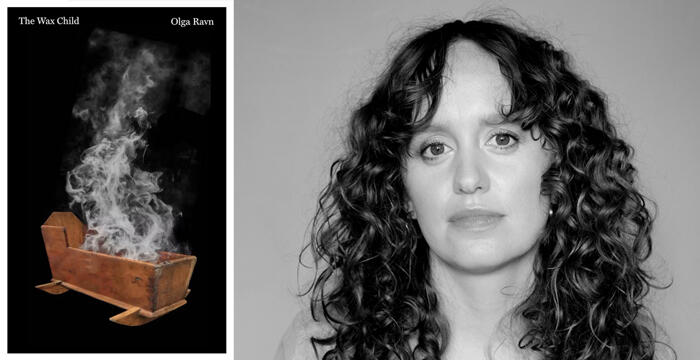
Set during the 17th century witch trials in Denmark, and relayed to us through the voice of a magically animated wax child of one of the accused, Olga Ravn’s new book, which creates something uncannily other from primary sources, has been heralded as a “devilishly subversive feminist anthem” and speaks as much to the present moment as it does to the time of the witches. We explore how the witch hunts and trials were an important part of creating a notion of state, family and self that we still live under today. We look at the fear of women gathering, at folk magic and alchemy, at animating the archive through ritual and the imagination, and much more.
If you enjoy today’s conversation consider transforming yourself from a listener to a listener-supporter by joining the Between the Covers community. There are lots of rewards and benefits of doing so and you can explore them all at the show’s Patreon page.
Finally, here is the BookShop for today.
Transcript
David Naimon: Today's episode is brought to you by Sara Jaffe's Hurricane Envy. Jaffe, author of Dryland, brings her keen eye and her formal ingenuity to subjects that range from queer parenting to the rise of the algorithm in the music industry, to gentrification and institutional claims on art, to post-punk culture, anti-Zionist Jewish identity, the rhetoric and realities of American safety. "The giggle to heart-pang ratio here is expertly one-to-one, and both columns of the ledger are brimming," Brian Blanchfield writes. Andrea Lawlor calls the book "Companionable, Illuminating, sharply observant." Out October 21st, Hurricane Envy is available for pre-order now from Rescue Press, the latest in their Open Prose series edited by Hilary Plum and Zach Savich. Now that I've been doing this show for 15 years, occasionally there is a conversation that happens where everything comes together as if by magic, where it might appear it is coming together with almost a magic effortlessness to it, an effortlessness that is entirely due to the many conversations that came before it that made it possible. This happened with Robert Macfarlane recently, and I spoke about it within the interview itself, where conversations as different as those with Jeff VanderMeer and Jorie Graham or Natalie Diaz and Naomi Klein, made it possible for me to meet Robert from the get-go in a deep place about his work. Today's conversation with Olga Ravn is similar in that regard, I think, but with a very different lineage, one that spans the entire life of the show, really, from early conversations with Sarah Manguso and Sheila Heti to more recent ones with Kate Briggs and Kate Zambreno, from Bhanu Kapil to Ursula Le Guin to Le Guin's biographer Julie Phillips. I'm really excited to share this conversation today with Olga Ravn. I'm going to bite my tongue and let the conversation speak for itself, and just say, if you enjoyed today's conversation, set during the witch trials of 17th-century Denmark, if you fall under the spell of Olga Ravn's world today, what better time to transform yourself from a listener to a listener-supporter by joining the Between the Covers community? Every supporter gets resources with every episode, which include the most noteworthy discoveries while preparing for the conversation. In this case, from Olga, about Olga, and other material brought in from Le Guin to Anne Carson and many others. There are a ton of other things to choose from, large and small. You can check it all out at patreon.com/betweenthecovers. Now for today's conversation with Olga Ravn.
[Intro]
David Naimon: Good morning, and welcome to Between the Covers. I'm David Naimon, your host. Today's guest, writer, poet, critic, and editor Olga Ravn, began her writing life as a poet, publishing her first book of poetry, I Devour Myself Like Heather, in 2012, followed by her limited edition chapbook Mean Girl, where none of the 250 copies published were identical, and then her second full-length collection, The White Rose, in 2016. During that time, Ravn also co-ran Witch School, a feminist performance group and writing school, and in her role as an editor for the oldest and largest publishing house in Denmark, she began to reissue the works of Tove Ditlevsen, which have since led to a renewed interest in her work worldwide, and to a critical reappraisal of it as well. In 2015, she published her first novel, Celestine, which one Danish critic compared to both Duras and Lispector. But it is after Celestine, however, when the Anglophone world received the first opportunity to engage with the work of Olga Ravn. Her arrival in English, thanks to translator Martin Aitken, was in 2020 with her novel The Employees. Brian Dillon for 4Columns says of The Employees, "In brief numbered statements delivered by the human and nonhuman crew of the Six Thousand Ship to a shadowy committee, Ravn seeds her narrative with direct and allegorical reflections on transhumanism, disappearing nature, and the ambiguities of being embodied. The novel is by turns queasily exact about what is seen—skin pitted like pomegranate, an object’s furrows oozing some nameless balm—and willfully obscure. Ambiguity is everything: 'I don’t know if I’m human anymore. Am I human? Does it say in your files what I am?'” Mark Haddon adds, "Beautiful, sinister, gripping. A tantalizing puzzle you can never quite solve. All the reviews say that the novel is, ultimately, about what it means to be human. What makes it exceptional, however, is the way it explores the richness and strangeness of being non-human." The Employees won Denmark's Beatrice Prize, was long listed for The Warwick Prize for Women in Translation, and the National Book Award for Translated Literature, and was a finalist for both the International Booker and for the inaugural year of the Ursula K. Le Guin Prize for Fiction. Her next book to arrive in English was her formally and emotionally daring book, My Work, with starred reviews from Publishers Weekly and Kirkus. Past Between the Covers guest, Kate Zambreno, says, "This novel from Olga Ravn, this new golden notebook, needs to be read by absolutely anyone who has known the quiet madness and claustrophobic happiness of the interior, especially mothers who also long for a life of literature. But this novel absolutely needs to be read by everyone else as well. Oh Olga Ravn, always inventing new forms, you are a genius, how do you do it?" Heather O'Neill adds, "My Work is ferocious, horrific, elegant, insightful, irreverent, and funny. Can a woman still be a person after motherhood? Of course not, Ravn argues, or rather, admits. And in prose, poems, and journal entries, she documents all the absurdity and repulsiveness of growing a creature in your body and then raising it. It is a magnificent and satisfying meditation. One of the most honest and revelatory works of fiction about motherhood I have ever read. Ravn’s writing is ecstatic, philosophical, and addictive." So it is with great excitement that we have Olga here today to talk about her latest book, to arrive on our shores, The Wax Child, out with New Directions, which, like The Employees, is translated by Martin Aitken. Kirkus declares The Wax Child in its starred review "a true masterpiece of substance and style," and Publishers Weekly, in its starred review, "a masterful blend of history and horror and a one-of-a-kind, devilishly subversive feminist anthem." Finally, Malcolm Gaskill adds, “Olga Ravn descends into a dark historical world of fear and danger, nightmarish fantasy, sordid suffering and blood. Magic is portrayed as a real power not only to be feared, but aspired to by an underclass of disadvantaged yet defiant women.” Welcome to Between the Covers, Olga Ravn.
Olga Ravn: Thank you so much. I feel overwhelmed. Thank you so much.
DN: Well, I love all three of your books in English. One of the things that I love about them is how porous they seem to each other. Even though they're discrete books with entirely different settings and scenarios, each one I read retroactively deepened my experience of the others. I think of David Mitchell when I talked to him, maybe a decade ago, and his notion that all of his work is part of what he calls one uber novel. Your three books feel like they are brought to life almost from the same subterranean mother root and are still, even now, open to each other's influence. But they're also porous not just to each other, but I think they're porous in other ways, too. One of them is how they engage with other disciplines. For instance, My Work travels through many modes and genres. There's medical transcription, there's poetry, there's diary, there's theater. The Employees began as an engagement with the work of a sculptor. The Wax Child's first life was as a musical theater production that you wrote called HEX that premiered at the Danish Royal Theater, a theatrical production that this book builds upon and is in conversation with. So my first two questions for you are to ask you to talk about both the interdisciplinary boundary-crossing nature of your work, where none of the books sit easily in any genre, to talk about this resistance around category, and then also about how HEX and The Wax Child in theater and literature, respectively, are related and different from each other.
OR: Thank you so much for saying that my books are similar. [laughter] People usually say they're so different, but I think you're right. I think increasingly it becomes clear to me that the way I work is I just have a sort of practice, which is like an everyday consciousness, I guess, where I engage with art and literature and theater and music and history and all these different things. You call it a subterranean mother root. [laughter] I think in my mind, I feel like it's a layer. I have like a layer where I am most of the time. Then everything that I am interested in or research is in the layer. It's very open. Then things can take shapes or suddenly shoot up and become something. Then in this practice, there's like a listening to, "Oh suddenly this little boat-shaped thing is coming along," that's really interesting, or it can be like having a collection that spans several years knowing that someday I would really, really like to engage artistically with this and I don't know what it is but I am collecting almost like, you know, the birds that like the shiny stuff, I don't know what they're called. So I'm not interested in the project at all. To me, it's more like a life practice actually, and I think that the books have become center because I finish them [laughs] and a lot of the other stuff is more private. But you're really right. To me, it's the same work. Yeah, it's all the same work.
DN: Before you talk about HEX and its relationship to the book, the book we're talking about is set hundreds of years ago, but after medieval times. But nevertheless, you've talked about how in early medieval times there were no boundaries between genres.
OR: Yeah, that was so inspiring to me.
DN: That's what I was wondering, you talked about how you find stories, recipes, notes, and a whole bunch of other things mixed together with a narrative, and I was wondering if you were aspiring towards a pre-modern writing style in that way.
OR: Yes and no, because I don't want to be conservative or nostalgic for the past, but I think there's definitely something to be relearned there. I remember when I was 21, I applied to the most important and prestigious Danish writing school at that point in time. It was the only program for writing. At the interview, they asked me, "Do you write poetry or do you write prose? Because both are in your application." I had real difficulty answering that question. At the time, I thought, "There's probably a right answer, and I really want to get into this school." It haunted me for many years, like, "What am I actually doing?" In the HEX school, in the witch school you described, we did some really crazy performance art, but we never really called it that. When I began my deep, deep dive into the witch trials in Scandinavia, I began reading illuminated manuscripts. It became a huge life-changing experience because a lot of these manuscripts will have a recipe, an image, a poem, a long doctrine about a saint. There would be no genre. It would be no problem. They are so bizarre and alive. The book doesn't really exist like we know it. It's more like an object. You're right. Then I realized, oh, it's because they hadn't really invented genre yet. I could talk about this forever. [laughter] There are all kinds of reasons in the history of art, but also in the history of cosmology for how you look at an artwork, what an artwork is that really interests me. What is the role of the work? Should it put forth a singular truth, the essence of something? Or should it be a tone that vibrates with the world around it as part of a chord? To me, that was a really freeing thought.
DN: Well, tell us a little bit about how the play and the book are related or unrelated to each other.
OR: Yes. Well, I researched the witch trials in Denmark almost just as a private interest, like a hobby for years. I did some different projects. I did a series of radio shows, and I did a little art exhibition. I did a memorial of sound, all of these little weird things. Somehow, this theater director that I knew a little, she got a notion about this. She had staged a Danish production of my work, so I trusted her. [laughs] She asked me if I could write something for her that was only based on source material. I understood her idea, but the problem that I knew almost immediately I was going to meet was that there is almost no source material about people accused of witchcraft where they speak themselves. They're always referred to in the third person and they're almost always described as being friends with the devil, being guilty, being evil, being all these things. So I said, "Yes, I want to write this, but I don't know how we're going to work with voice. I don't think we can do this with just sources." Then there were a lot of different movements at the time that happened that we put into the play. While I was researching for characters, we were doing magic actually in the rehearsing room. We were trying to reenact a bunch of these spells that I found in the archives. I was looking for voices, and I had a really hard time finding the voices of those accused of witchcraft. They were too far away. I think no matter what I did, it became historical fiction that rang false, with big costumes and speaking old-fashioned nobly. I really despise that kind of historical fiction because I'm not sure we can really understand the past. Or at least we have to understand it in a not very intellectual way. So we had this conversation that was very inspiring to me and the creative team about who is talking, what voice can we put on the stage? I realized that I had a problem. [laughs] Then I was just reading about cases, going to the archive almost every day, reading about more and more cases. I knew about this case from Olbo, which is the case in the novel, that there was a letter where one of the women accused of witchcraft spoke. That was interesting to me as actually a source material. I got a little deeper into the case, and I realized that at the center of the accusation was the creation of this wax child. I realized, "Well, you know I love a non-human narrator, so what if we put the voice in that? What if it becomes an object of remembrance or a portal to that time you cannot really reach?" So I wrote the first two pages of the novel, and I was like, "This can't be a play, but it can be a novel." So I actually wrote the novel parallel with writing the script. Some of the lines and situations were in the script too, but it became a much more experimental piece.
DN: This is perfect because we have a couple of questions for you that deal with research in relationship to the imagination. But before I play them, I wanted to ask you first about Denmark's contemporary relationship to its own witch trials. Because here in America, in the popular imagination, of course, we think of the Salem witch trials. But in Europe, I would probably think that what comes first to mind are the trials in Germany, because they were so widespread and so massive in terms of the sheer number of people who were accused and killed. How much are the witch trials in Denmark part of Denmark's own story of itself? Are they well known or are they avoided or are they erased?
OR: I would say they're not a part of the Danish identity at all. I think that's not singular to Denmark. I think that in a lot of European countries, the years of the fires are considered an irrational, irregular period that doesn't really represent how we really are. Also, writing The Wax Child, the Danish readership has been really interesting because the king in the book is the most famous person in Danish history. So it's really interesting to write up against this very popular guy. I think that it has changed a lot. I think there's definitely in the last maybe five years or 10 years been some soft reckoning with this period, also because it's slowly beginning to move into academia, slowly being something that you can actually study. But I think that no, it's not a part of the Danish self-identity at all. I don't even think the common Dane would know about the German trials at all. Then there are a lot of myths where the witch figure almost changes into a fairy tale area. I think actually a lot of people have their image of what a witch is from the Monty Python movie with King Arthur.
DN: Yeah. [laughs]
OR: I think that's actually almost a more well-known source. So just, for example, saying in a Danish context that the witches burned here were not burned at the stake is surprising to people. They were bound on a ladder and pushed into the fire. So while I was writing the book and also while we were doing the play, it was a huge part of the work to say, how in a respectful way can we describe this violence without making a spectacle of it, but also actually putting the unease on the reader to sit with.
DN: Well, we have two questions for you from other people that I'm going to play together before you answer, because I think they're both pointed in the same direction around research and the imagination. The first is from past Between the Covers guest, Canisia Lubrin, who was on the show for her book Code Noir, a book of 59 stories engaging with and dismantling the 59 French codes of slavery. Her next book, the poetry collection The World After Rain, arrives this winter and is described by Dionne Brand as follows: "How incandescent the language is, each line emitting light through the membrane of time and anticipated grief. The work has a rigorousness, the poet pushing through the ache of experience from the first to the last word." So here is a question from Canisia.
Canisia Lubrin: Hi, Olga. This is Canisia Lubrin. I'm a reader of yours. I've had stirring and far-reaching conversations with my students about your novel, The Employees. So I was pleased when David asked me to offer a little note to you for this conversation. This comes from my own personal fascination with how you manage strangeness in your books, how you work such a vast scope of materials into something precise and wild at the same time. As I understand it, there are activities you engage outside of writing that mark your literary practice. For instance, there's the exhibition in The Employees, magic in The Wax Child. While I know a lot of research is involved, it's also a huge pleasure to watch your imagination shape that stuff on the page. I'd love to hear you talk about this. Thank you so much for entertaining this curiosity. Thanks, David, for inviting me to offer this to Olga.
DN: Okay, so the second part of this question is from the novelist Neel Mukherjee, whose latest book, Choice, was described by recent U.S. Poet Laureate Tracy K. Smith as searing, poetic, and beautifully brutal. Choice reveals just how far the imagination, when buoyed by courage and conscience, can travel. One realization I take with me from Mukherjee's intrepid prose is this: to be honest in our living and to refuse despair is to assent to a whole new vocabulary of humility. So here's a question from Neel.
Neel Mukherjee: I hope you don't mind me calling you by your first name, seeing as we haven't met. But Olga, I was astounded by the originality and vision of your first novel, The Employees, when I was reading it as one of the judges for the International Booker Prize in 2021. Absolutely blown away, all of us. Now, your new book, The Wax Child, is even more brilliant. It feels like it was written in a long trance, as if you were having a vision. There, I've used that word again, vision. As if you were having a vision, so deep and unbroken is your immersion in the world of early 17th-century Denmark and the women accused of being witches. It was only while reading the afterword that I understood that you had researched real 17th-century witch trials in Denmark to provide you with inspiration and material and the scaffolding of the novel. The question I want to ask is perhaps the most difficult question one can ask a writer, because it's a question about an alchemy that very few writers can pull off. Namely, how did you alchemize and transform all that research into something so opposite of a research historical novel, something that's much closer to a dream vision kind of poem?
OR: Oh my God, to think to be so lucky to be read like this is so overwhelming. I feel really touched by these questions. Thank you so much for playing them for me. This is so interesting and it goes so deep into what writing and art is, and I'm so happy that we're just going there. I have so much to say. [laughter] And I hope it will somehow answer or otherwise pull me back. I think that what I have realized more and more through actually my research and meeting with the oral tradition of folk magic and all kinds of non-rational artistic experience is that there's a huge difference between learning and experiencing. What I realized while I was in the archives was I remember it clearly, I was sitting in the reading room, there's a reading room where everybody's quiet and they bring you the little thing and you don't put on gloves because apparently the fingers—it's a long story—anyways, you're in the system and you ordered something called file 123. You have no idea what's coming, and it's like a drug because you're looking through hundreds and hundreds of files and suddenly something's there. I was sitting in the reading room, and I think I had been researching for three years, and I'm reading this text about greeting the sun. I'm reading handwritten manuscripts and also typed manuscripts, all kinds of documents that had been handed into this folk archive where everything is anonymous. I'm reading about this greeting of the sun and it's so difficult for me to understand. It's like a description of a series of movements. The man looks to the West and lifts his left arm and lifts his right leg and puts the arm down and puts the leg down and turns to the South. Then I realized it's a dance. So I got up in the middle of this very quiet reading room, and I didn't say anything, but I just read the text as a recipe for movement. It was a dance. I began turning. So you actually turn around if you're doing it by yourself. I mean, I was high. I get goosebumps just talking about it now because I realized I cannot enter this sort of source material by reading alone. I cannot truly engage with it by just learning about it, reading about it. I have to experience and I have to engage with my body. There are a couple of things that were easy to do at home. I did something with my kids and with my husband, little rituals for having a good year at Christmas or whatever. Then over the years, I've become more and more ambitious because it's like a drug. So I'm doing more and more, and I'm doing more and more elaborate stuff. I think just at midsummer this year, we were 32 people out in the woods. I had prepared a bunch of stuff. The reason I'm doing it is because experiencing this material suddenly makes you, if you're very, very quiet, you can hear the past. There is some sort of entrance there that started as research, but through the years has become more and more a necessary part of my life. The difference between learning and experiencing is how you can move away from the weight of the research. That's what you usually see, that the book would be weighted down by all the knowledge. But if you're not researching because you want to write a book, you don't need to put all of it in the book. There's no weight. It's actually an interest. So researching for the pleasure of the research is something that I really like. Maybe I will use it in 10 years or 15 years. Who cares? With the trance thing, that's really true. After the years where I had been in the archives reading the secular authority documents, ledger books, and court documents, I became really fed up with meeting this very violent text, which was about punishment. I used such a long time reading about torture and finding out, were there actually torture? What kind of torture would be used on this specific island in Denmark? I really needed to find out. At some point, I was like, "I can't do this anymore." I can't read anymore about these shadows that are accused of witchcraft, where they would say, "She would go happily to her death." I needed another archive. But there is not anything, because nothing is written down. Until I realized that I could use folk magic as an archive. Literally, because in Scandinavia, there are several folk magic archives. Norway has a really great one. So it was like there was one language mode in the description of the court cases or in the ledgers with the economics of a trial, the expenses of a trial. It was a certain language mode with a set of values. I had a really hard time engaging with that language literarily. But I realized in the Folk Magic Archive that there was a very profound, playful literary tradition there. They were using all the literary tools that we know, like meter, rhymes, repetition, concrete poetry, assonance. There would be variations and variations on the same spell. All the variations would be so local. It would be written in the hand by this person that was living here. They were all writing about how to protect their cattle. There's so much about the cattle. Oh my God, so important with the cattle. When I realized I wanted to write a novel about this and had a secret novel underneath the play, I knew that this was what I wanted. I wanted to engage with the literary tradition of folk magic. I wanted to get closer to that language, also as a language that could collide with the language of the court case. Because it's a language with such a different movement and such a different memory. It's two very different ways of engaging through language with the world. So that was a really pleasurable period, writing that first draft, because it was almost just like a listening. Then all the shame and editing can come later.
DN: Well, in the spirit of the alchemy of the magic that you perform with your research to make it something utterly otherwise, yet somehow also still rooted in the real, let's hear the opening short first chapter of The Wax Child.
OR: Yeah. Oh my God, that's one of the other passages you picked. I just sat down and read it earlier today. I was just like, "This is so difficult to read." It's like really one long sentence. [laughter] So I was really happy that I got it in advance because I was like, "Jesus Christ, I've never read this in English." Okay, okay.
[Olga Ravn reads from The Wax Child in Martin Aitken's English translation]
DN: We've been listening to Olga Ravn read from The Wax Child in Martin Aitken's English translation. Well, before we talk about this unique narrator of yours, I wanted to ask you about the ships in these opening pages, which are not a focus of the book. Even so, I never forget them after they're mentioned in this brief way at the beginning. In my own looking into the history of witches in Denmark, I frequently came across the story in the late 16th century of the 14-year-old Princess Anne of Denmark, who the Danish fleet was supposed to bring to Scotland to marry King James of Scotland. Unusually bad weather disrupts the journey to the wedding, with her ship almost sinking, and Anne is then waylaid in Norway to wait it out, and ultimately King James sails to Norway and marries her there instead. The Danish finance minister is blamed for poorly equipping the ship and not anticipating the possibility of a storm, but ultimately, the blame is deflected by him onto women he accuses of witchcraft. A witch hunt ensues, and the first major Danish witch trial occurs where ultimately 17 women are burned. A Danish woman who was already in jail for witchcraft prior to this, and was called the mother of Satan, is the first person to confess that devils traveled to the ship in empty barrels on the sea and caused the storm. There's also an interesting, I think, transnational, almost contagious nature to this witch fever, insofar as Denmark was brought into this witch paranoia because of the recent witch trials in Germany, where nearly 400 people were executed. Then King James of Scotland himself, hearing about the Danish trials, starts his own hunt and trials in Scotland in relation to the same ship. His trials lead to many more executions by burning in Scotland's first witch trials, where one of the first women to confess, and this is always under torture, Agnes Sampson, whose body was shaved until they found the witch's mark on her genitals, she was said to have a wax doll of King James. None of these witches are part of your book. I don't believe this is the scenario of your book. The ships in your book, I don't believe are royal ships, but rather the ships of colonization, where the living bodies within their hold are possibly slaves from Danish colonies. But talk to us about any connection you see or are possibly making regarding these ships of extractive wealth and riches, and the witches hunted down at the same time. Is there something about how class and power dynamics are shifting in Denmark with the colonies and with conquest abroad in relationship to this witch focus?
OR: Yes. [laughter] I think to answer, I will start very far away from the novel and then maybe we can get closer. But this period, the novel takes place for maybe, I don't know, 1585 to 1621. But most of it is around 1620. This is a very important period in Danish history and in European and Western history. Usually, if you go just a little bit back into the history books, the witch trials would be seen as the last cry of the Middle Ages before we moved into the Renaissance and the Enlightenment and became wiser. But all recent research shows that that's completely false, that the witch trials are actually a very important part of the beginning of the modern age. Just as you described with Scotland and Germany, what we will call a witch fever, it's not a fever at all. It's actually a very well laid out campaign where the accusation of witchcraft is used by the secular authorities, at least in the northern parts of Europe, to train, perhaps you could say that, to train the population into becoming the citizens that you need to build a state. Because the state is actually a quite new invention at this point in time. I mentioned also the centralization of power is also very, very new at this time. This king, Christian IV, that is in the book, he's a very important figure in the consolidation of Denmark as a nation. We don't know if he was friendly with James in Scotland, but he probably was. Maybe it's a stretch, but you could theorize that these heads of states were looking into, oh, how are they doing in my neighboring country? We have letters of the Danish king bragging about all the witches that are after him and how he punishes them because he's so powerful that even the devil, in lieu of the witches, cannot harm him. So I think those ships are there in the starting pages because I consider the accusation of witchcraft as a tool that's central to building the same state that's built on slave labor. Denmark has a history of slavery that's almost not recognized at all. I'm not an expert. But there was something about knowing also that the first slave ship arrived to the States in 1619 and writing about these women walking around in a town in Denmark. The beginning pages, they make like a zoom or they're zooming in and out all the time as like an opening of the world. So we have a locomotive, which is, of course, an invention that comes much later. So there are some points that the narrator is just touching its little coordinates, or almost like different voices rising out of the darkness. The narrator, the wax child, will see or hear a little here and there before the story really starts. So I think this extreme violent push into modernity at this time had so many different, how do you say, arenas of violence. This is one of them, the witch trials, but they're linked. One of the things that the king and the secular authorities, at least in Denmark and Norway, because it was colonized by Denmark at the time, what they really succeed in with all these laws that are coming in this period of the noble against witchcraft is the total erasure or closing down of a cultural mode of engaging with each other, with everyday life, with parties, with the sexuality, with nature, that takes form through quite honestly very innocent folk magic in order to create a modern citizen. I mean, and also in order to, how do you say this? In order to disenchant actually the word so it can become commodified, I guess. Also so the singular body can become commodified.
DN: So when you say, you said in one interview that King Christian IV, the king that you say is very beloved in Denmark.
OR: Oh, he is.
DN: In celebration of 100 years of reformation, he instituted three laws, no luxury, no lewdness, and no witchcraft. You say in one interview, "These laws were meant to discipline everyone. I feel like we're still in that state." When you say you feel like we're still in that state, that these are not necessarily historical questions, but perhaps also contemporary ones, is that what you're referring to when you've just said like the arrival of the modern citizen, the arrival of the modern state, the arrival of the commodification of perhaps the self or of nature? Is that what you mean, that we're still living really in the extension of this period now?
OR: I found this so difficult to answer because I want to answer yes and no at the same time, because, of course, we're not living in 1620. So many things have changed. But it was very interesting to me to find the writing of new laws that tie together qualities that were suddenly criminal that still to these days are tied together. To me, it explained a lot. It's not like patriarchy started in the 1620. I mean, of course, I know that. But it's at least a period where it becomes so obvious that, for example, as you say, witchcraft, what was the English words?
DN: No luxury, no lewdness, no witchcraft.
OR: Okay, so no luxury was about class. It was because the common people were wearing too much jewelry, and they were having too long weddings. They had to be put in their place and work. You need to be able to distinguish between the noblemen and the normal people. So no luxury for them. The lewdness was about, mostly actually about, intercourse before marriage, which was quite common and not frowned upon at the time. The last one was witchcraft. It was a broadening of understanding what witchcraft is to also include what today we would call maybe white magic, like healing and blessing the field and stuff. So these three new prohibitions, if that's a word, these three new laws that are stated on the same day, we can understand them as what the authorities would like their citizens to be. I still feel that those are very strong values in today's society. There were these intellectual ideas at the time that women were weaker than men, both spiritually and intellectually, and physically. There was also this notion that the devil was actually really real, and he was everywhere. He was really trying to seduce the human souls in a battle between God and the devil. So he was everywhere. Who is easier to seduce than the feeble-minded? That was how the accusation witchcraft were tied to women because it was believed they were easier to get on board by the devil. [laughs] It's not new. I mean, it's a notion that's been there before. It's so difficult because at one point you want to say, of course, it's not the same. Then you're like, this is completely the same. It's totally the same. This entire movement to the right, the family values, like it's the same notion of what a good family is. That was established in Northern European by the Reformation. Especially a hundred years after, not when everything was open and Luther was doing his thing or whatever, but when it was consolidated and the king wanted to also show all the other kings his strong states and all the money they made and how law-abiding all his little people were, you know? I think that the society we live in that form us is very influenced by this view of what a family is, what gender is, and the division of work, the division of public and domestic life is also something that really arrives in this period. So, yes, I don't know. It's a very long way to say yes.
DN: Yes. [laughs] Well, I want to eventually spend time with the remarkable fact that this novel is narrated by a magically animated wax child. But before we do, I want to first spend time with how you engage with objects more generally across your work. Because your relationship to objects is one of the strongest connections between your three books, which otherwise might seem on the surface very different. One in 17th-century Denmark, one in the contemporary moment, and one in the outer space of the future. The most obvious example is your book, The Employees, with its mysterious objects. The sculptor you were collaborating with around this book said about her own work that she was interested in making forms that were not really human, but still living. It feels like your book blurs the boundaries between human, android, and object, especially because we don't often know when the person's speaking, if they're an android or a human. But I think your book, My Work, one that is perhaps least obviously about objects, is really also about them. I agree with Eliza Smith at Lit Hub when she says, "On the surface, My Work seems quite different in scope [from The Employees]...but something tells me that interacting with humanoids and sentient space objects have more in common with the first stages of motherhood than one might think." Here are some quotes from My Work, translated by Sophia Hersi-Smith and Jennifer Russell: "The objects were a means of approach she understood the child through. The objects that belong to the child's world. She understood that the child was growing through the increasing size of his onesies." And, "Anna suspected this deep union with the objects of the house was the result of her upbringing. Had Anna been taught not only to be a housewife, but to be one with the house itself, to be an object among objects? Had the work of the home given her a particular sense of the life of objects?" And, "But was the real reason not that writing brought Anna closer to all the objects in the world, and that in this way she became less human, that in her writing she could seek to become an object? Here, happily objectified by writing, she felt more like Anna, more alive than otherwise. Was Anna not human? It was not through housekeeping, but through writing that she wished to approach all the objects of the world. Was writing in that case a form of housekeeping, a way of bringing things into order? When Adam named everything in the Garden of Eden, was he in fact doing the work of a housewife?" Of course, in the latest book, we now have an entire book narrated by an object, an entire narrative shaped and directed, and voiced through an object. So what is going on here with objects, Olga Ravn?
OR: [Laughs] What is going on?
DN: [Laughs]
OR: Maybe it's more interesting or fun to talk about feelings than intellectual thought. I have with these very intense experiences of things and objects not being alive, but being. Not in an extraordinary way, just as a way that it has always been. I feel very much like an object a lot of the time. It can be very scary, but sometimes I think that the feeling of being an object is changing into the feeling of being one big ear, [laughs] which I also think is a way of looking at The Wax Child as a narrator. I think of a mode of existing in the world that is a complete listening. When I enter that stage, I feel that immense information is coming at me, not from people, but from the material of the world. [Siri, in Danish] Okay, my phone answered.
DN: [Laughs]
OR: That was Siri answering in Danish. That was really scary. She was like, "Yes, yes, you're right."
DN: [Laughs] I love that. So here we have an object just talking in the middle of our conversation.
OR: Yes. So I think we have confirmation.
DN: Yes.
OR: I think that it has only been deepened by this practice of folk magic. There's this old medieval medicinal concept called the doctrine of signatures, which isn't the idea that there is a God that created the world, and he has put his signature everywhere. Not for only the human to read the world, but for the world to read itself somehow. It's used in medieval medicine, such as if a flower resembles an eye, it has a signature of God to tell you that it would be good against an infection in the eye. Eating a walnut would be good for the brain. Underneath this notion, there is the idea that everything has the potential to have the signature of God. Everything is a letter. Everything is a sign to be read. Everything is language, actually. I don't know yet, but I know that this has some relation to the notion of what a self is. There's some border between what we consider ourself and the rest of the world, you use the word in the beginning that becomes porous if everything has the potential to be vibrating with this tone of being. Yeah, it sounds almost religious. It doesn't feel very religious to me. It feels very matter-of-fact. I think that it's true with the quote from My Work that this is something that I really, really want to get closer to. Writing is a really good way of getting there. [laughs]
DN: Yeah. Well, when I talked with Robert Macfarlane about his book, "Is a River Alive?" we talked about something that I think relates—that you've just spoken about—but also I think in his book relates to this question of both witches and of objects. Because his book opens with a sweep through history, and part of that was how the Christian Reformation, both in Europe and in the Americas, would target and punish people for going to rivers or to holy springs and speaking to them. That a life of animism was a norm on both continents before this, where things we now mainly consider inanimate were actually part of our imaginary, that we were in a bidirectional relationship with them, something that was literally whipped out of existence by the church. This re-enchantment of the world is throughout your work, but also, as you've alluded to today already, a life practice. On the Louisiana Channel, you do an episode called Occult Work and Maternal Gothic, where you talk about how you are into making ink using 500-year-old recipes and about the use of oak galls, which are plant growths made by wasps on oaks that have been used for 2,000 years to make ink. That The Canterbury Tales were written in gall ink, and that it was used to sign contracts because it doesn't fade. Many of the so-called black books and grimoires full of spells were themselves handwritten sources too. You say that more and more you do things, and you've said this today also, that you do things first and then you write about them, and that the doing of them is a different form of research. This is true about folk magic rituals and spells, which you practice. The Wax Child is full of these, such as when one woman asks what to do if she wants the child to come soon, she is told to take a bath in warm water in which lads love leaves have been steeped for some time, and then to masturbate in the bath. Someone else then responds, that is no more than any other wife in the city could have told me. I thought you were a witch. Which, of course, implies that this knowledge is widespread. You've already talked about folk magic rituals and a little bit about the place they occupy in your life and how that then informs your writing practice. But I wondered if any of this in relationship to objects and animism, which again, there seems to be a pivot around the Reformation, if that sparks any more thoughts for you.
OR: Oh, my God. Isn't it typical that you cannot have a relationship to a body of water that needs to be closed down? [laughs]
DN: Yeah.
OR: I think just a small thought about that is that at least in Northern Europe, it's actually not so much the church that is driving this criminalization of animism as it is actually the secular authorities, which I just found so interesting because we can see it in almost in a Marxist sense of disenchanting of the earth as a way of commodifying it. Where to begin? [laughter] Those are great questions. I think that what very quickly becomes so obvious when you look into these stories of witchcraft is that a lot of the things that people are accused of, it's not really possible. I mean, I don't really think that they changed into rats. It could happen, but I really don't think so. Sometimes the witness statements almost read like jokes. You're like, "How on earth could they believe this?" Of course, I'm saying this from my point in history with all my prejudices and blind spots. But something that becomes very clear is that they don't always actually know what they're accusing people of. Nobody really actually knows what an accusation of witchcraft is. In Denmark, the law against witchcraft comes out in 1617, and in the next maybe five or six years, almost half of all the witch trials in the history of Denmark happen. So it is like a craze, as you say. It means that, for example, from one day to another, standing too close to someone can become a crime. I remember when all the corona laws came here, we had a lot in Denmark, it reminded me of how quickly a society can incorporate and internalize something to be forbidden, taboo, a crime that wasn't before. That was something that I found really interesting in this period, that it's not only a bunch of actions or folk magical stuff or dark magic stuff that's being criminalized. It's sort of a cosmology that's being criminalized. You can call it animism or whatever, but this notion of engaging with the landscape and thereby the objects, the river, the lake, the stars around you, becomes criminalized by default, at least. I'm reminded by this quote by Walter Benjamin that I had running through my head when I wrote the novel, which is something like he's going to the observatory, where you can see a model of the stars. He says something that he's like musing about how all these great scientists map the stars and we just lost the notion of what the stars are in the process. Then he says something like, "Only in communion, only together, we can enter into ecstasy with the cosmos. By ourself, the own individual stands underneath the stars in a daydream." There was something taking the notion about animism even further, not saying this is not only about thinking that there can be some sort of life in the world around us, but also that we cannot engage with it unless we do it together. That ties nicely into a bunch of other laws in Denmark at the time, where a bunch of traditional ways of partying also became forbidden. So a bunch of common secular parties tied to different life occurrences that maybe had some sort of flavor of folk magic or were too sexual that became forbidden. All in this movement towards, I think, actually the nuclear family.
DN: Well, we have another question for you, this one is from the Danish writer, poet, and translator Harald Voetmann.
OR: Oh, my God. Oh, my God.
DN: The third book of his trilogy of three historical novels is called Visions and Temptations, and it's just out with New Directions.
OR: He's so great. Oh, my God. He's so great.
DN: It was called by Publishers Weekly in its starred review, a not-to-be-missed masterpiece of morbidity. Meghan O'Gieblyn for the New York Review of Books says, "Ultimately, the trilogy is not satirizing science so much as systems themselves and the dominating impulse that, much like the male dragonfly, tends to murder what it loves. The human desire for knowledge begins with mystery and awe—the bestiary, the lapidary, the saint's mystic vision—and calcifies into dogma, scientific logs, religious doctrines. Yet these novels suggest other ways of knowing." What's great about that quote about the male dragonfly tending to murder what it loves is it's exactly what you're saying about Walter Benjamin, the stars getting mapped, and then in the process of the mapping, losing sight of what stars are. So here's a question for you from Harald.
Harald Voetmann: Hi Olga, this is Harald from Denmark with a question for you. I was reminded of your novel The Wax Child recently when I visited an exhibition at the Royal Library of Copenhagen, where they showed a lot of their occult books, most of which were from the time you are writing about, the 17th century. You've probably read many of these while researching. There were these fine and expensive books about alchemy and hermetic mysticism on the one hand, and then there were old ragged grimoires and notebooks from the people who practiced magic around the country, trying to heal the sick and protect the crops. So two very different sorts of magical practice, if we can call them that. The Danish king Christian IV, who is perhaps the biggest villain in your novel, he was terrified of witchcraft, but he was into all this other stuff, hermetic mysticism and astrology, and alchemy, some of which bordered to science, but still contained a lot of hocus-pocus. So my question is, how would you compare these different mystical arts from that time, and why do you think one kind of magical practice was persecuted, while the other was celebrated by the king and the nobility?
OR: Oh, my God. Everybody should read Harald Voetmann. We're all standing on the shoulders of Harald. He's so great. Oh, my God. Thank you so much for reaching out to him. I feel like I'm in an episode of This Is Your Life. [laughter] Oh, yeah, I went to that exhibition. It's really good, actually. It's very true. There's like a room with alchemist manuscripts that are beautifully illuminated. Then there are all the little informant books just with like a record cover. You can see it spin in the pocket. You can see hands have turned the pages so many times. I'm always more drawn to that. In the beginning, I always felt like alchemy was giving me like art bro vibes. But what I'm saying is that it's definitely a branch of magic that belongs to the noble. Usually, the king or the prince or whatever would have like an alchemist as part of his court. That's also because alchemy is very expensive to practice. It's very expensive. It is this interesting crossover of science and not science. It can be so beautiful. It can have so much poetry in its descriptions, but it is ultimately about the individual winning over nature through alchemy making gold, through alchemy making the stone that can give eternal life. While the little magic books at the same time are part of, domestic life didn't exist as we know it at that point in time, but part of domestic life, common life, made by anonymous people, passed on as the same little things our parents tell us to do when we have children of our own. It was not tied to achievement. Alchemy is about achievement. Alchemy is about winning over the elements, getting the secret out of elements of the nature, the alchemy has a chronology in it. This story that something is going from being, I can't remember all of it, but like from the black to the red to the white, a transformation into a higher state. It can be an object that becomes gold. It could be you as an alchemist. But there is this notion of almost winning, winning in magic.
DN: Yeah. Also, a hierarchy too, right?
OR: Yeah, there's a hierarchy and there's an idea of the huge achievements, which I think mirrors an old-fashioned idea of what the artist is. Like the idea of winning over the medium, making a perfect sculpture, making a perfect painting, writing the novel of your generation, and striving towards perfection. I think that's the most boring thing in the world. Also, for what? [laughter] What do you do when you're finished? You know? Tying back to animism and folk magic, there was this, she just died a couple of years ago, this amazing Danish, and she's part of the exhibition, this amazing Danish practicing witch, she was also a writer. I'm very influenced by her. Her name is [inaudible]. Just before she died, she gave this huge, amazing interview. The journalist asks her, "Okay, you're wearing this amulet. Do you really believe it? Do you really believe it? Will it change anything? Will it do its magic?" Then she says, "Oh, silly you. The transformation is inside yourself." That's how the amulet works. It's not alchemy. It's not changing anything to gold. It's not changing anything in the natural laws, but it's changing something inside the one who wears it. I think the small magic books is very much about that interpersonal transformation. I have experienced it so many times when we're doing these folk magic rituals with my friends and acquaintances that they keep coming back for that. We can all feel it, the air becomes thick, time changes, it's almost ecstatic. Maybe it's just for 30 seconds, but it's almost as if you enter myth when you're doing some of this stuff, and you can just sense that it's been tried so many times. It's almost as if you have muscle memory or something. You recognize the work of many, many, many skilled artists in there that did not care or have the possibility of getting praised for their achievements or getting rich or whatever. Of course, a king that is all about a hierarchy loves the idea of the human victory over the elements, which alchemy is about, while the other much more communal magic is actually taking power away from the center. It's not about the center.
DN: Yeah, I love that. Well, I want to finally return to and spend some time with our animated object narrator, the Wax Child. As a first step, who better to hear from than a scholar of early modern history with a specific focus on witchcraft, Malcolm Gaskill? Hilary Mantel said of Gaskill's last book, The Ruin of All Witches: Life and Death in the New World, "Malcolm Gaskill shows us with filmic vividness the daily life of the riven, marginal community of Springfield, where settlers from a far country dwell on the edge of the unknown. His attention to their plight—material, psychological, spiritual—goes far to explain, though not explain away, the alien beliefs of a fragile, beleaguered community, torn between the old world and the new. The clarity of his thought and his writing, his insight, and the immediacy of the telling, combine to make this the best and most enjoyable kind of history writing." Here's the question for you from Malcolm.
Malcolm Gaskill: Hello, Olga. As a historian of 17th-century witchcraft, I see quite a lot of novels on the subject, most of which struggle to capture the ghastly, disturbing strangeness of the past. Yours does this admirably. Many congratulations. I thought it was particularly ingenious to tell the story from the wax child's perspective. Why did you decide to do that, and how did it influence your construction of the narrative with all its dark insights into pre-modern life?
OR: I feel so lucky with all these questions, and also just to think that he read something I wrote is amazing. I mean, I just walk around in my little apartment, you know, writing these things. Yes, the wax child. [laughs] Well, I engaged with this part of history for many years, thinking that I would never be able to write a novel about it because I actually really dislike historical fiction, because I sense the contemporary in them trying to hide. In that sense, The Wax Child is almost like an anti-historical fiction book because I wanted to speak or I want the book to speak from a point where this was in the front from the beginning. Like, we cannot actually know what happened. We cannot actually know. We cannot actually access this. We can only imagine. How do I put the action of imagining in the front of the novel all of the time? Maybe I can use an unreliable narrator. Maybe I can use a narrator that is familiar with the world, but at the same time doesn't understand it at all, which is the wax child. It's almost like a Pinocchio figure. It longs for the humans, but it still doesn't really understand always why they're doing these silly things. As an object, it also gets access to knowledge from other objects. So it's like a representative from the world of the things. Yeah, it became my portal.
DN: In honor of our wildly omniscient narrator, let's hear a passage as one example of how this voice and figure can move and get access and share with us what it knows. Because in that sense, it's far more powerful, a narrator than any human could be.
OR: Oh, yes. That's also just like a trick, you know. Let's make a narrator that can do it, know everything but without being omnipotent. That's great. I hate omnipotent narrators. They don't exist. "Why are you telling me you know what everybody's thinking?" But this narrator thinks it knows what everybody's thinking. [laughs] It's so fun that you picked out this passage because it really shows the different language modes of the novel and how they are almost in collision.
[Olga Ravn reads from The Wax Child in Martin Aiken's English translation]
DN: We've been listening to Olga Ravn read from The Wax Child in Martin Aiken's English translation.
OR: How is he able to do it?
DN: It's amazing.
OR: It's crazy.
DN: When you were talking about the kings having their own alchemists, I listened to you read. You're so good at reading this in English, I can't imagine it in Danish. But I'm thinking, "I want Olga to be my…" If I were the king, I would want you to be my witch. [laughter] Not like a witch to be persecuted, but like in the royal court.
OR: I would love to be a witch.
DN: [Laughs] Well, we often get this repetition of, "And I was in the king's ear." For instance, 30 pages earlier, "And I was in the king's ear and I was in the king's mouth and I was in the king's loose tooth and in the quick silver of his liver." This repetition, both within a given passage and also across similarly constructed passages throughout the book, it feels incantatory, almost spell-like, and I also think it shows your background as a poet. Two other mirrored examples, 40 pages apart, go, "I was a wax child. I was the servant of my mistress. I was a dragon doll. I was a walnut dropped by a magpie from a great height. The shell split into two as I struck the ground, exposing the kernel." Then later, "And I, I am a wax child, secreted from the scaly glands of the honeybee's abdomen, of rosehip, propolis, pollen, dread, quince, longing, yeast dough, age, and ever young with infinity's secret in my folds." So first I'll just bow down to you and Martin for those lines.
OR: In the Danish version, the list of stuff, it's just on the back side of the book.
DN: Oh, that's amazing. But thinking of this alive wax figurine, I also think of something you said on the Louisiana Channel about your interest in the doppelganger figure in horror literature, which you employ a lot. You talk about how it's a motif in Gothic literature by women and also in Victorian literature, stemming from the experience that one has to play several roles and how the multiple roles cause the idea of an authentic self to disintegrate and become porous, perhaps in a similar way to how your books trouble the notion of a freestanding individual book. In your novel, My Work, the narrator says, she names herself Anna after the Anna in Doris Lessing's The Golden Notebook in order to distance herself from herself. There's an explicit tension in that book between I and she. There are also lines about doubling, like, "And if dreaming at night is also living, is part of experience, and writing is also dreaming, then writing is twice as much living as anything else. But life is doubled here because the words remain long after they are written. Writing continues its own life." And, "Is this the reason why we humans have invented lying? Not to hide our intention, but to double it?" There's this amazing scene in that book where Aksel and Anna have had their first child and Aksel recounts to Anna how the nurse has taught him how to change a diaper and Anna laughs because she immediately is able to dress and undress the child with skill and confidence from the beginning not because of something innate or genetic in her but through the indoctrination since childhood of thousands of dolls being dressed by Anna's hands. Lastly, I want to bring up your successful revival of interest in the work of Tove Ditlevsen, how her poetry was criticized as being written in outmoded and unfashionable forms, as if her work were in a corset, where you say, "It’s clear that Ditlevsen has squeezed herself into the corset of her own volition. She has chosen this fixed form, these old-fashioned rhymes, a form of misogynist poetic control. But perhaps Ditlevsen didn’t have the same opportunities to be free. One might ask whether the experiences Ditlevsen writes of have anything at all to do with freedom. Are they not precisely about a lack of freedom? About lost girlish dreams, about pain inflicted in a distant childhood, about husbands who walk out and children who look up at you strangely, and you remember once again that you are their mother? What I’m trying to say is that some of Tove Ditlevsen’s poems work deliberately with worn-out language, with sentimental language. With the corset. With the cliché. It’s the voice of Eve in the poem 'Eve,' who says: 'That’s why my mouth has wilted, it has kissed too many men, / it has sung too many songs, it will never sing again.' For me, this has always been a model of how you could write as a woman. Not the only way, but an important way. To embrace the image of the doll and speak from that position, cast aside like Eve in the poem, with nothing but old, worn songs on your fading lips." I love this embracing the image of the doll, which of course you've just done in The Wax Child, but in this investigation of her poetry and willfully recasting herself within a constrained form and faded form, which also seems to then harken back also to objects as things that are disregarded as well. But talk to us about doppelgangers and dolls and writing like a woman.
OR: It's interesting because while you were talking and reading these quotes, I think I had the thought that what you're circling is the difference between voice and self. I'm really, really interested in the voice. It always begins for me with the voice. The voice, when you sit down and you write an "I," you already created a sort of doppelganger. It's just a word. It's just a sign. I think that if you have already had the experience of losing your eye, of losing your freedom of movement, freedom to define yourself, this is quite an easy concept to understand. As soon as you speak of the self, it becomes double. Or as soon as anyone speaks about you, you become double or triple or whatever. When I'm writing, I'm so interested in this deep existential question, which is when you write, who is speaking? And I think probably a lot of writers you've interviewed would say the same thing that you get the sense when you're writing at some point that the ink witch is doing its thing and you're there for the party. That's also what I'm talking about writing as a listening, that it's at some point you find a sentence almost that can carry a book and then it's just a sort of trying out and it was the same with The Wax Child with these very, very long poetic sentences where I just kept trying to see how far can this sentence go, how elastic is this language. "Okay, it's extremely elastic." The thing you read with the propolis, where it's just a list, that's just me saying, "Okay, this voice apparently really likes to list things. How long a list can I make before it breaks over into pieces?" So it's also just me trying to understand the voice, of course, because that is an act of writing, and then there will become more pages, but actually also just to engage with language, a language that moves in that certain way, and to see what that voice and that mode of language brings that's not from me, that's not mine.
DN: Well, I loved how you say about the movement of language, how you moved your dancing while I was reading that list. Because it does have a music. It has a propulsive, rhythmic element to it.
OR: There's something hysterical about a lot of my narrators. It can be poetic and serious, but there is something about pushing the sentence or the thought or the emotion as far as one can that I really like. [laughs] I mean, when I wrote My Work, I knew from the beginning that I wanted an unreasonable voice. Like a child being sour about a little thing, like that kind of unreasonable. I think that writing like a woman, I think that through history, a lot of writers that because of some circumstance, have been marginalized or put in a box of minority or whatever, they're usually not given the luxury of imagination. We read their books as completely autobiographical, which also means we do not believe that they can invent a voice. We do not believe that they can describe their own self. They can only be one individual telling their story with no literary tricks or power. That was how Tove Ditlevsen was read in Denmark for many, many, many years, for centuries; as if she had no formal consciousness. It was just like running out of her and not giving her the privilege of working with voice. Perhaps because that voice was not recognized as something of literature. I see, I mean, I'm much fortunate. I'm a white woman. I can write books and most of the time they don't think it's about me, but not all of the time. But this is something I think that we, as readers, just in society, have to be aware of who is given the luxury of another voice in themselves. Also, just as something that is extremely marketable, like expectation of young writers to write their own personal trauma as something that really sells, that I have huge difficulty with, I must say.
DN: Well, before we spend some more time with "writing like a woman," introduce us to the central woman in the book, a real-life figure, the creator of The Wax Child, and, uncommonly for a woman accused of witchcraft, a woman of noble blood.
OR: I always forget when I talk about The Wax Child to say that it has a plot and stuff. [laughter] I'm all like, centralization of the state. Yeah. No, yeah, there's a story. There's a story. Christenze Kruckow was a real person that lived. All the characters in the book were real people. I thought about her like the main character in Orange Is the New Black. That I could use this noble woman that people would find interesting and that had a lot of court documents in her name. There was a lot of archive because she was noble, so she was more important. But that I could use that to actually tell the stories of some people and some life stories that were more in the fringes of the archive. So Christenze is some kind of Jane Eyre character. She's a noblewoman. She has a title, but she doesn't really have a family. She has a brother. She's poor. So she actually works like a lady/servant, I guess, at this manor. She's the friend of the lady of the house. The lady of the house, Anna Bildt, has like 15 miscarriages, which was something I really considered taking out of the book because it's too much. But it just kept on coming up in the sources. I also thought this is a really, it's not fun, but it's a peculiar part of Danish history. Like this is crazy. So I couldn't help myself. I put it in. So Christenze is in this house with this woman that's experiencing this tragedy over and over. In the end, she accuses Christenze of being a witch that has caused all these miscarriages. So Christenze, and this is all like in the sources, flees. Actually, she travels all over Denmark in a period of years until she pops up again in the documents in Aalborg, I shortened it a little, you know. Then she flees to a city, the big city at the time in Denmark, where she quite quickly finds her people and has like a small gang. When I read the source material, I swear to you, also after some years, you know how to read sources. You know how to read court documents. It's almost visually as if the stories are coming up from the pages. You're like, "Oh, Apollonia. Okay. Accusation of thievery or being a thief again. Okay. Turning the pages again, thief." You know, so these stories that were around Christenze were really vibrant.
DN: Well, let's hear a final reading, which engages very directly with questions of gender. You mentioned to me was also very popular in the Danish version that people love to hear this section.
OR: They always ask me to read this one. I think it's because it's the most political page in the novel, because it just puts a gendered aspect in your face. It's a scene where the king's lieutenants, which I didn't know, but they were very important at the time. I usually explain this like you know the Disney movie Robin Hood, the wolf that goes around the sheriff, that's the role of the king's lieutenants, and they were everywhere. Each city had one, and they were extremely powerful, and I have them here in this text reading in different books, and everything they read, all the quotes are from real sources from that time, which is to me hilarious. I mean, you must laugh because I don't want to cry over it. Okay, let's read this one.
[Olga Ravn reads from The Wax Child in Martin Aitken's English translation]
OR: [Laughs]
DN: So good.
OR: I just love the thing about the dick. When I was reading that in a 400-year-old book about how to spot a witch, I'm telling you, I was laughing. I was laughing so hard. "What are you telling me? What are you telling me? Okay, it gets hard, but then not. That's witchcraft?" [laughter] So fun. Simply so fun.
DN: Well, when... [laughter] Okay, so our transition from non-erect penises. When I think of your work at large, there are many women writers I actually think of, and I want to spend a little bit of time with a couple of them. One is Ursula Le Guin. You mentioned her essay, The Carrier Bag Theory of Fiction, as an influence on both you and your sculptor collaborator when you were writing The Employees. If people don't know of this essay, I highly encourage people to listen to the conversation with Lidia Yuknavitch in the Crafting with Ursula series we did. It isn't a surprise that it is by far one of the most listened to episodes ever on the show. But I also think of many other connections between you and Le Guin. You and Le Guin share not only, I think, an anthropological impulse in your work, but also, I'd say, an archaeological impulse on behalf of the future, is the way I would frame it. Lastly, and perhaps most strongly to me, is the question of women writing, motherhood, and, in her notion, the notion of the artist housewife. If there were one episode I'd point people to listen to right after listening to you and I, it would be the Crafting with Ursula episode with Julie Phillips, who is Le Guin's biographer, about Le Guin's journey toward the notion of the mother writer, and fully inhabiting a female protagonist, which took quite a long time in her own journey to come to that position. But she's very generous about foregrounding her thinking through it as time passes. That conversation and the one with Kate Briggs, too, are the ones that I would encourage people to listen to after listening to us. But tell us in your own words what connections you see, what ways Le Guin finds herself within your worlds or within your words.
OR: I remember listening to some of the episodes where you interview Ursula Le Guin. I had one child, I have two now, and she was very little, and it was very, very difficult. I remember her saying, and I was in this apartment, I think I was doing laundry, something, you're listening to a podcast, then she says something like that when she became a mother, there was this notion that you had to choose between the book and the baby and that it was actually not difficult for her and that she wanted to put forth that it didn't need to be difficult. That was so important for me to hear at the time. It was so freeing. I had lived by those words since then. It doesn't need to be difficult. I really also want to show that it's not difficult. I wrote three books before I became a mother. But after I had the experience of giving birth, my writing and just my whole perspective on giving yourself over to being a medium of expression changed. It's still a huge part of my artistic practice, the mother writer. I love this, it's not always easy, and it's really difficult, but the idea that writing isn't everything, art isn't everything, it's not separate from domestic life. And I think My Work is also really about the false pair of opposites of work and domestic life or writing and domestic life. It was really, really difficult to unlearn. I really needed Ursula. I really needed Ursula as someone to look up to. I think I'm kind of getting there. It's still really difficult, but it has made me into such a better writer. I wrote The Employees when my first child was one year old. That was really, to me, a very breakthrough artistic experience because I had such little time to write. So all pretension fell away and it was just suddenly like drinking water. It became a joyful place where I could actually write what I wanted to experience through language more than, I don't know, some immature notion of engaging with literary scene or being seen or doing good work or whatever. I don't know if this answers your question.
DN: It makes me think of me talking at the beginning about your books being porous when you talk about life not being separate between the writing and the living. Because while Virginia Woolf was one of Le Guin's most important influences, Le Guin's essay, The Fisherwoman's Daughter.
OR: I love that one, yeah.
DN: Which I talk at length with Julie Phillips about in the Crafting with Ursula episode, the Mother Writer episode. She's actually pushing against Woolf's notion of a room of one's own, that the writing and the mothering and the living and the domestic life, what she would call the work of the housewife and the work of the artist, weren't separated in other rooms. Or if they couldn't be separated into other rooms, you could still do it, I think is what she's saying. Not that a room of one's own isn't a good thing and an important thing.
OR: Isn't there also something classist about a room of one's own? You need some money to have a spare room?
DN: Yeah.
OR: I don't have a spare room. [laughs]
DN: Yeah. Your novel My Work is explicitly engaging with Doris Lessing's The Golden Notebook. But with that book, I think more of Lessing's novel of maternal horror, The Fifth Child. Even more so, there are many things about your work at large that remind me of Mary Shelley. For one, all your books are Frankenstein-like books insofar as they are built from disparate parts and then animated by magic. Your book most directly about motherhood, My Work, you've said, has 13 beginnings, 20 middle parts, and 12 endings. But the narrative of Frankenstein is also really weird in many ways. We don't typically remember that there's a whole section at the North Pole with the monster on the ice, for instance. If you only see the movies, you don't realize that in the book, the monster is a deeply complex psychological figure with a depth of emotion and an intellectual life. I also think of how Shelley is writing this book while breastfeeding a second child, a child that would ultimately die three years later. She's writing the book not long after losing her first child in its first days of life, a baby she has never named. She's only 18 years old, and she writes in her diary each day for the first 10 days of her first baby's life, "Nurse the baby, read. Nurse the baby, read." Then on the 11th day, "I awoke in the night to give it suck. It appeared to be sleeping so quietly that I would not awake it." Then the next morning, "Find my baby dead." Then, and here I can't help but think of her book Frankenstein, she says, "Dream that my little baby came to life again, that it had only been cold, and that we rubbed it before the fire, and it lived." Here again, we have the animated or reanimated object, the wax child. But I wanted to take this image of Shelley writing Frankenstein while nursing, likely while under postpartum depression from the loss of her first child, into the question of maintenance labor, work that is necessary to make the world function and spin, but where no value is assigned to it, work that is often feminized work. All your books deal explicitly with work. Obviously, the titles The Employees and My Work make this clear. But even though The Employees isn't on the surface about child rearing, you said that it can be read as an allegory for it, that there's a lot of caring, taking care of stuff, and doing the work of production. The Wax Child is engaging with work in a different way, I think. On the one hand, I think it's more subtextual and less central, but on the other hand, it's more collective and perhaps more powerful because of this. There are long descriptions of women gathering together seasonally to card wool together to prepare it to be spun, and of gill women cleaning and gutting herring, and of packing wives and salting wives. You've talked about this work before, noting that it's mostly pre-industrial, before it was assigned value in a capitalistic sense, but also how you see these collective gatherings of women as becoming almost an artistic or magical practice or ritual, that the traditions associated with the practical act make it something more, something with more significance and perhaps power. Talk to us about what you are exploring around work and about these collective seasonal gatherings and the traditions that elevate them to art or to magic in your mind, or any examples that come to mind about this collective work. But clearly, much like you're engaging with objects in all three books, you're also dealing with work that's been put into the margins or invisibilized with no value attached to it, that in a strange way might be the most powerful work and certainly the most important work.
OR: Yes. Oh, so many places to start. Each time I read about the story about Mary Shelley and her children, I'm so touched each time, "Found my baby dead." Oh my God, "I dreamt that it was alive." Maybe there's something you're saying that's also about death and entropy in relation to maintenance. Maintenance work is not about creating something new. It's not about doing alchemy. It's about taking care of what is already there so it can hold up against entropy, against gravity, against falling apart. Maintenance work is also taking care of people around you, like that old annoying family member that needs more and more help is also actually helping them survive. [laughs] In some of these situations you describe in The Wax Child, when they're preparing the wool, we can understand this situation in so many ways. We can understand it as a situation of maintenance. They need new clothes. They need new linen. They need to produce fabric. It takes like seven years to make one sheet. We could also see it as a creation of something new, that they're making a new piece, a new thread. We can see it as a collective going into dialogue with the season. These gatherings are tied into the seasons or into huge life events like weddings, births, deaths, and stuff. So it's a way of, through the collective ordering, maintaining life, maintaining a collective life. I think what I realized when I've done some of the work with larger groups, where we've done different rituals, that the path or the narrative or whatever, the development is that we start in the ritual. Okay, there are different movements. It's silly. They're difficult. It's stupid to do. We laugh. We don't really understand why. Or maybe you're just very concentrated on whatever. Then if we're lucky, we will maybe do 10 different rituals in a night. Then with some of them, there is a collective presence that I do not experience anywhere else, perhaps with music, perhaps with dancing. To me, it opens up a totally different way of looking at artistic practice as maintenance. Maintaining your relationship to the landscape, to the earth, to each other, to time. I always ask all my friends and acquaintances afterwards, "What did you feel? How was it like?" I use it like, as you say, an anthropologist, "Tell me," because some of them are actors and they will go much further into it than me. What I found over the years is more and more that people are like, "Can we do it again? I really need it. Are we doing it for Christmas? I need us to do it for Christmas because it's the only way I can survive the real Christmas." So it becomes maintaining a specific way of relating to the world. That reminds me of art, but maybe I'm babbling, but I think more and more that the crossover of art and religion or the crossover of art making and anthropology is the most interesting place to me, where it's not really one thing or the other. I consider The Wax Child very much just one part of this work I have done with this. Perhaps it sounds grand, but it has really changed life for me. It has made me much more calm about not producing because there's so much artistic satisfaction in these events where what you are creating together is an image that will disappear. I always say to people, not so many photographs or perhaps only some photographs. People will say, "Oh, it was so beautiful in the end when this and this happened. I wish I had a picture of it," which I found disturbing. Like it needs to be materialized. We need to understand it through the image. I think we're so removed from that way of experiencing things. So we won't have an image of the magical ritual, but when we're doing it next year and next Christmas, the image will be there again.
DN: I hope you come here and do it.
OR: It's very difficult. You don't need too many people that are skeptics for it not to work. It's usually a lot about crowd control. [laughter] Like doing all these stupid things that people are really disappointed in. "I thought we're doing magic and we're only playing a flute backwards. What's happening?" Then slowly you're doing more and then a little more and then a little more. Then this summer I had like a lot of pig's blood on me and I really loved it. [laughter] My husband was like, "Isn't it very unsanitary? Don't put it in your mouth." Like, "Oh no." I was just like, "lalala," [laughter] and you understand so much because it was so difficult to get hold of that goddamn blood. We had to go to like the school of slaughter. I don't know what it's called, which also really confronts you with the meat industry. So, okay, we would like five liters of blood because that's what's in a human body. We're like, "Take 10 because it coagulates a lot." It was in the fridge. By the time it was night in the woods, me and my friend, Mette, we were just putting the blood through a sieve over and over again. That image in itself was amazing. It was so much work. Oh my God. Then there were only three liters, and we had to put water in it. Then we're like, "Ah, this is why you bring the animal to the sacrificing spot. It's the best way to transport the blood."
DN: [Laughs] Oh my God. The other part, the part where you were talking, and maybe this is related, but the part where you were talking about making art more like maintenance work, definitely reminds me of The Carrier Bag; the idea that all of the stories that we tell are of the men coming back from the hunt and it has a specific shape of like, they go out, they're heroes, they're coming back with all the meat and Le Guin recentering these quotidian mundane acts, daily acts of women gathering which actually produces the most important food and the food they mostly rely upon, but where people either have trouble narrativizing it or don't even try. And the question of like, well, what forms would arise of writing if we looked at the gathering rather than the hunting?
OR: I think that Frankenstein is a really good example of a gathering of parts. You're right, it's really a weird novel. Reading it, it's almost like this 18-year-old genius is just showing us that she can play all the instruments. "I will do a letter, I will do a court case, I will do this and do this and do that." And I think that brings us back to the illuminated manuscript, like before the novel was invented, a book that can be everything, that can have all the genres, a book as a carrier bag of stuff, but also perhaps a book as a musical chord where all the things are notes resonating together. I really always have, when I write, very three-dimensional images of the writing. I think that's also why The Carrier Bag Theory made so much sense. I was like, "Of course, that's what I'm doing." [laughter]
DN: It feels that way. Well, as we approach an ending, I want to stay with this question of collectivity and the power of the collective and thus the fear of the gathering of women because of it. You've said elsewhere about the employees that you wanted to create a strong hierarchical order in this world of humans and androids, but then to introduce something into that hierarchical world that was uninterested in fitting in by introducing objects that both defy origins and resist understanding, objects that cannot be commodified. I think of the category of witch in this way too. The precarity of women in the world of The Wax Child, in the world of 17th-century Denmark, within the hierarchy of everyday life, is already intense. I think of the pressures to produce babies in the book and the one woman you've mentioned who's had so many fetal deaths and miscarriages that ultimately she arrives at blaming the witchcraft of another woman for it. I also think of a woman who loses an eye and suddenly her status changes overnight in a very gendered way. She says, "I was 48 years old, but when the next day I set out to walk home, I'd become ancient. I'd become wizened. The children laughed at me. Flies buzzed around my bandage, drawn by the smell of the deep-running blood inside my skull. I was Grandam, a Grimalkin, a crone, an old you, and the devil's milk wife. I had at once, as if by a stroke of magic, become the one-eyed hag." But I want to spend a moment with the inverse of this precarity, not the precarity, but the potential power of gathering in the collective. Much like the objects you introduce in The Employees that don't fit in, that can't be commodified, that defy origins and resist understanding, if women ever gather in this way together, it terrifies the powerful. The first half of the book is full of the thrill of women gathering to create ritual, to make things, to sing and dance together. Women who are ultimately later accused of witchcraft, partially because of this. When you were talking to The New Yorker about your short story published there, you said you'd recently learned about the rituals in Denmark around childbirth, where historically lots of women would gather around the new mother, in contrast to the complete and devastating isolation that you felt. Then you say in that interview, "When I became a mother, I became suspicious of the concept of the individual." In that spirit, you said about The Employees that one of the impulses of writing it was wanting to write a book that was about a group rather than an individual. Again, influenced by Le Guin's deconstruction and dismantling of the artist genius hero in the Carrier Bag essay. But I also think of Anne Carson. I know The Wax Child is obliquely in conversation with The Glass Essay, but I think of another work of hers called Variations on the Right to Remain Silent, which is partly about the translatable and untranslatable in the trial of Joan of Arc that leads to her condemnation and burning. Six public interrogations and nine private interrogations before she's condemned to death. But even though thousands of words went back and forth between Joan and her judges during the months of her inquisition, she was illiterate and spoke Middle French, which was transcribed and then translated into Latin by one of her judges. During that process, deliberate falsification of some of her answers happened that helped to justify her condemnation, something that was only revealed in the retrial a quarter of a century after her death. But the main untranslatable thing is what she could hear, the voices that she could hear that none of these men were privy to, the voices that guided her both militarily and morally. The judges kept demanding over and over again to understand these voices in a language that they understood with recognizable religious imagery. But she ragefully refused to translate this into theological cliché. Anne Carson says her genius is in this rage. I guess I wanted to end here, both with a chance to hear any final thoughts you have about the individual versus the collective, the power of women gathering and speaking, perhaps speaking in a voice that can't be captured and commodified. Finally, where all of this exploration of witchcraft has placed your interests now, what is the edge or horizon that you're moving toward next in your collection of books coming from the same subterranean mother root?
OR: Wow, that's so great. I think what I hear what you're talking about is also like different acts of rejection as a way of getting agency. So rejecting specific roles or turning the exclusion, like being pushed out from society into a rejection of society, which I think is like a subversive movement that is at the heart of what a witch is. I think one of the reasons that I had been so interested in witches was the collective domestic female gatherings. I think that I really, really miss them in my life. I have tried since I was a child, actually, to understand why it was so difficult to be many girls together or many women together or many femmes together. I think that I have arrived at some understanding that it's impersonal. It is simply so difficult to have any meaningful relationship, at least for me, to other women that are not part of my immediate family. It feels like a huge empty space in my life. We can theorize for hours about what it is about capitalist patriarchal society and how the domesticity of the housewife needs to isolate her and how it can be not long ago almost certain death not to find a man to protect you. But to me, what I return to is actually the sadness of that loss, and I think that since the witch trials, maybe before—Joan of Arc is a little before—it has been quite threatening to just people on the streets together, many women. I've still experienced this, especially when I was younger. If you're too many girls in a bar laughing, you were sure to provoke someone. Now I see maybe in the street two ways of women together. It's like the bachelor party, which is all about the marriage. Or it's like outdoor fitness groups, which is also about disciplining your body and avoiding death in some way. [laughs] I think becoming, I don't know if you have children, and I live in a social welfare state, which is very different from the States, but still, I think that becoming a parent, it's just an immediate awakening to how the way society is built is it's simply not made for taking care of children. It's simply not possible. What I wanted to say before was that even though it had been criminalized, made into like a threat for women together, we could also talk about how the word gossip changed meaning at the time with the witchcrafts, from like a word signifying a close friend to what it means today. Of course, I have been gathering, but it became part of this specific domesticized woman gathering that it had to be in secret, and it's part of it. And you will also meet it with really experienced, amazing people working seriously with magic. I feel that some of the things they're saying again and again is that magic is private. It's a private relationship with the world. So where is it? [laughter] You have to create it yourself, you know? I think also I try to do that with the book, actually, to say how this looks, what kind of language would come from, a lot, especially in the first half of the book, a lot of the text is just talk, like women talking, just me sitting with my friends listening to them and saying, "What would this sound like in a text? What are people saying? What are they actually talking about? How are they interrupting each other? What's the rhythm? How do we tell a story together?" Which ties back to not one voice, but a lot of voices telling a story together as a way of talking reality into existence or something.
DN: I love that. Thank you, Olga. I've been waiting for this conversation for so long.
OR: Me too. Thank you so much. If you ever need a witch for your court or whatever, please call me. I will come to court.
DN: You are my witch. It's been such a pleasure. It's my honor. I mean, I feel all the preparation, and it's amazing. I will carry this with me for a long time.
OR: Me too.
DN: We've been talking today to Olga Ravn about her latest book, The Wax Child, from New Directions and a translation by Martin Aitken. You've been listening to Between the Covers. I'm David Naimon, your host. Today's program was recorded at the volunteer-powered, non-commercial, listener-sponsored, full-strength, makeshift home office of me, David Naimon. If you enjoyed today's conversation, consider transforming yourself from a listener to a listener-supporter by joining the Between the Covers community. Every supporter can join our brainstorm of future guests, and every listener-supporter receives the supplementary resources with each conversation: of things I discovered while preparing, things referenced during the conversation, and places to explore once you're done listening. Then you can choose from a wide variety of other things as well, including the bonus audio archive, which has a wide variety of contributions from past guests, including, for example, CAConrad performing their piece Memories of Why I Stopped Being a Man, written as part of the 50th anniversary of Ursula K. Le Guin's Left Hand of Darkness. There's also a late-night whispered reading by Bhanu Kapil, a call and response of readings between Sofia Samatar and Kate Zambreno, and Johanna Hedva's performance called The Saddest Thing of All Is When a Lone Astronaut Falls in Her Suit—Who Is There to Help Her Up? They created this just for us, from moans, groans, screams, and written text recorded city-to-city while on tour, and performed alongside and within the sounds of the universe itself, from the sonifications of a black hole to a field recording of the aurora borealis. There's also the Tin House Early Reader subscription, receiving 12 books over the course of a year, months before they're available to the general public, and much more. You can check it all out at patreon.com/betweenthecovers. Or if you prefer a one-time donation, you can do so via PayPal at tinhouse.com/support. I'd like to thank the Tin House team: Alyssa Ogie in the Book Division, Becky Kraemer in Publicity, and Lance Cleland, the Director of the summer and winter Tin House Writers Workshops. Finally, I'd like to thank past Between the Covers guest, poet, musician, composer, performer, and much more, Alicia Jo Rabins, for making the intro and outro for the show. You can find out more about her work at aliciajo.com.