

In Celebration of Horses: A Conversation with Jake Skeets and Mary Austin Speaker
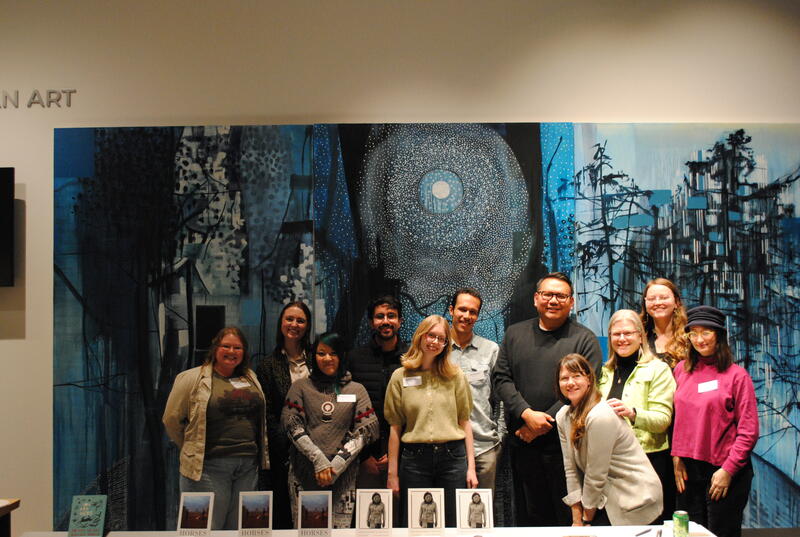
On Friday, April 3rd, Jake Skeets joined Milkweed in celebration of his latest poetry collection, Horses, at the Minnesota Museum of American Art’s Queering Indigeneity exhibit, curated by Penny Kagigebi and Bethany Whitehead. Along the way, his Minnesota book launch included exploring Minneapolis’ Indigenous offerings from Gatherings Cafe, Owamni by The Sioux Chef, and Birchbark Books. He was joined by Mary Austin Speaker, Dr. Kate Bean, Hope Flanagan, Diane Wilson, Heid E. Erdrich, and Odia Wood-Krueger, among others.
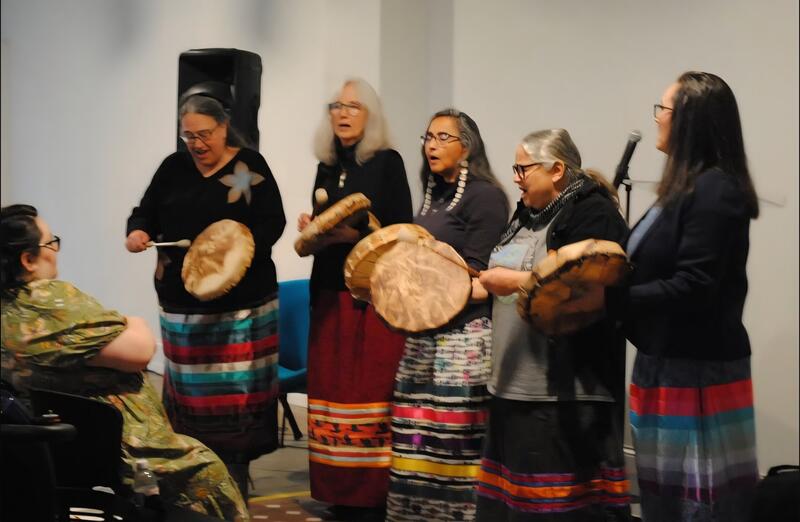
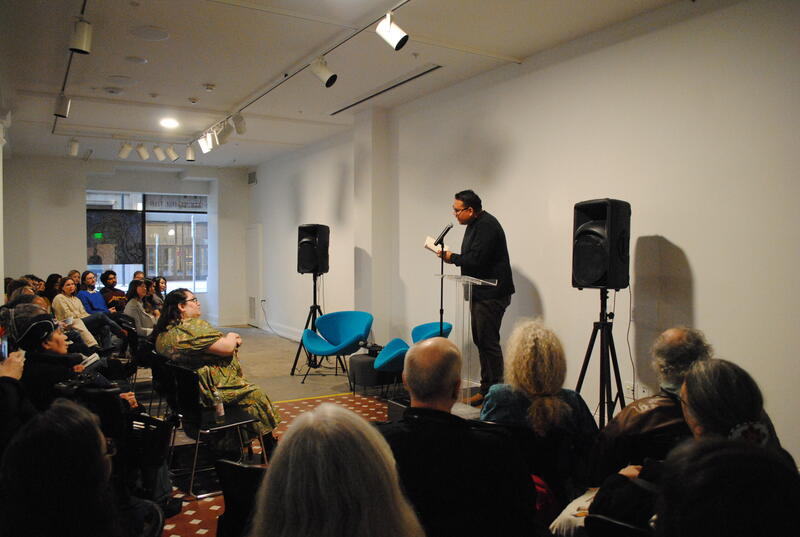
Jake Skeets’ first reading of the night, “Just Before the Silence,” embodied his Minnesota book launch for Horses in a single poem. Diane Wilson preceded his reading with a group of drummers, including Odia Wood-Krueger, Hope Flanagan, and Heid E. Erdrich, among others. As he read, the drums fell silent, tucked into the laps of the women. Artists from the Queering Indigeneity exhibit at the Minnesota Museum of American Art were among the audience. From there, he continued with “Horses” and “Hootso,” before he introduced himself in a stream of Navajo. “As I was reading,” he said, “I realized every event so far has had Native presence. From Texas, Toronto, Chicago, and now here. It goes to show that Natives really are everywhere. That, to me, makes it worth it—thank you.”
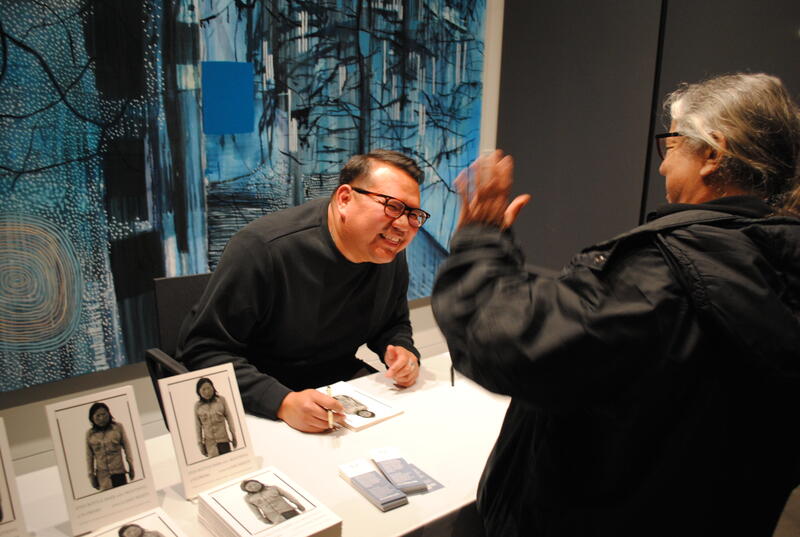
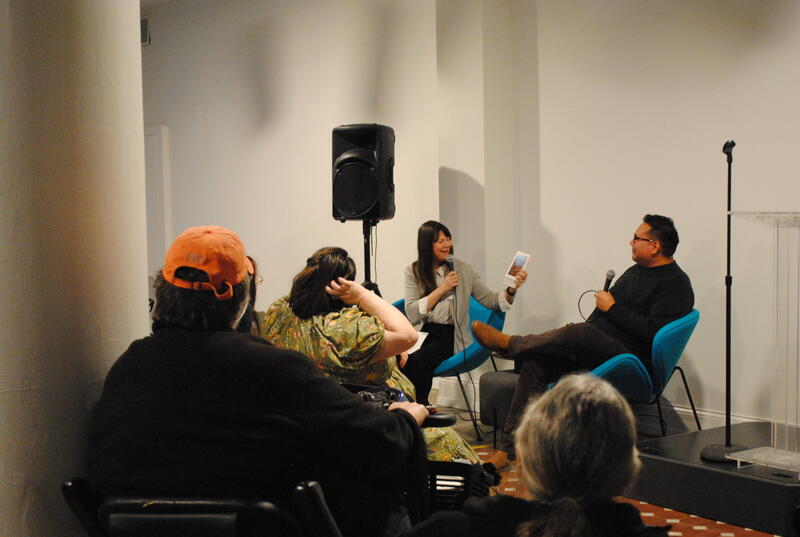
He cleared his throat again, and flicked through the pages, finding ‘On Rain Or Light Or Joy,’ bringing it to life in song. “Since we started with drumming, it only feels right to sing this one.” He alternated between English and Navajo, singing with a lullaby’s cadence. “Go my son, go and climb the ladder. / Go my son, go and earn your feather. / Go my son, make your people proud of you.” Afterward, Milkweed’s Creative Director Mary Austin Speaker sat down with Jake to discuss how his poetics have developed.
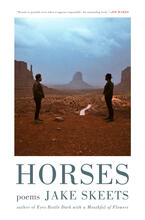
Mary Austin Speaker: I met Jake eight years ago, before he won the National Poetry Series. Now, we’re celebrating Horses in a museum, surrounded by queer Indigenous art, which is deeply relational to your work. Your first collection featured a portrait of your uncle, Benson James, by Richard Avedon. His series photographed people against a white background which highlighted their personality, but removed the land. In contrast, Horses features work by queer Navajo photographer Nate Lemuel. In your essay The Memory Field, you write, ‘memory exists as a spatiotemporal entity, because time, memory, and land are woven together.’ I’m curious, how have you experienced time, memory, and land as a poet learning to speak Navajo?
Jake Skeets: I’ve been learning. English has tried to be a language of absoluteness, as if it’s black or white without nuance. In Diné Bizaad though, you see simultaneity. In my attempt to write about joy, I cover tragedy, catastrophe and climate apocalypse. There’s still elements of joy in the language. Grief and joy can be felt simultaneously. Indigenous people and marginalized communities know this.
Mary Austin Speaker: Beauty is integral to your poetry. How do you see it in Horses?
Jake Skeets: In Diné, there’s hózhó, which translates to beauty or balance. I’ve been trying, with my poetry, to find beauty where there seems to be only tragedy. I knew people would see Navajo Nation and think ‘oh, that makes sense: barren landscape, high desert. Horses can’t flourish. As a queer Indigenous person, I understand what happens when this misrepresentation occurs. I know the stealthy linguistic things that happen in the English language already misrepresents me. I see the way these [Queering Indigeneity] artists, too, are responding to the stealthy power English has. I’m always trying to illuminate beauty. When we think of hózhó, we must think about all things, not just the narrowing of what might be possible—all things are possible.
Mary Austin Speaker: Why choose horses?
Jake Skeets: Horses, of course, are a metaphor for us. We’re all stuck in a giant stock pond. We’re actively clawing for something we left behind. What that is, I don’t know. How do we get out of it? I don’t know. The poet’s job is to pause and contextualize events. Right now, there’s active destruction happening. As Diné, we have horse songs, chants significant to horses. As I researched our ‘wild horse problem,’ I learned they’re actually contributing to overgrazing–they eat the entire plant from the root up.
Mary Austin Speaker: Your poem “If Senses” offers agency to words like ‘field’ and ‘morning’ as subjects in their stories. How have you experienced the nonhuman world as it influences your writing?
Jake Skeets: It was crucial in my upbringing. I had access to running water. We were one of the first homes on the reservation to get dial-up, then the internet. We learned the land as children. I’m trying to find this specific plant to this day, this flower on the rez that blooms into a cup. We’d pick these flowers and drink their nectar when we were thirsty. None of us knew what plant it was, we were just learning the land, not putting it to language. It’s definitely influenced my poetry.
Mary Austin Speaker: You’re also working on a novel. How do you decide the genre depending on your subject?
Jake Skeets: In the pandemic, I lived on the rez. We couldn’t leave our houses beyond twenty-five feet. We had checkpoints and had to explain where we were going. I had an archive of newspapers, so I read The Navajo Times through the eighties. I came across a letter from a Navajo soldier stationed in Germany, asking for someone to exchange letters with. It inspired a character, a closeted Navajo soldier stationed in Germany. Then, I found this blog comment from this Navajo soldier, about how Berlin’s nightlife helped her discover her sexuality, which inspired a character, too. When I spoke with my agents about it, they said “it sounds like a novel.”
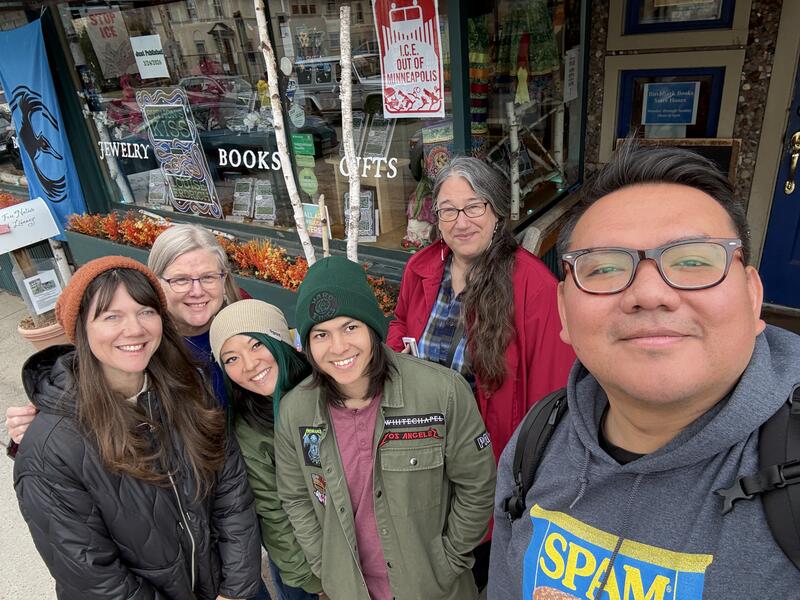
Following the event, Jake joined Milkweed staff on a quick tour of the city. “Touring has been so overwhelming,” he admitted, “but last night’s event at the Queering Indigeneity exhibit and this morning’s side quest to Birchbark Books gave me so much life, wonder, and medicine.”
For more information on Jake Skeets’ events for Horses, please visit his website. For more on Jake in conversation please check David Naimon’s interview with Jake on Between the Covers.
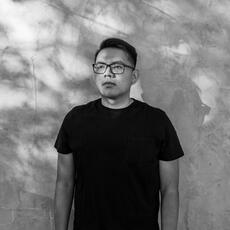
Jake Skeets
Jake Skeets is the author of Eyes Bottle Dark with a Mouthful of Flowers, winner of the National Poetry Series, American Book Award, and Kate Tufts Discovery Award, and Horses, which was named one of Literary Hub’s Most Anticipated Books of 2026.
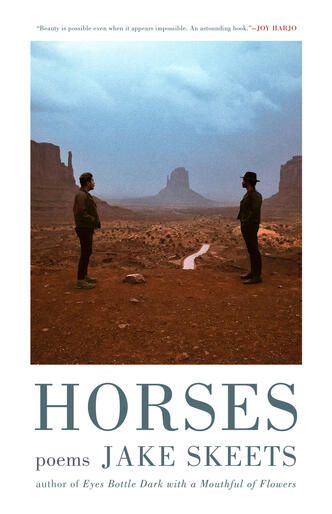
Longlisted for the 2026 National Book Awards
“Beauty is possible even when it appears impossible. An astounding book.” —Joy Harjo, author of Washing My Mother’s Body
“For now, go out and dream of joy, we know the labor of feeling it.”
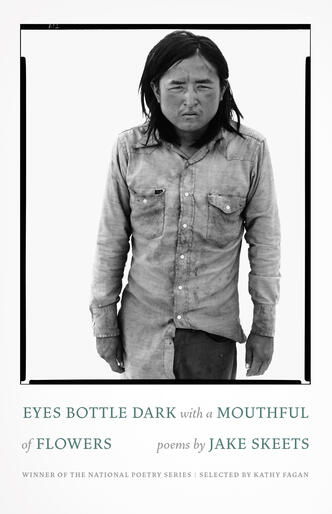
This National Poetry Series winner is an unflinching portrait of the actual west—full of beauty as well as brutality, where boys tentatively learn to become, and to love, men.
Jake Skeets at Minnesota Museum of American Art
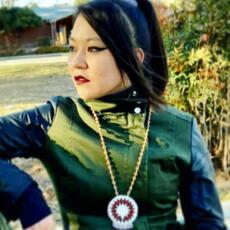
Brianna Reed
From the Navajo Nation, Brianna Reed is the Diné author of multi-genre works that have appeared in Leonardo Fine Arts magazine, The Tribal College Journal, The Yellow Medicine Review, and Into the Unknown Together: A Climate Sci-Fi Anthology. By gaining her BFA in Nonfiction through the Institute of American Indian Arts, she has earned opportunities to present work across the nation, in Mexico, the Fine Arts Work Center of Cape Cod, and now through the Milkweed Editions fellowship. Now pursuing her MFA in Fiction through IAIA, she has also entered her third year penning her column, “The Moccasin Millennial” with…