

LOW FLYING PLANES: A Conversation with Hajjar Baban
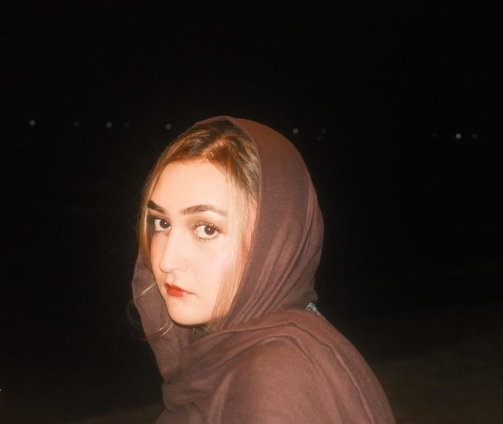
In celebration of LOW FLYING PLANES, we connected with Hajjar Baban, winner of the 2025 National Poetry Series selected by Jake Skeets, to discuss the mountain as a generative presence, the trust that spirituality requires, and miraculous openings in poetics from the artists who stumbled through the valley before us to the great Wikipedia.
KH: Why did you choose poetics to explore themes of identity and estrangement? What about the poem opens complex experiences for you?
HB: I think the poem is the only space I can open those complex experiences, as you put it. I don’t trust myself in prose, whether it’s fiction or nonfiction. And I certainly don’t think plain speech, speaking away from the page, is something I’ve mastered, or even understood myself in slightly. I can speak within different readings of a single line, sometimes in the multiple readings of a single word, in poetry. And I find that I can get real quiet, which on the page I think allows people to be able to hear me better, and, if not them, I believe I can hear myself clearly that way.
KH: Can you speak to the poem’s ability to resist conclusion?
HB: Going back to those multiple readings… Yes, this is a really accurate takeaway, what’s underneath your question. It’s also a bit of what I bring to each poem. The way I reflect on life and track my own belief is not in conclusion but in more questioning, in more belief. Like asking myself, what do I believe? That seems more true to sit in than showcasing all I’m carrying. It’s not a resistance or dancing around conclusion but an understanding or looking closer of/to the air. Although I’m a bit stubborn and serious in my day-to-day and in how I view certain situations, I think my true self, my most inside, is very expansive. The poem is a great place to dream in that.
KH: What significance do you derive from rocks and mountains as they relate to the violence, confusion, and desire unraveled softly, but not without conviction, in this collection?
HB: Mountains have been important to me as a touchstone, of connection to Kurdishness, and specifically Kurdish writers and artists who I’ve learned from. In LOW FLYING PLANES, they meet at exactly what you note: violence, confusion, desire. The rocks and mountains both allowed me into how the speaker might arrive at understanding of “being seen.” And the rocks began to allow for deeper connection and breaking, whether of the violence or confusion (something I can know intimately as I shape these poems to each new appearance of the rocks, something in the body, and as in one of my epigraphs, Glissant’s “I build my language with rocks”). Yes, I’d say they serve as reminders of a certain isolation in claiming Kurdishness, and also the violence in how we’re seen, and in what I’m able to build from there. I also wrote almost all of the book being near the mountains for the first time in my life. And there’s something very stilling and humbling to be around that kind of height. Something that might live beyond the body and beyond the language.
KH: LOW FLYING PLANES is in conversation with work from powerful artists and poets, including Anna Akhmatova, Paul Celan, Savas Boyraz, and Walid Siti. Can you discuss how reference informed or shaped your creative process for this project? When you decide to write through a fragment from another poem or with a painting in mind, what are your intentions when it comes to the conversation that homage generates?
HB: The intention begins with my seeing something in the work. So, I’d say a deep respect and admiration. And to answer your question of intention in conversation I’d say that there’s an honest conversation there, that it feels true I’m speaking to/after something I’ve seen and read. Just as being physically in the mountains opened something up for me, reading the work of Celan and Glissant also opened something for me. Without their language, I’d maybe have less to imagine from, of what’s possible. This is true of the writers who I haven’t been in conversation with explicitly just as much as it is those that get named. I don’t think this book would’ve been possible without the reading I was doing at the time. But yes, some things just click and don’t leave the mind. I was in a space where I could really listen to that, let it haunt and guide me.
KH: The speaker’s perspective transforms throughout the collection from one that is stunted by confusion to one that is clarified after healing. Can you discuss the significance of breaking apart the language that frames our world to reach towards liberation?
HB: I think it’s all about understanding or getting closer to each other or trying to hear each other. Maybe something about, beyond the language that frames the world, what of it we each take in, about learning language, too. There’s a poem or fragment in the book about, “resting with my enemies” I didn’t mean it as defeat, but maybe closer to what you’re noting here. The different ways of breaking and reaching to be more free.
KH: In Lonely Palindrome with Allah, the speaker writes: “Surely we belong to Him / and to Him we shall return…” How does spirituality, which is a cornerstone of forgiveness in these poems, influence your relationships and your creative practice?
HB: It’s something I’m still learning. And it’s beyond a security of self and enters a more breathable space. It has to do with belief and (I’m sure this might not sound entirely right to me later) but comfort? It’s one layer to my language, even in what I don’t know. I don’t know why but after this question, Sappho’s “someone will remember us i say even in another time” is coming to mind.
KH: How did you arrive at the title LOW FLYING PLANES?
HB: I’ll answer this as how I arrived at the title for that sequence of poems, because as soon as I came up with the title for a single poem (and originally ended that poem with a comma, intended to be continued) and began a sequence, I knew it’d be the title of the book. Before that first LOW FLYING PLANES, the title was something like “God, rocks, nationality” and it felt very wrong. I can’t rely on memory exactly, so this might be a lie, but I think I either encountered Yassin Aref’s book “Son of Mountains: My Life as a Kurd and a Terror Suspect” because of a Wikipedia rabbit hole or more deliberately as part of a documentary poetics course I took with the poet and professor Kiki Petrosino during my MFA at the University of Virginia. It was in my reading of Aref that I discovered his quote about the Kurds living near the mountains “for so long they have rocks in their heads and have become rebellious, like wild animals.” This quote made its way in the first LOW FLYING PLANES poem (and accompanies Glissant in the epigraphs). I was thinking about everything up there, as I was alone in the mountains, the birds and what they might know, those rocks, all that violence. And it felt like it had to be carried over. I needed to deposit the breaking over many poems. I think the title exactly (though I don’t like sharing this because it feels so definitive, and goes against the airiness I was hoping for) was from seeing the road signs as I returned back home during breaks from my MFA. But there’s also the violence that comes with that, if not in the exact association that my parents might have with it, then at least in the noise.
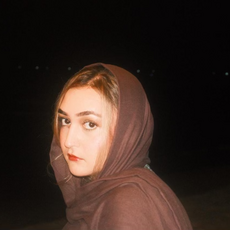
Hajjar Baban
Hajjar Baban is a Pakistan-born Afghan Kurdish poet. Her work appears in publications including Prairie Schooner, Guernica, Poetry Daily, and Hayden’s Ferry Review, where she won the 2025 Poetry Contest, selected by Hieu Minh Nguyen.
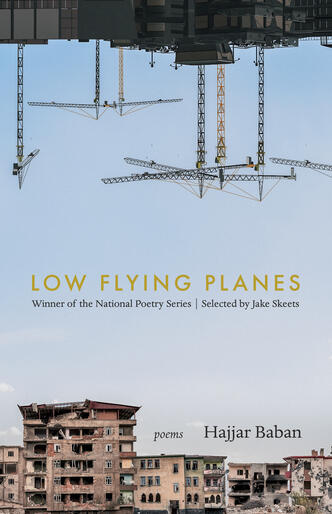
Selected by Jake Skeets for the 2025 National Poetry Series, a reverent and revelatory debut examining language, memory, and identity.
Kamra Heldman
Kamra Heldman is a poet and educator from Minneapolis. Her experience in librarianship, academia, and publishing empowered her to cultivate a reverence for community. She is committed to learning about the human condition through art and is fascinated by work that explores relationships to the self, other people, and the natural world. Her writing centers around femininity, spirituality, social justice, and connection. She received her Masters in Poetry from the University of St Andrews and teaches creative writing in the Twin Cities.