

Marne Zafar, Michael Kleber-Diggs, and Daniel Slager On Community and Showing Up
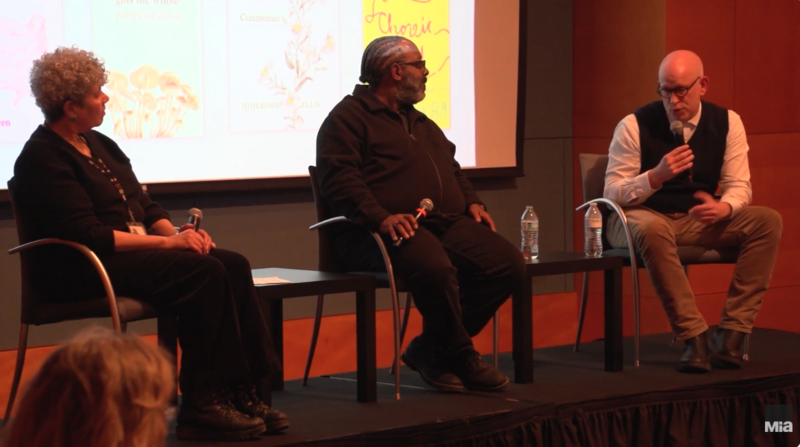
On February fifth, Marne Zafar sat down for a Friends Lecture at the Minneapolis Institute of Art with Max Ritvo-award winning poet Michael Kleber-Diggs and Publisher Daniel Slager. Together, they discussed dual perspectives between author and publisher, from winning awards to forging literary friendships within the Twin Cities.
Good people show up where they’re meant to be. —Michael Kleber-Diggs
This line, from his poetry collection Worldly Things, won’t be read until later in the night, but the crowd that gathers in the Minneapolis Institute of Art already evokes this notion. Just as tonight’s Friends Lecture suggests, everyone checks up on one another—Milkweed staff coordinate carpools and the Friends of the Institute guide us along, grasping hands and squeezing shoulders.
Marne, too, speaks to the risk assessment that is vital within the literary landscape. “Milkweed takes risks,” she opens, “from experimental writers, first-run writers, to debut authors. Daniel has made it a mission to publish BIPOC writers who are so often marginalized. He’s launched the Seedbank series, which gathers literature from around the world to foster conversation around the human condition. And, too, he has fostered Multiverse, which focuses on neurodivergent, autistic, nonspeaking, and disabled authors and cultures.”
Michael, in turn, is acutely aware of the risk assessment here within the beating heart of the Twin Cities, in an area inundated by ongoing ICE presence since the new year began.
I am, of course, thinking of our own cities, about the opportunities for community and what necessitates them right now. —Michael Kleber-Diggs
As Michael reads, he highlights the good people around us—from Milkweed Editions, the wider literary community, and to those that inspired his poems. Here, he turns to Daniel, grinning. “Maybe we could tell the story of how our friendship began? I was standing in my yard, tending to my dogs when my phone rang. I still have that voicemail. It was a call that changed my life.”
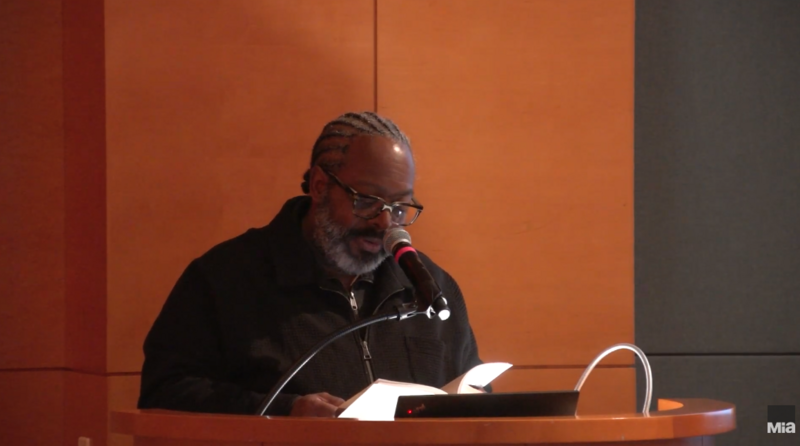
Daniel Slager: Thank you so much, Michael. One of the great privileges of my role is the best part of my job: letting writers know we’re publishing their manuscript. I’m touched you saved that voicemail.
Marne Zafar: Daniel, what can you share about the technical side, on what it means to publish an award-winning book like Michael’s?
Daniel Slager: Regarding the Max Ritvo poetry prize, we selected distinguished poet Henri Cole as our judge. Then, he selected trusted poets as first-round readers. We had about 4,500 manuscripts submitted. From there, they chose forty for Henri, and he chose the winner. Of the six Max Ritvo winners, just one of them is local to Minneapolis. A number of us already knew him, so we thought it couldn’t have happened to a better human being.
Marne Zafar: As the winner of the Max Ritvo prize, you’ve talked about ‘entering’ poetry. Can you say more about your experience?
I knew that I wanted to work with Milkweed, but that seemed like too much to ask for. When the call came, I was not expecting it. With Milkweed, I got everything I wanted. -Michael Kleber-Diggs
Michael Kleber-Diggs: Debut poetry collections are typically published through contests. I know that there are usually first-round readers that advance their selections to a finalist, who then chooses the winner. It really matters who the judge is, who can see what you’re hoping to bring forward. I focused on manifesting five things: I wanted to have tangible proof of my existence on earth. I wanted to work with a press that was making beautiful books. I wanted to work with an editor who shared ideas to make the book better. I wanted everyone who was connected to the book to be proud when it was done. I wanted to learn about how books were made. I knew that I wanted to work with Milkweed, but that seemed like too much to ask for. When the call came, I was not expecting it. With Milkweed, I got everything I wanted.
Marne Zafar: You exemplify the city, the people, and our community. Something I hear is the idea that poetry is very small, but how is it in terms of being a Black poet? Do you find it as a space that hinders, or something that allows you to explore?
Michael Kleber-Diggs: It was something I did for enjoyment. I grew up in a literary house, full of books and titans: Langston Hughes, Gwendolyn Brooks, Toni Morrison. I thought, if what they’re doing is called writing, what am I doing? For years, it was a hindrance in embracing that identity. I am a person who writes, but I am not a writer. I enjoy making poems, but I’m not a poet. A cool thing about the Minnesota arts and Black poetry community is that they’re welcoming, encouraging, and supportive. I took class at the Loft Literary center and, through those friendships, I learned I was a poet. It would’ve taken me much longer to get here if I wasn’t in the Twin Cities.
Marne Zafar: Daniel, what are ways you’ve pushed out through Milkweed, to make sure the voices that are unheard are heard?
Daniel Slager: Milkweed Editions has committed to the community since our founding. It’s no coincidence that we’re a founding partner of Open Book with The Loft. In recent years, our Seedbank series and Multiverse have been two animating pulses for us at Milkweed. Ecosystems are stronger the more diverse they are, and that’s only proven true in literature. Just as seedbanks collect seeds to preserve biodiversity in times of scarcity, our series aims to do the same for endangered cultures. Multiverse, too, is curated by and for neurodivergent poets. Between them, we’re enlarging the community of American letters.
Marne Zafar: Both of you, as an independent press and a poet of color, are witnessing this significant moment in time. How do you see yourself, Michael, in terms of the project you’re a part of with Literary Hub?
Michael Kleber-Diggs: This project, called “Letters From Minnesota,” is a series in which they’re publishing essays from our community about their observations during this time. In 2020, our cities were on fire in the reaction to George Floyd’s murder. I really got clarity in knowing that the arts were essential in moments like this. The perfect antidote to ugliness is beauty. Art is beauty, as well as the consciousness of our nation. During the uprising, I felt two things at once: poetry is one way we can respond, noticing the hospitals, the supply chains, archiving public art, raging against the machine–all the ways people employ their particular gifts to effect positive change. That’s happening again right now. I’ve heard examples of what people are doing right now that we shouldn’t discuss because we want them safe. But poetry is also something that I can do, not the only thing. What I learned then that I carry with me now is that it is both important for me to continue to do that which I claim as a vocation. Poetry means a tremendous amount to me and I shouldn’t separate myself from that. Art is as essential as ever.
I’ve come to think of the book as one of the most radical ways to open up to otherness. From the writer, a book is a profound gesture of generosity. To receive it with love and openness requires that same generosity on the reader’s part. —Daniel Slager
Marne Zafar: Where does Milkweed stand, regarding this particular moment in time, as an independent voice amongst larger presses?
Daniel Slager: I’ve worked as a translator for about forty years, and I’ve come to think of the book as one of the most radical ways to open up to otherness. From the writer, a book is a profound gesture of generosity. To receive it with love and openness requires that same generosity on the reader’s part. If that happened more, we’d have less of what’s happening here in the Twin Cities. I’ve come to think of Milkweed Editions as distinctly Minnesotan, made possible by a supportive community that believes that independent publishing and literature matters. We wouldn’t be able to do this without them.
Marne Zafar: How would you say the working relationship is between a writer and a publisher?
Daniel Slager: In Michael’s case as an award winner, the manuscript has been selected by a judge as the best, so it’s clearly not a developmental project. Beyond that, we’re committed to working with writers collaboratively to develop manuscripts to their full potential, which has enabled us to be intentional about the voices we elevate into the cultural conversation.
Michael Kleber-Diggs: The best books are ones in which both the author and publisher are really excited about. The best outcomes are gained when we work together to move that book into the world. That work is done inside publishing houses—with editors, the art department, publicists, marketers. When the book is considered ‘done,’ it moves into post-acceptance copy-edits, and fact-checking. I do think that modern authors are asked to be more active in promotion—that’s one of my favorite parts, as an extroverted man with golden retriever energy.
Q: How is poetry in prisons received, and how is it progressive?
Michael Kleber-Diggs: As a part of the Minnesota Prison Writing Workshop, we teach creative writing classes within Minnesota’s adult correctional facilities. It’s one of my favorite places to teach, which I know doesn’t sound quite conceptually right. There are always opportunities for improvement, but there’s also opportunities to extend humanity, grace, respect, and care. In those spaces, I get to work with people who are earnest and engaged, who are activated by work that matters to them.
When we’re working in truth, often what’s motivating us is desire. Within that desire, there’s potential for beauty and resilience, insight and understanding. —Michael Kleber-Diggs
Q: I’m interested in your ‘five things,’ particularly in your advice to make sure everyone involved is proud of your book. Do you find yourself exercising restraint with your creative self?
Michael Kleber-Diggs: Any time you work in creative nonfiction, you’re going to ask yourself: how might they feel? This is your story. You should tell it. It’s calling you to the page, and you should honor it by doing it. It’s not always comfortable. With my father’s murder, his sisters didn’t necessarily want me writing about it, but he was my father and it was something I needed to tell. Ultimately, it’s not your problem. Just write it. Be fearless and direct. People feel how they feel. When we’re working in truth, often what’s motivating us is desire. Within that desire, there’s potential for beauty and resilience, insight and understanding.
We invite you to read more about Michael Kleber-Diggs’ work here.
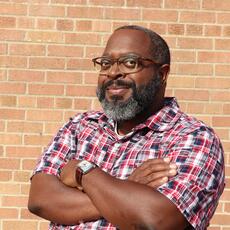
Michael Kleber-Diggs
Michael Kleber-Diggs’s debut collection of poems, Worldly Things, won the 2020 Max Ritvo Poetry Prize. He was born and raised in Kansas and now lives in St. Paul, Minnesota. His work has appeared in Lit Hub, the Rumpus, Rain Taxi, McSweeney’s Internet Tendency, Water~Stone Review, Midway Review, North Dakota Quarterly and a few anthologies. Michael teaches poetry and creative non-fiction through the Minnesota Prison Writers Workshop.
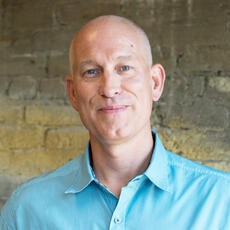
Daniel Slager
Daniel Slager is the Publisher and CEO of Milkweed Editions.
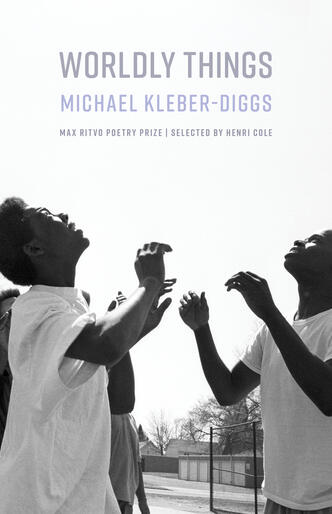
Winner of the Max Ritvo Poetry Prize, the poems of Worldly Things offer needed guidance on ways forward—toward radical kindness and a socially responsible poetics.
Friends Lecture: Michael Kleber-Diggs with Daniel Slager
The Friends Lecture Committee presents “The Art of Poetry, the Voices to Hear,” an evening with award-winning poet Michael Kleber-Diggs in conversation with Daniel Slager, Milkweed Editions publisher and CEO.

Brianna Reed
From the Navajo Nation, Brianna Reed is the Diné author of multi-genre works that have appeared in Leonardo Fine Arts magazine, The Tribal College Journal, The Yellow Medicine Review, and Into the Unknown Together: A Climate Sci-Fi Anthology. By gaining her BFA in Nonfiction through the Institute of American Indian Arts, she has earned opportunities to present work across the nation, in Mexico, the Fine Arts Work Center of Cape Cod, and now through the Milkweed Editions fellowship. Now pursuing her MFA in Fiction through IAIA, she has also entered her third year penning her column, “The Moccasin Millennial” with…