

Nocturama: Author Q&A with Will Brewer
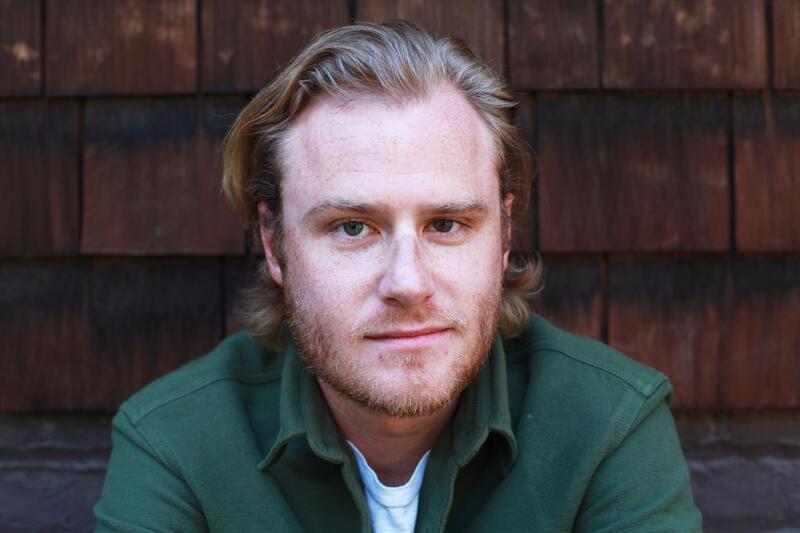
In celebration of his newest poetry collection, Nocturama, we spoke with Will Brewer about his experience with critical mentorship from Louise Glück, listening for the lightning strike, and the hope for a poem to exist as a flash that echoes beyond its reading.
Milkweed Staff: Henri Cole likened your voice to Robert Frost’s, whose America was lonely, bewildered, and grieving. What are the characteristics of your America? How does your relationship with the United States influence your poetics?
Will Brewer: I never think about “poetics,” period! As for America, I never sit down and think to discuss it on the page. But because I’ve only ever lived here, the lives and situations I write about end up engaging with America, in the same way that if I’d been born in Copenhagen, my work would engage with Danish circumstances. That said, my first book was concerned with a specific place and a specific event, whereas this book covers a broad stretch of time and space. There are poems set in some of the most down and out parts of the country, then some set in one of the most affluent, future forward parts of the country. What this book seems to track—though I didn’t plan for this—is that for a long time, places like Appalachia and the Rust Belt have been dealing with a deep sense of decline, disappointment, and even collapse; what’s changed is that now that feeling has permeated the whole country.
What this book seems to track—though I didn’t plan for this—is that for a long time, places like Appalachia and the Rust Belt have been dealing with a deep sense of decline, disappointment, and even collapse; what’s changed is that now that feeling has permeated the whole country.
Milkweed Staff: Your collection is dedicated to Louise Glück, who was a beloved mentor of yours. How important is it for writers to have someone who truly sees their work? Being an artist can be an isolating experience if it feels like most people in your circle have no understanding of why you spend your days breaking lines and forging unlikely comparisons, or who won’t read your work closely after its completion. What is the value in surrounding yourself with people who orient their life around the same work, and who are open to encountering your vision to assist you in shaping it?
Will Brewer: Teachers changed my life. Louise was a monumental teacher and an even greater gift as a person and a friend. Recently I saw Henri Cole read and during the Q&A he was asked about Louise—they were good friends—and he said something to the effect that her belief in you was absolute and unwavering in a very rare way. I knew exactly what he meant. Her belief changed me, it made things possible. What’s important is that she was deeply honest about the work. If something wasn’t working, she said so. If it was contrived, she called it contrived. This wasn’t brute honesty—she was trying to get you to see your own work as clearly as possible. Anytime she told me something wasn’t good, or even very bad, I already knew that deep down. I’d just tried to convince myself otherwise. But she cut through that. One time she pointed at something bad in a poem draft and said, “You can’t possibly think that’s good,” and I started laughing and admitted I had a hunch it was bad; she looked at me dead-eyed and said, “Then why did you need me to tell you that?” This was an awakening. She was teaching me to trust my own instincts, to see that I didn’t need her in the room editing the poem. I just needed to accept what already I knew to be true. This turns out to be 95% of what writing is. Of course Louise was also a rare case in that she was the most decorated American poet of the last 50 years. It’s very instructive to watch someone win the Nobel Prize and then months later wonder aloud if she’ll ever write again and feel totally unsure about her skills. Find me a better example of how writing is a life’s practice that requires perpetual humility and patience. I’m lucky to have witnessed that.
Milkweed Staff: Poets are often encouraged not to create a plan for a poem—but to allow constellations of experience time to germinate in the mind. The poet may begin to write once those experiences have been knit and dyed with sense, sound, and image by the psyche and are ready (basically crawling out of the spirit) to be unraveled on the page. You tend to take the reader through multiple experiences that travel through time and space in your poems, and I find the flow of your poems to be a great example of that idyllic process in action. In “Pilgrims,” for example, you begin with fraud before recalling childhood. Similarly, “Housesitting” is a complete circle, in that it begins and ends with the speaker but carries the reader to Berlin and a Halloween past. How do you decide what experiences are meant to be sewn together?
Will Brewer: Martin Amis says, “novels are (among other things): not almanacs of your waking life but messages from your unconscious history. They come from the back of your mind, not from its forefront.” That feels true to me of novels and poems. Rarely do I sit down and try to make a poem happen. Instead, I wait for them to strike. When they do, I transcribe them without questioning what’s showing up. Then I revise a lot. But my revision is never driven by intellectual energies—what I care about is a reading experience. If someone finds this poem in a magazine or a book, how is it going to operate in their mind, line by line? I’ll be provocative and say I like maybe 2% of the poetry I read, and that’s because it rarely feels like the writer thought about how I’d actually be reading the poem. Instead it feels like they just want me to witness the fact of them having written. No thanks! The writing I love feels wholly organic but is exceptionally crafted. This sounds paradoxical but I firmly believe that the better we revise, the better we are at letting the greater intelligence of our egoless mind come to the surface and surprise us.
Milkweed Staff: In “Nonmigratory,” the speaker feels “the sense of surfacing in a great aboveground pool of glue.” Later, you describe a man named Travis, whose “eyes had the gloss of a wall-mounted bass.” I find your metaphors astounding because they work to shock illumination in the reader through their unlikely comparisons. Audre Lorde believed that the purpose of poetry was to accomplish such a feat by distilling experience and naming what is inarticulable. How do you think about what your poems are doing, and how do you approach the task of connecting?
Will Brewer: Again, it’s all instinct. I trust that a deeper intelligence is making those connections. Everyday Will is a totally pleasant guy, great to get a beer with, but there’s not a lot going on up there. But when I write, Everyday Will falls offline and something much more expansive and sophisticated takes over. When I talk about instinct, I’m talking about my ability to shape, with as much honesty and precision as possible, what that deeper part of me has done. So I don’t wonder about a metaphor’s subtextual possibility, for example. I just make it the clearest, most concise version I can make it and trust that the rest will follow. I’m not saying my work isn’t about anything, only that I discover those concerns much later in the process. I think I agree with Lorde. The best poems come from a mysterious place and get at something mysterious. But the key is: mystery does not equal work that is opaque, overly complex, contrived, abstract, or sloppily written. The best poems I know of feel deeply intelligent, but they don’t feel intellectual. They feel experiential, like they’re five paces ahead of the intellect, and very precise. Which is exactly what a mystical experience feels like.
I don’t want to force a conclusion because that’s always going to feel contrived. Poems feel like flashes, sudden emergences, a brief drop into an altered state—those experiences never have a hard stop.
Milkweed Staff: The final lines of “An Hour” are “…and you are a boy again, standing in the yard, everyone is gone, / and behind every tree is someone / who is afraid of you.” This image is a true siren in the way that it echoes. You are skilled at leaving the door open, as the poets say. How do you know when to leave a poem, and how do you ensure that the last words sing?
Will Brewer: A lesson Louise gave me was that you don’t close up a poem. When you close it, you signal made-ness. You signal design. I think that’s exactly right. I don’t want to force a conclusion because that’s always going to feel contrived. Poems feel like flashes, sudden emergences, a brief drop into an altered state—those experiences never have a hard stop. The physical poem may end on line fourteen or sixteen, but it might not end in you until moments, or even hours, later.
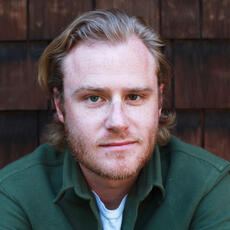
Will Brewer
Will Brewer’s first book of poems, I Know Your Kind, was a winner of the National Poetry Series. His debut novel, The Red Arrow, was published by Knopf in 2022 and received the Silver Medal for First Fiction from the California Book Awards.
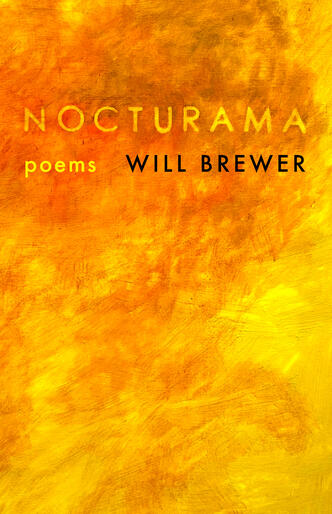
Spanning Appalachia to California, Will Brewer’s new poems attempt to make sense of some of life’s darkest turns: a father’s bout with leukemia, the slog of mental illness, a friend’s early death, and the rise of environmental catastrophes in the West.
Kamra Heldman
Kamra Heldman is a poet and educator from Minneapolis. Her experience in librarianship, academia, and publishing empowered her to cultivate a reverence for community. She is committed to learning about the human condition through art and is fascinated by work that explores relationships to the self, other people, and the natural world. Her writing centers around femininity, spirituality, social justice, and connection. She received her Masters in Poetry from the University of St Andrews and teaches creative writing in the Twin Cities.