

The Evolution of Fire: A Conversation with Angela Pelster
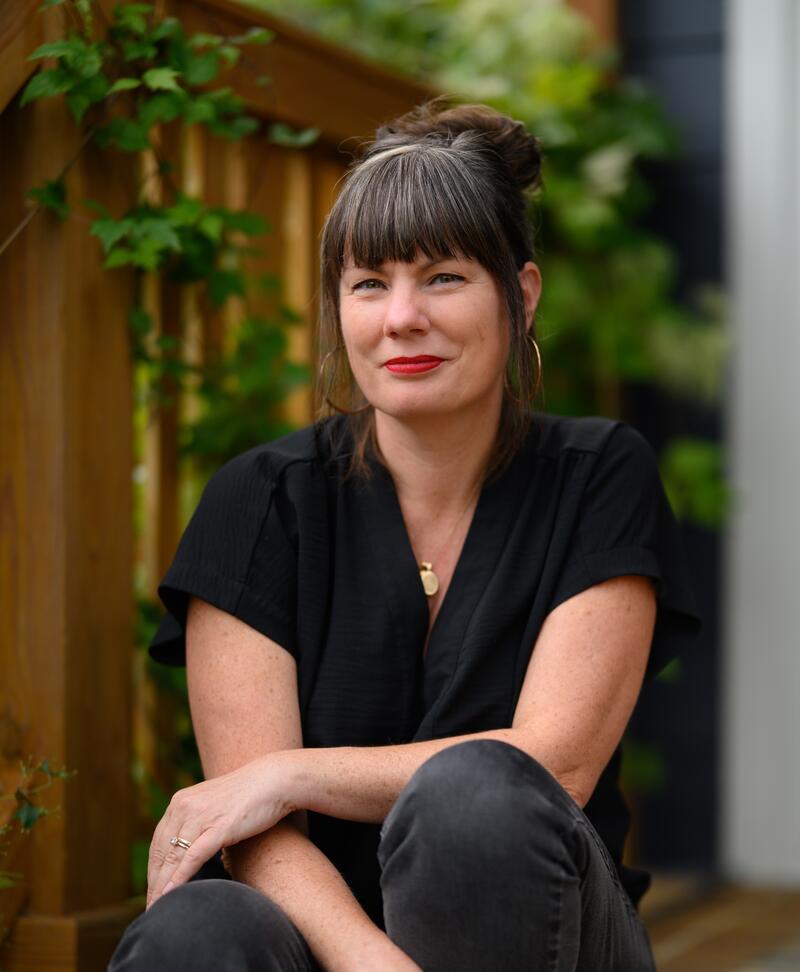
In celebration of The Evolution of Fire: Essays on Crisis and Becoming, we sat down with Angela Pelster to discuss meaning in suffering, whether the world is a safe place, and to honor community building as the most sacred part of creating a rich life.
Kamra Heldman: The dream that our perception of our story’s narrative arch will perfectly align with how the people who are a part of it would depict the same events is a true impossibility. How do we reckon with the truth that our understanding of any relationship or experience is singular?
Angela Pelster: Every experience is singular, and I think that’s a truth that we sometimes forget because we want to pretend and imagine that the way we’re experiencing something is the only way it can exist in the world. New writers of nonfiction get anxious about capturing the truth of something. They also get really anxious about being perceived as naval gazers, because they’re writing about their experiences. But what any essayist who has spent some time thinking about this question knows that the only real and honest place you can write from is your singular experience. As soon as you start to imagine that you can speak for anyone else, then you’re in trouble. If I ever said: this is what our childhood was like—my siblings, I know, are going to have a different response. That’s totally okay. Whether or not they like how I describe what my version of our childhood was is a different thing. I made my peace with that part of writing a long time ago!
Kamra Heldman: That reminds me of the Emerson quote you include in the book. “The good writer seems to be writing about himself but has his eye always on that thread of the universe, which runs through himself and all things.”
Angela Pelster: Yes! So that’s the second part of it. It is not enough to tell your experience. You have to own that it’s your singular experience, but the essaying part is making meaning of it. As I tell my students, memoir is your story and meaning-making put together.
Kamra Heldman: In the chapter titled “Evolution of Fire,” you write: “a love without limits, a love that demands another’s limitless forgiveness, looks more like abuse than love.” What is truly forgiving, and in turn loving, requires discernment that can lead to boundaries or separation. Do you think we live in a culture that misunderstands forgiveness as unconditional when real forgiveness is rooted in a recognition of mutual sanctity?
Angela Pelster: I have often thought that my next book should be about forgiveness, because I don’t think I actually know what it means. That was one of the things that was hard while going through everything that I did. To work towards something when you can’t exactly articulate what the goal is, is tricky. I don’t think we have a lot of language to talk about what it means to forgive. If somebody were to ask me whether I forgive my dad or my ex-husband … I don’t know what the answer is to that. I wish them both well, and I wish them the help and support they need. I would like them to own responsibility for the choices they made and the harm they did, and to move on from it. I don’t have any desire for anyone to linger in the pain of wrong decisions, but I don’t know if that’s forgiveness. I don’t know what that word means, so I’ll have to write a book about it to figure it out.
I don’t have any desire for anyone to linger in the pain of wrong decisions, but I don’t know if that’s forgiveness. I don’t know what that word means, so I’ll have to write a book about it to figure it out.
Kamra Heldman: I think about forgiveness a lot too. Just recently, I was talking to a young girl who is struggling with her relationship with her parents, that dynamic, and facing the confusion that arrives when you realize that you haven’t been treated the way that you deserve to be. I think confusion and forgiveness are two concepts that you have to think about together. I don’t think there is clarity in forgiveness. It has more to do with acceptance and compassion. When you have to forgive someone, it tends to be a situation that you couldn’t fathom acting out yourself. And so, it is beyond the self. Forgiveness, or a feeling like it, arrives when you decide that they are still valuable but what happened to you because of knowing them is inarticulable…and that’s okay.
Angela Pelster: I was talking about forgiveness with a friend a few months ago. I said the closest I’ve been able to get to thinking of a definition is that forgiveness is the thing that stands in the place of understanding. When you can’t understand why someone did what they did, it feels like its own kind of devastation. The world no longer makes sense. You forgive in order to move forward inside a world that doesn’t make sense in a moment like that. “Forgiveness” feels less like the right word when I understand why a choice is made. In that case, it feels like “acceptance” is the thing that needs to happen. Like, if a tornado blew down my house, I don’t need to forgive the planet; I need to accept that it happened, that a weather system caused it, and that weather works like that. When someone causes me harm because of an unhealed harm of their own, or a lack of something essential in their own lives, I understand the logic, and I can work on accepting the action that came of it. So, I’ve come to think of forgiveness as that placeholder until understanding, and the acceptance, is gained.
Kamra Heldman: In a powerful reflection on yourself and the woman who your ex-husband cheated with, you write: “[I] was kind. [I] was tender and forgiving and interesting and adaptable, and [I] assumed that this woman in front of [me] was all these things, too, because why wouldn’t she be? It would be an insult to [my] own self to think otherwise.” I am interested in the idea that assuming the worst of people, strangers and neighbors alike, is a disservice to yourself because it necessitates placing a limitation on your understanding of human value. It is almost a negation of self, in that you lead with an expectation that you will encounter a trait that causes you to doubt goodness and so search for the presence of negativity instead of something more nuanced, like generosity or humility. How transformative do you think it can be for someone to look at all people as characters of wholeness rather than one-note facets that inevitably underrepresent their capacity?
Angela Pelster: Well, it would change the world, right? It is certainly not something that I am able to do all of the time. But, in moments of quiet and reflection, you have to admit that people are complicated. Nobody is pure evil. I think that’s why I came to that conclusion about forgiveness. Nobody longs to be evil. At least nobody I’ve yet encountered. There is always some explanation of how we get to where we are. No baby is born with a desire to harm the people they love. There’s always complexity to it. When you can see that, it makes more sense. It’s selfish in some ways. You want the world to make sense. If you understand that this led to that and that led to this, you can hold it and you can exist with it because it’s not just chaos or people doing evil for the sake of evil. Then there is a little bit of hope tied to it because how you get to where you are is almost scientific.
I worked in a group home for years with boys who were already causing intense harm to themselves and others. But I also had their case files in front of me, and I could clearly see what made them the way they were by age 13 or 14. Nobody was guessing why they were making those choices. I could imagine also a future in which those choices would get worse and worse unless there was an enormous intervention. But nobody is paying the money for that kind of intervention for those kids.
Kamra Heldman: You note how bats are the only flying mammals in the world and through that fact contemplate the loneliness of being the only anything. The United States is a part of the loneliness epidemic that many identify as the root of cultural crisis. How can we retain reverence for our unique individuality while remembering that the communities we inhabit are essential to the development of so much that we consider worthy of pursuit, such as purpose, fulfillment, belonging? Think of the loneliness and isolation that is so often coupled with a commitment to artistry and the knowing that you can’t create if you don’t pour yourself into what is beyond you.
I don’t think we need to be individuals. I don’t know that we need to protect that.
Angela Pelster: I don’t think we need to be individuals. I don’t know that we need to protect that. But the simple answer is that it is just about boundaries. You have to give yourself when you can and make space for yourself when you can. With all of this shit that went down with ICE the past few months, I hate to tie anything good to it because that feels gross and inappropriate. But wasn’t it amazing to be one speck amongst thousands? To feel all the love and solidarity, and to become a part of going to meetings and planning things and making sure people had what they needed and being on signal nonstop … that felt meaningful. Anytime I’ve been a part of collective action like that before, for social justice causes or even just building community at my workplace, it’s always brought a deep sense of recognition that this is how it’s supposed to be. Nothing has ever felt as right as being a worker amongst thousands of other workers in doing good.
Kamra Heldman: It is almost like the art is a desire to re-experience those moments.
Angela Pelster: Yes, or to process them!
Kamra Heldman: And capture them! As perfectly as you can. But it is impossible to recreate.
Angela Pelster: I also think the feeling that we have to choose between making art and working for good is a symptom of the shitty reality we are in.
Kamra Heldman: We are all sacrificing far more for what is not necessary than for what is. But this moment in time, in Minnesota, this fighting ICE and fascism … this is the everything.
Angela Pelster: Capitalism controls us, and it is really hard to break out of it. It is hard to make choices that don’t get you sucked into that. It’s hard to keep your elbows out and make space for all that you actually care about.
Kamra Heldman: Is it important to trust evolution, and to believe that losing and rebuilding is necessary for a return to a more complete understanding of joy?
The whole book grew out of wanting to understand that Einstein quote that asks whether or not the universe is a safe place. The book is looking at the evidence before us. And I don’t think that the Universe is a safe place or a good place. It’s just a place.
Angela Pelster: The whole book grew out of wanting to understand that Einstein quote that asks whether or not the universe is a safe place. The book is looking at the evidence before us. And I don’t think that the Universe is a safe place or a good place. It’s just a place. Anything could happen either way. But where we are now is a result of crisis and our responses to it. Crisis can either get us to a good place or it can destroy us. I don’t think about bad things happening as an opportunity to turn it into something good. It is just a way of understanding the rules of the world that we live in. Otherwise, you run into dangerous positions. Sometimes things are just hard and hurtful. I don’t think it’s helpful to try to frame pain as always being served with a silver lining so long as we’re “good” enough to look for it. That we can change and adapt to pain is why we survive, but it feels gross to tie that as a natural outcome or as some kind of equivalency or ratio—this much pain equals that much good. So, the project of the book is to have an honest reckoning with the way the world functions and then think about what I want to do with that information.
Kamra Heldman: I am thinking about what we tie ourselves to and what we use to cope, and how when those tools are stripped from us without choice, the moments after are especially tender and difficult to survive. It is really nice to remember that we should let ourselves recognize what is painful as simply that.
Angela Pelster: I am opposed to the idea that when you go through bad things it makes you a better person. Often what happens is it makes you very angry. Or insecure. It makes sense that when you are wounded you carry wounds and you wound others. We want suffering to be meaningful because what else are you going to do with it? But it’s not automatic. Suffering doesn’t automatically make you kinder or more understanding of other’s suffering. I think about antebellum White women, and how they were oppressed and powerless over their own bodies because of their gender, and how that oppression didn’t teach many of them compassion or embed a deep sense of justice within them, but instead, it taught them to find another body—often an enslaved Black body—to enact power over. It’s so tragic. Humans are so tragic in the way we pass our woundings on.
Kamra Heldman: One can never untangle the self from childhood. What part of your upbringing has most forcibly brought you to where you are and made you who you are? When processing what formed you, does gratitude play a role?
Angela Pelster: Faith is a really big thing that remains with me. The Christianity I grew up with taught me to move through the physical world while trusting in things beyond the tangible. That, and that the baseline of everything, for everyone, was love, because God was love. That was non-negotiable—even while I witnessed all sorts of “unloving things,” I understood the difference between what we wanted to be and what we really were. I still value those two things deeply.
Kamra Heldman: The human mind rewrites our personal histories. Do you think it possible to fight or suppress this biological tendency for the sake of remembering people more clearly?
Angela Pelster: There is no fighting it. The best thing you can do is know that you are recreating reality and be open to that. Every now and then, I get really deep into this with my undergrads. I’m like, this is all an illusion! They just look at me like I am bonkers.
Kamra Heldman: I really hate that. I want what is real to be real. I want to see people, and I don’t want to see people through my desires.
Angela Pelster: Yeah. But it’s also nice. Because certain people draw certain qualities out of you. I can’t be my total 100% self with you. We don’t have time for that! It is nice that you get to see me in this moment as whatever elements you draw out of me. It’s kind of magical … the collaborative nature of being.
Kamra Heldman: It is interesting to think about what we do and don’t show specific people, and how different people show parts of themselves to you that they wouldn’t show anyone else. It’s even more special with family, friends, and romantic partners.
Angela Pelster: When I was young, people always talked about the need to “find yourself” as if there was this lost being in everyone that was waiting, if only we gave them a chance to be revealed. And, as if there is one single self. I labored for a long time under the idea that because I had different versions of myself with different people that I was somehow being false instead of bringing to the moment the different parts of myself that the moment asked for. That’s so silly. It’s okay to adapt.

Angela Pelster
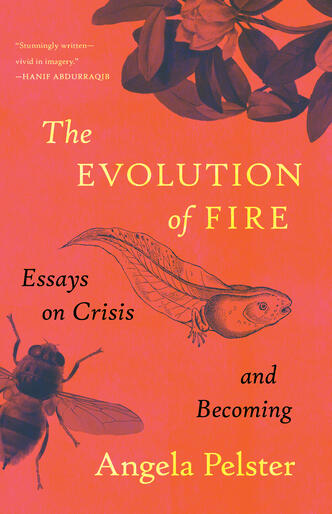
Longlisted for the 2026 National Book Awards
A Katie Couric Media Summer Reading Selection
”The Evolution of Fire is stunningly written—vivid in imagery, in the braiding together of language, and in the honoring of every person it shines a light on.”—Hanif Abdurraqib, author of There’s Always This Year

Kamra Heldman
Kamra Heldman is a poet and educator from Minneapolis. Her experience in librarianship, academia, and publishing empowered her to cultivate a reverence for community. She is committed to learning about the human condition through art and is fascinated by work that explores relationships to the self, other people, and the natural world. Her writing centers around femininity, spirituality, social justice, and connection. She received her Masters in Poetry from the University of St Andrews and teaches creative writing in the Twin Cities.