

Julie Schumacher Celebrates Patient, Female: Stories with Claire Lombardo
On Tuesday, May 26th, Milkweed Editions hosted the book launch for Julie Schumacher’s latest book Patient, Female: Stories. There, the Thurber Prize winner was joined in conversation by Claire Lombardo, national-bestselling author of Same As It Ever Was. Together, they discussed the necessity in finding humor within hopelessness, embracing form as challenge, and celebrating her comedic renaissance of the feminine.
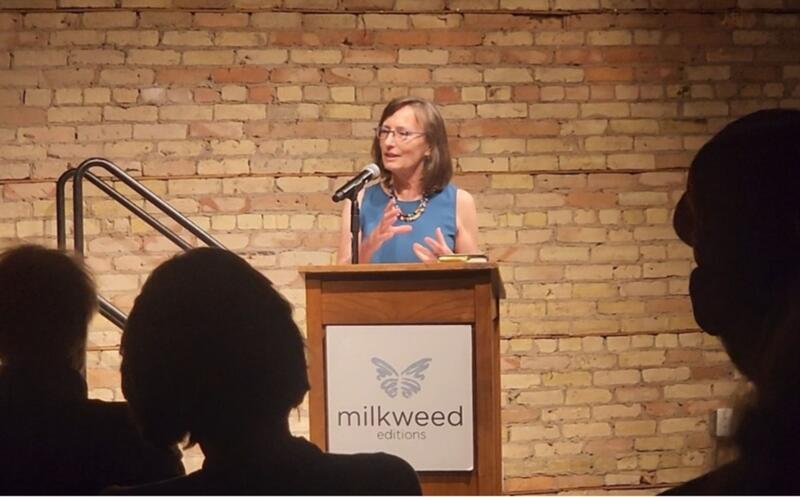
There’s such a powerful hit with stories. It’s like a dart to the chest. With novels, you have to get in the water and swim in it, sometimes for days. Stories are a dart. -Julie Schumacher
Claire Lombardo: There is so much power in the short story. Can you speak about your thoughts on the short form?
Julie Schumacher: …No. [Laughs] If an idea comes to me, it usually has a shape attached. I think a lot about the shape of stories.
Claire Lombardo: Do you work on short stories while you work on longer projects?
Julie Schumacher: I’m a one-at-a-time kind of being. I know other people manage to do lots of things, but I can’t do that. When I finish writing something long, I’m like ‘I’m never doing that again.’ It’s a grass-is-greener thing.
Claire Lombardo: Which do you prefer?
Julie Schumacher: There’s such a powerful hit with stories. It’s like a dart to the chest. With novels, you have to get in the water and swim in it, sometimes for days. Stories are a dart.
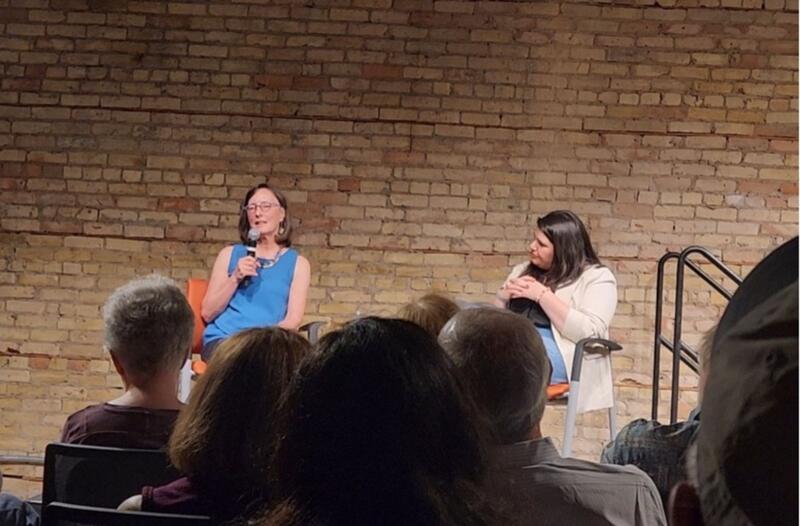
I love collections that are cleverly united with a common thread. I wanted to try that, but eventually I came to terms with the realization: I’m writing about girls and women, that’s what I’m doing. That’s the thread. -Julie Schumacher
Claire Lombardo: While drafting, were you aware it would be a collection of stories?
Julie Schumacher: Some of these stories have been around for a while. I love collections that are cleverly united with a common thread. I wanted to try that, but eventually I came to terms with the realization: I’m writing about girls and women, that’s what I’m doing. That’s the thread.
Claire Lombardo: The final story is actually the collection’s title. How did you make that decision?
Julie Schumacher: I liked that story a lot. It was in my brain for a long time. It’s about a woman going through nursing school, working as a professional medical patient. It stemmed from a job I had after moving to New York and getting a job as a typist for a medical magazine. There was a piece I typed about professional medical patients, one of which was called ‘The Female Patient.’ It stuck with me for years.
Claire Lombardo: You are such a watchful writer, full of specificity within its details. One comes to mind about a kid saying new hamster instead of New Hampshire. [Laughter] What’s it like in your head?
Julie Schumacher: Well, I’m married to a political scientist who talks about the presidency a lot of the time. We’ll take a walk and, as he’s talking about the latest horrifying thing, I’m looking around thinking, ‘wow, look at that!’
Claire Lombardo: There’s a story in this collection that is a syllabus, which I loved. Do you have any banned items on your syllabus for your own students?
Julie Schumacher: I don’t like to do it anymore. Syllabi have gotten so long now, they’re like legal documents. I used to ban animal perspectives, inanimate object perspectives, no characters standing around an open grave, that sort of thing.
Claire Lombardo: I had a ‘no wizards’ clause. [Laughs] Does your teaching life coexist with your writing life?
Julie Schumacher: Summer is always good for writing. I always pick up steam that carries me into fall. By December, I’m exhausted with final grades in, admission season, then award season. In December, I pause for a few months. It’s better than beating myself up. It’s a nice break with no guilt attached, just non-writing time. By the time writing comes back around, I’m ready for it to hit.
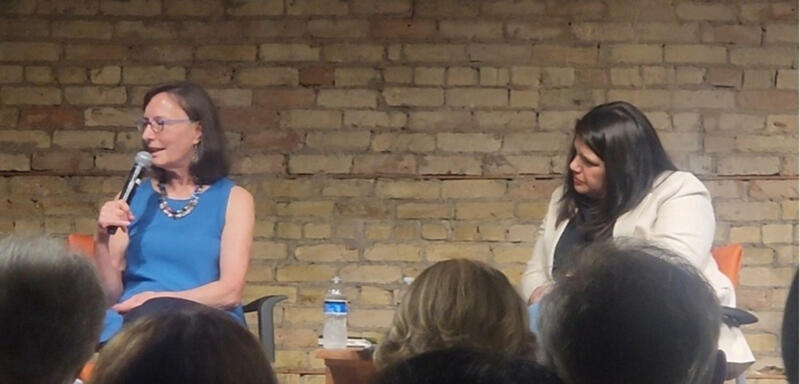
Just because there’s horrifying things out there, doesn’t mean you give up on humor. You can’t live without having a sense of humor. I love books where difficult things happen, but there’s a bitter humor or some other flavor of lightness. Humor is an antidote and a balm. They go together. -Julie Schumacher
Claire Lombardo: There’s a line in the collection: ‘the world is full of horrifying things.’ Is writing an escape, for you, from horrifying things?
Julie Schumacher: Just because there’s horrifying things out there, doesn’t mean you give up on humor. You can’t live without having a sense of humor. I love books where difficult things happen, but there’s a bitter humor or some other flavor of lightness. Humor is an antidote and a balm. They go together.
Claire Lombardo: Do you share your early writing drafts?
Julie Schumacher: If I share something with my spouse, his job is to say ‘I like it.’ There’s no other response. [Laughter] There are some writing friends I’ll send writing to, usually with a warning like ‘I just need encouragement’ or ‘it’s done, have at it’ so that neither of us are surprised.
Claire Lombardo: What does your reading life look like when you’re actively writing?
Julie Schumacher: If I don’t want to be influenced by something, I’ll only read Jane Austen. I’ll never imitate someone like her. I couldn’t create a Mr. Darcy. When I was writing Dear Committee Members, I didn’t read anything about academia.
Claire Lombardo: What has been the response to your writing among fellow academics?
Julie Schumacher: I didn’t expect them to like it. I was experimenting with form, I wasn’t trying to write a campus novel. I’m terrified of plot. The white page has too many possibilities. With form, it becomes a task or a puzzle.
Claire Lombardo: I don’t want to ask how long it takes to write a short story…
Julie Schumacher: . . .Too long. [Laughs] Some drafts sit for years. I’d put them away in a drawer. For me, it’s a literal drawer since I hand-write them.
Q: A piece you wrote a few years ago really touched me. It was about your friendship with Melissa Bank and the letters you’d swapped for years. How has it influenced you and your writing today?
A: Melissa Bank and I were friends since grad school, and we wrote letters for years. She was hilarious. It was very lonely afterward—I suddenly had no more letters. I thought, ‘where are her letters?’ It was a very particular flavor of friendship, a written friendship.
For Julie Schumacher’s next stop on her book tour, you can visit her website for more information here.
Julie Schumacher
Julie Schumacher is the author of eleven books, including the national bestseller Dear Committee Members, winner of the Thurber Prize for American Humor. Schumacher’s other works include two short story collections, a satirical coloring book, and five novels for young readers.
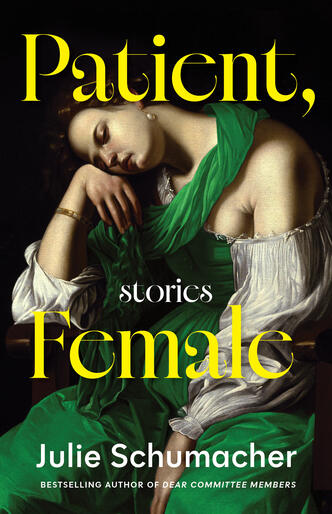
“Shrewd, sage, and so darkly funny.” —Claire Lombardo, author of The Most Fun We Ever Had
Milkweed Presents Julie Schumacher

Brianna Reed
From the Navajo Nation, Brianna Reed is the Diné author of multi-genre works that have appeared in Leonardo Fine Arts magazine, The Tribal College Journal, The Yellow Medicine Review, and Into the Unknown Together: A Climate Sci-Fi Anthology. By gaining her BFA in Nonfiction through the Institute of American Indian Arts, she has earned opportunities to present work across the nation, in Mexico, the Fine Arts Work Center of Cape Cod, and now through the Milkweed Editions fellowship. Now pursuing her MFA in Fiction through IAIA, she has also entered her third year penning her column, “The Moccasin Millennial” with…