On Writing Banbas/Exile: A Ramayan Retelling
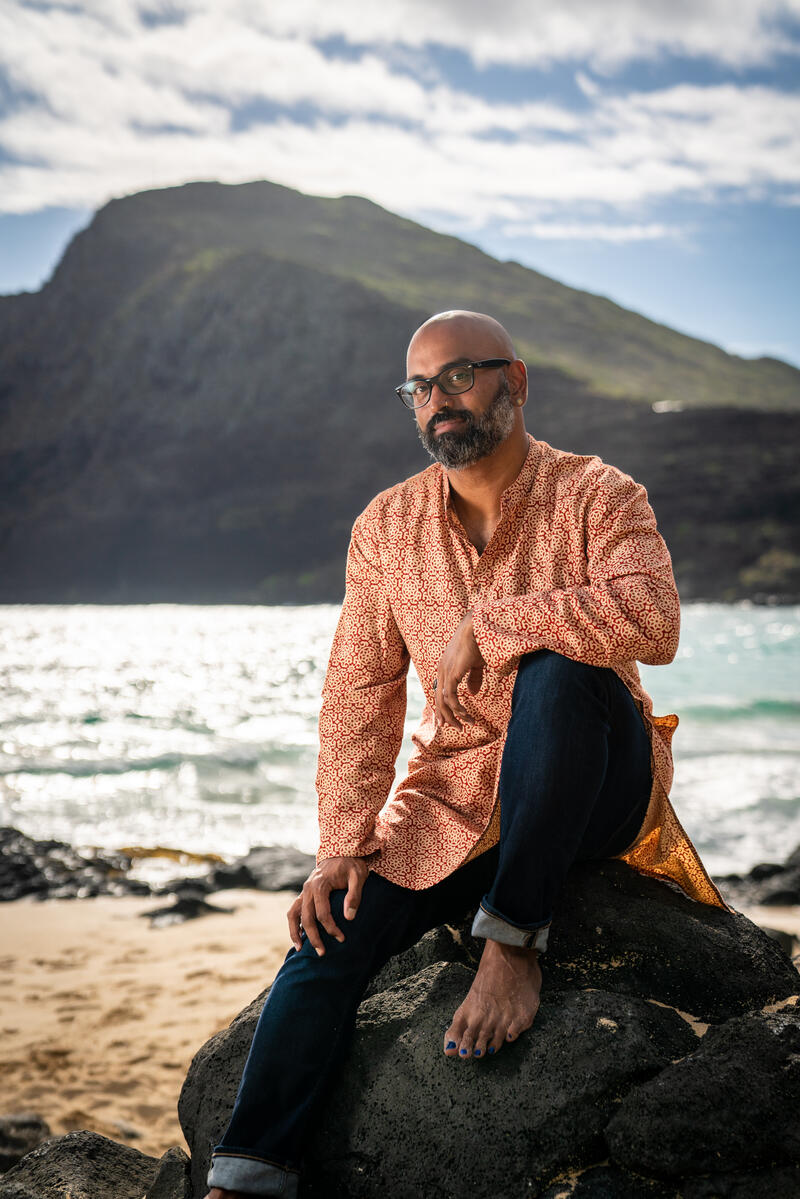
Rajiv Mohabir tells us about writing Banbas/Exile: A Ramayan Retelling—how it emerged from his grandmother’s language that was banned in his childhood home, to the way it can challenge fossilized ideas of dharma and religion.
I never set out to write this book. Its songs and stories sang me into body and spirit. Through this excavation of myself through the stories that were part of my bloodline for generations, intentionally obscured by colonial masters and British education, I leaned into the unknowing until it grew wings and painted rainbows in my sky. I think this is the work of the epic narratives of the ancient world, to bewitch us and teach us to fly. There are so many similarities between The Odyssey and the Ramayan: bow stringing, longing after the lover, evil to be thwarted, complicated heroes. I wasn’t surprised that the trailer for the new Ramayana movie produced by Namit Malhotra and Yash popped up on the screen, though from the subtitle “Our Truth, Our History” gives me pause for its Hindutva (Hindu nationalist) agenda.
The epic of the Ramayan endures in diaspora—in direct opposition to the conservative messaging of recent years. The story centers a prince exiled from his throne, his wife kidnapped, and the lengths he goes or doesn’t go to save her and restore balance. This collection of folk songs (from my grandmother and other Caribbean singers) is a distinctly Guyanese retelling of this living epic. Not a traditionally written language, Hindustani (and Creolese) folk ways are on the verge of being replaced by the larger, more funded (casteist, Islamophobic, anti-Black, etc.) conservative iterations. In the language of servants, born on the sugarcane plantations as a machete of resistance, I refuse to let these folk iterations be ghosts.
Driven by the burning need to understand my own family history, I began recording songs that my paternal grandmother sung. She was unlettered in both languages she spoke, and since British education privileged the written word (written by white people) these stories were endangered from the moment that my ancestors boarded the ships that left Kolkata and Chenai for Berbice.
My family used to say that we only were “broken” people, being Indo-Guyanese with ancestors who left India in a forced-labor system of racialized indenture to work the sugarcane plantations in South America. The language that evolved into the lingua franca of South Asian laborers descended from Bhojpuri and was called Hindustani by my grandmother. Since they thought of this as a “broken language” without any inherent value measurable by Empire, continuing the legacy of colonization, my father banned his mother’s language from being spoken in our home.
As a callow youth I went against his wishes and gathered the seeds of my grandmother’s oration to one day grow into a testament of her life as well as my own. We had secret meetings sometime and slowly slowly I began to learn our language enough to tell that my grandmother was relating the tale of a prince who was thrown out of his home. She related to this, being from the diaspora, living in Toronto, and not being able to speak to nor to be understood by anyone outside of her Guyanese and Caribbean speech community. She could never imagine that anyone in the world, let alone the publisher of an American Poet Laureate would hold her work with the dignity that it deserves.
The collecting and translating of these stories and songs saw me live and write and rewrite and translate and retranslate for twenty-five years. During this time, I had lived in many cities: Orlando, Gainesville, New York City, Varanasi, Jaipur, Honolulu, Opelika, Malden, Boulder, Denver, and now Longmont. And I have made it a mission to speak her language and to sing her songs across the world. I once even spoke her—our—“broken language” in the Library of Congress, the seat of imperial power today. This is not just linguistic reclamation, but a deeply political and spiritual reclaiming of voice and song.
In translating them, I found the joys of this disappeared language, grateful for the threads of knowledge my Aji imparted in me in the most traditional way: through oration and repetition. But translating this story was not without its own struggles, politically and spiritually. The conservative, nationalist Indian government uses this text as a true history of the Indian civilization, justifying the lynching and oppression of scheduled and backwards castes, of Muslims and other religious minorities, and of many others, using this text to uphold a very skewed version of dharma or “rightness.”
What could a queer do but to add their voice to iteration. At first, I was conflicted by this, should a translation of these Hindustani and Bhojpuri songs include my own original poems? Would it somehow change the project of collecting these poems? These questions animated my decisions around writing into the story as myself. I could not retell this story without using my own voice, without refusing the caste-idealism and misogyny that this text has been used for. In fact, not to depoliticize but to repoliticize it, the Ramayan has been used to contest those structures in power that attempt to rob others of their humanity.
I mean, what does it mean to battle the forces of evil? Do the heroes ever acquiesce to the power of State oppression? Doesn’t this actually transform them villains? It reminds me of Aimé Césaire who also said that colonization deforms the colonized’s view of their selves as well as simultaneously deforming the colonizer itself. I thought that a book like Banbas/Exile: A Ramayan Retelling should actually be coming out now in that it challenges stasis and fossilized ideas of dharma and religion. More and more mainstream Hinduism is interpolated into India’s state politics—which means also coopted into these evil ends are the songs and stories that we have been learning from for generations upon generations.
There are new ideas to be mined from this tradition: lessons and ideas about protesting hatred, of interrupting global anti-Blackness, Islamophobia, apartheid, genocide, and any and all governmental and religious phobic stances. That by virtue of having a leftist, mixed-caste, queer orator I would be able to go against the narrative domination of fascist state politics and stoke my own fire, to keep myself alive during the daily struggle against North American and Israeli racism, genocides, and erasure. What started out as a magnetic strip of a cassette tape from a woman, my Aji, whom Empire forgot, is now singing through me and to readers.

Rajiv Mohabir
Rajiv Mohabir is a memoirist, translator, and the author of five collections of poems, most recently Seabeast. His books have been awarded with Foreword Indies Gold and the Eric Hoffer Medal Provocateur.
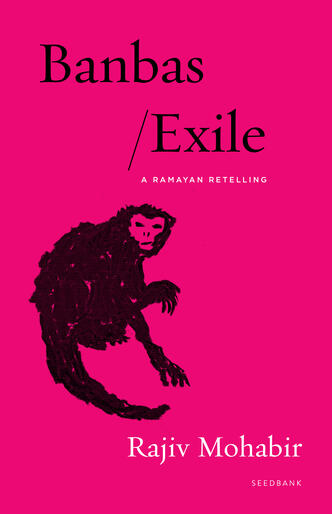
From acclaimed poet and scholar Rajiv Mohabir, a brilliantly crafted retelling of the ancient Ramayan that valorizes the epic poem’s queer heart.