

Patient, Female: Author Q&A with Julie Schumacher

In this conversation, we talk with Julie Schumacher, author of Patient, Female: Stories, about how her reading list influences what writing she produces, the complexity of humor in storytelling, and the writer’s proclivity for studying what is alluring about the people and places around them for inspiration.
Milkweed Staff: While writing Patient, Female, were you influenced or inspired by the works of other writers? In what way?
Julie Schumacher: I feel that my personality and my mood—as well as my writing—are deeply influenced by what I read. And because the stories in Patient, Female were written over a period of many years, they reflect my thoughts and experiences, as well as the many books that I read during that time. To me, reading is like food for my fiction; I wouldn’t be able to write without it. I dog-ear and underline mercilessly, scrawling notes in the margins of books, always on the hunt for inspiration, and I have found that inspiration even in fiction that is radically different from mine.
Milkweed Staff: Several of the stories, including “Syllabus” and “Spin,” rely on shapes and forms for effect. Why did you choose to write them that way?
Julie Schumacher: I like shape and form and structure (poets make use of form all the time). Beginning a story in the shape of a syllabus or a board game gave me a starting point, alleviating the anxiety of the blank white page. Fiction writing offers so many options—sometimes too many. When I feel stuck, I like to eliminate some of my choices by choosing a form before I dig in.
Milkweed Staff: Your stories are satirical and darkly comedic. Are you intentionally breaking down starry-eyed attitudes and perspectives?
Julie Schumacher: I suppose I would call myself a hopeful pessimist. I don’t believe in tidy endings or in epiphanies leading to “aha” moments or resolutions. And, especially in fiction, I find human imperfection and fallibility more interesting than contentment or success. We hope for happy endings in real life, but those don’t always work very well on the page.
Details—especially vivid and original details—allow us to immerse ourselves in fiction, so I’m always on the lookout for odd little tidbits that I can use.
Milkweed Staff: Throughout the book, scenes and settings are made vivid with an eclectic array of descriptions and objects. How do these come to you?
Julie Schumacher: Writers are noticers, I think. We eavesdrop on buses, ask personal questions, and study the voices and mannerisms and clothing and habits of family and friends. (According to Czeslaw Milosz, “When a writer is born into a family, that family is finished.”) Details—especially vivid and original details—allow us to immerse ourselves in fiction, so I’m always on the lookout for odd little tidbits that I can use.
Milkweed Staff: Often, the funniest narratives are also the most intense, torqued by suffering and grief. How do you set out to make the reader laugh?
Julie Schumacher: A lot of comic moments in life or in fiction are infused with difficulty or ambivalence or pain. Almost nothing is *exclusively* funny. I don’t typically try to make the reader laugh, but I do try to explore nuanced rather than simple emotions: anger mixed with confusion, love compromised by envy, hilarity complicated by simultaneous grief.
Milkweed Staff: The characters in Patient, Female are a wild bunch of anxious, sometimes annoying, and often frustrated people. Can you discuss your process for character development?
Julie Schumacher: Well, I usually start with some aspect of myself. My characters are radically different from me in terms of biography, but they were born from bits and pieces of my psyche. I know how it feels to be anxious or bewildered or annoyed (as well as annoying), and I use those feelings to create a person who, over a series of drafts, begins to take shape and feel real. Sometimes I get a clear sense of a character right away. Other times, I experiment for quite a while and throw a lot of pieces out to try to bring them to life.
It’s a writer’s job to create trouble for her characters—and in doing so, even when they don’t find solace or a resolution, they get a glimpse of self-knowledge or understanding.
Milkweed Staff: Regardless of the age of the individual character, these stories can be read as female bildungsromans within the moments you frame for readers. Do you see similarities in the way these girls and women evolve or change over the course of the narratives?
Julie Schumacher: All of these characters struggle. They often feel thwarted. And at the same time, there’s a bit of a spark in each of them, a little flame of yearning that allows them to keep going (most of the time). They encounter trouble—it’s a writer’s job to create trouble for her characters—and in doing so, even when they don’t find solace or a resolution, they get a glimpse of self-knowledge or understanding. They don’t change overnight, but change is out there, as a possibility.
Milkweed Staff: I was particularly struck by the visceral quality in “At the Executioner’s Table.” Why or how did you emphasize the characters’ physical selves as a way of conveying meaning and telling that story?
Julie Schumacher: The two characters—mother and daughter—spend much of that story in a car. So, I didn’t have the luxury of a varied setting. I needed the reader to feel what it was like to be in the front seat with them for hours while they talked and argued. They love and resent and worry about each other, and they know each other so well that they can interpret each other’s subtle facial expressions. They pay close attention, gauging and navigating each other’s emotions, and I wanted the reader to experience that physical and psychological intensity between them from within the confines of the car.
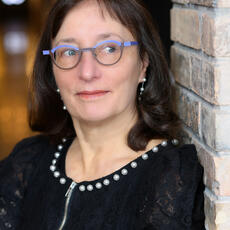
Julie Schumacher
Julie Schumacher is the author of eleven books, including the national bestseller Dear Committee Members, winner of the Thurber Prize for American Humor. Schumacher’s other works include two short story collections, a satirical coloring book, and five novels for young readers.
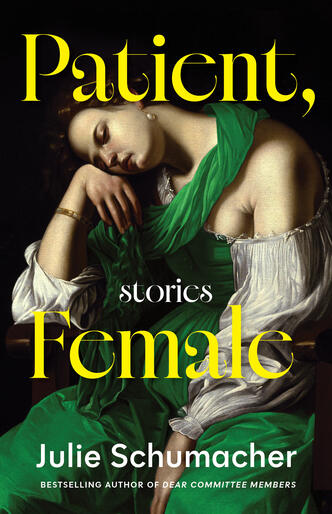
“Shrewd, sage, and so darkly funny.” —Claire Lombardo, author of The Most Fun We Ever Had
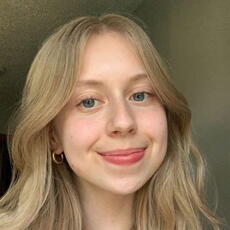
Kamra Heldman
Kamra Heldman is a poet and educator from Minneapolis. Her experience in librarianship, academia, and publishing empowered her to cultivate a reverence for community. She is committed to learning about the human condition through art and is fascinated by work that explores relationships to the self, other people, and the natural world. Her writing centers around femininity, spirituality, social justice, and connection. She received her Masters in Poetry from the University of St Andrews and teaches creative writing in the Twin Cities.